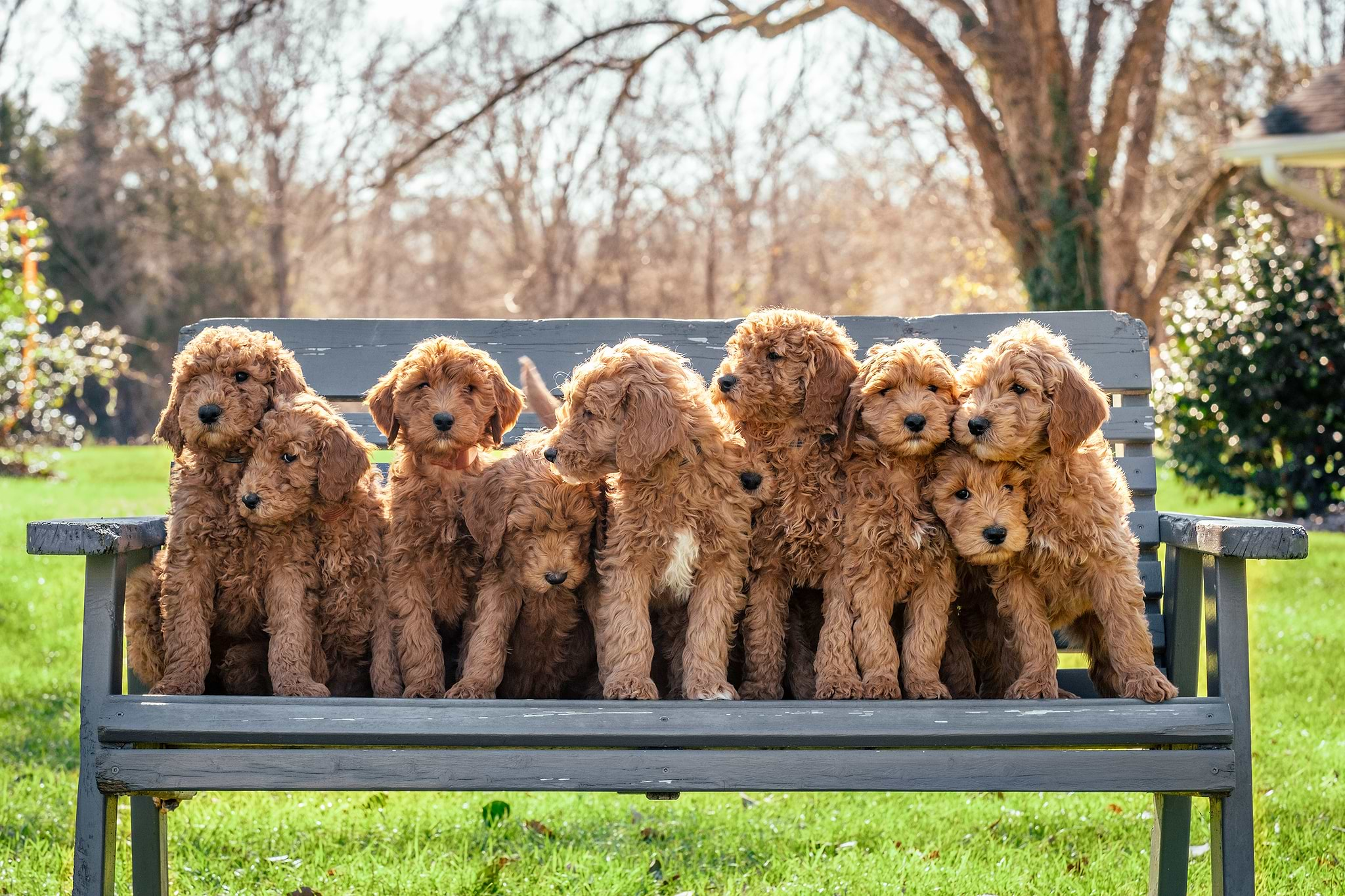
Bernedoodle Growth Stages: When Do Mini Bernedoodles Stop Growing?

So instead of trying to find one perfect “full-grown” date, follow your puppy’s progress over time. A series of healthy measurements tells you far more than one weigh-in or an online adult-weight calculator.
What Does “Full-Grown” Mean for a Bernedoodle?
A full-grown Bernedoodle has reached physical maturity, but height, weight, muscle development, and behavioral maturity do not all finish at exactly the same time.
You may notice your puppy getting taller first. Later, the chest can broaden, muscle develops, and that slightly lanky puppy frame begins to look more like an adult dog.
This is especially easy to notice in larger Bernedoodles. A one-year-old may already be close to adult height but still look lean or adolescent through the body.
Behavior has its own timeline, too. A dog can look fully grown while still displaying plenty of adolescent enthusiasm. Physical maturity is not the finish line for training or emotional development.
Bernedoodle Growth Stages by Age
A Bernedoodle growth chart is most useful when it helps you understand what is changing at each stage, rather than promising that your puppy should weigh an exact number on a certain birthday.
| Age | What you may notice | What to focus on |
|---|---|---|
| 8 to 12 weeks | Fast early growth and changing proportions | Establish veterinary care, feeding routines, and a starting weight |
| 3 to 6 months | Legs and frame grow quickly; your puppy may look lanky | Watch the overall weight trend and body condition |
| 6 to 12 months | Growth often starts slowing in smaller Bernedoodles | Keep tracking progress as the puppy moves toward mature size |
| 12 to 18 months | Many smaller dogs are near maturity; larger dogs may keep developing | Adjust feeding as growth slows and watch body condition |
| 18 to 24 months | Some larger dogs continue developing their adult frame | Focus increasingly on healthy adult weight and condition |
These age ranges are general canine development guides rather than Bernedoodle-specific deadlines. VCA Animal Hospitals notes that growth rate is strongly influenced by expected adult size, with smaller dogs generally maturing earlier than larger dogs.
That is why comparing your puppy with another Bernedoodle of the same age can be misleading. A puppy expected to mature around 30 pounds is following a different growth path from one expected to mature above 55 pounds.
When Do Mini Bernedoodles Stop Growing?
Many Traditional Mini Bernedoodles are close to physical maturity around their first birthday, but some continue gaining adult body substance after 12 months.
At Crockett Doodles, a Traditional Mini Bernedoodle has an estimated adult weight of 25 to 40 pounds. Crockett Doodles also uses Toy/Petite at 5 to 24 pounds, Medium at 41 to 55 pounds, and Standard at more than 55 pounds. These categories describe expected adult weight and help families plan for size.
Because Traditional Minis fall into a smaller adult-weight range than Medium and Standard Bernedoodles, they will often finish their fastest growth sooner.
Still, puppies do not read the calendar. One Traditional Mini may look almost mature before its first birthday, while another continues changing through the following months.
Think of 10 to 12 months as a useful planning range for many smaller Bernedoodles, not an expiration date for puppy growth.
For a deeper look at expected adult weights and size prediction, see our Bernedoodle Size Guide.
Your Bernedoodle May Stop Getting Taller Before It Looks Fully Grown
This is where first-time owners are sometimes surprised.
Your Bernedoodle may finish much of its height growth and still look narrow through the chest or a little long-legged. Over time, you may notice:
- A broader chest
- More muscle
- A sturdier-looking frame
- More balanced adult proportions
- Slower, steadier weight changes
People often call this “filling out.”
As growth slows, the goal shifts from watching your puppy get bigger to helping the dog maintain an appropriate body condition.
Is a Mini Bernedoodle Full-Grown at 6 Months?
A six-month-old Mini Bernedoodle is usually still growing, even if the puppy already looks surprisingly tall.
Six months is an interesting stage because you now have several months of growth history to work with. Your puppy may look much less like the tiny dog you brought home, but there is usually more physical development ahead.
Some puppies look especially leggy at this age. Their frame can develop faster than their chest and muscle, creating that familiar adolescent look.
Instead of wondering whether your six-month-old puppy has reached a certain percentage of adult size, ask a few more useful questions:
- Has weight been increasing in a steady pattern?
- Does your puppy have an appropriate body condition?
- Does the current growth trend fit the litter’s expected adult range?
- Is appetite generally consistent?
- Is your veterinarian comfortable with the puppy’s development?
Those answers tell you much more about healthy growth than a universal percentage formula.
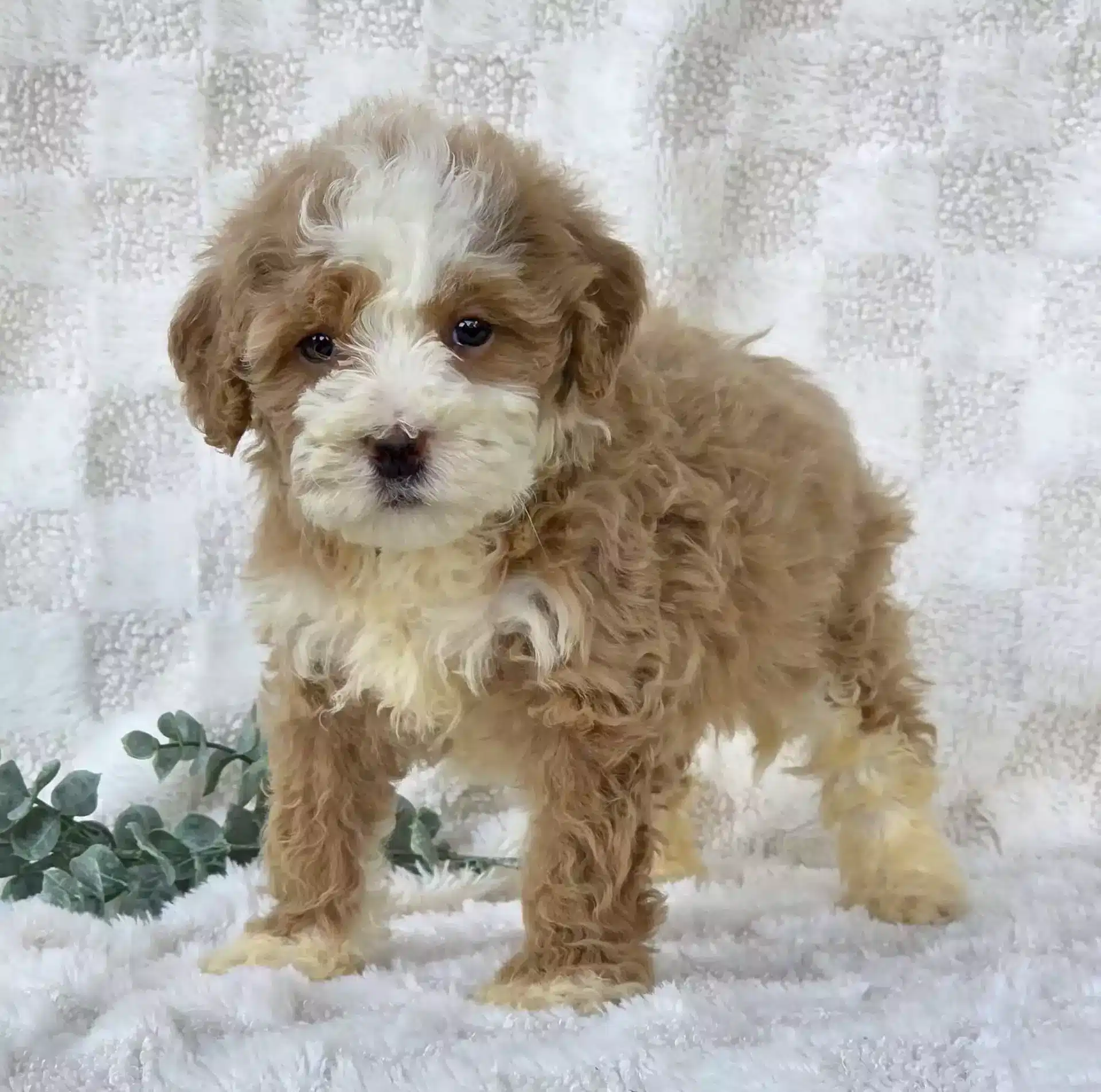
How Much Should a Mini Bernedoodle Weigh at 6 Months?
There is no single healthy six-month weight that applies to every Mini Bernedoodle.
Even within Crockett Doodles’ 25 to 40-pound Traditional Mini range, there is plenty of room for two healthy puppies to grow differently. A puppy expected to finish near the lower end of that range should not be compared with one expected to mature closer to 40 pounds.
The word “Mini” can also mean different things outside Crockett Doodles. That is why knowing the breeder’s expected adult range matters more than comparing your puppy with a generic Mini Bernedoodle chart online.
If your puppy’s weight worries you, your veterinarian can look at the number in context. Growth rate, body condition, muscle, appetite, health, and expected adult size are all more informative when considered together.
Can You Predict Adult Size From a Six-Month Weight?
A six-month weight is useful for tracking growth, but a simple formula such as doubling that number cannot reliably predict a Bernedoodle’s final weight.
It is understandable why these formulas are popular. One number feels reassuring when you are trying to decide how large a crate to buy or whether your puppy will fit comfortably in your lifestyle.
Bernedoodle growth has more moving pieces than a multiplication formula can capture.
For a better estimate, combine:
- Both parents’ adult sizes and builds
- The expected size category for the litter
- Growth patterns from related puppies when available
- Your puppy’s repeated weights over time
- Current body condition
- Your veterinarian’s assessment
Before you bring a puppy home, parent dogs and family lines provide useful context. Once your puppy is living with you, its own growth curve becomes increasingly valuable.
Merck Veterinary Manual notes that puppy growth charts can help show whether an individual puppy is following a healthy growth pattern. The value is in the trend, rather than using one point to calculate a promised adult weight.
Why Do Mini Bernedoodles Grow at Different Rates?
Genetics are a big part of the answer.
A Bernedoodle combines Bernese Mountain Dog and Poodle ancestry, and individual puppies can inherit different combinations of size-related traits. Even littermates with the same parents may finish at noticeably different adult weights.
Parent Size and Family Lines
Parent dogs give you some of the most useful clues about expected size.
Ask how much both parents weigh and, when that information is available, how puppies from related pairings have matured.
It still leaves room for individual variation, but it gives you a much stronger starting point than puppy paw size, loose skin, or a single early weigh-in.
Does Bernedoodle Generation Affect Growth?
F1, F1B, and Multigen describe Bernedoodle parentage, not a guaranteed adult size or growth rate.
Crockett Doodles currently lists Bernedoodles as F1, F1B, and Multigen. An F1 is a first-generation Bernese Mountain Dog and Poodle pairing. F1B describes a backcross, while Multigen refers to later-generation Doodle breeding.
For growth planning, the actual parent dogs and expected litter size are more useful than the generation label alone.
If you want to understand what those letters mean without turning this growth guide into a genetics lesson, see the Bernedoodle Generations Guide.
Nutrition and Healthy Bernedoodle Growth
Healthy puppy growth is about steady development, not getting your Bernedoodle to adult size as quickly as possible.
Growing puppies need a diet appropriate for growth, along with portions suited to their age, expected size, activity, and body condition.
Veterinary nutrition guidance from VCA explains that excessive calorie intake can accelerate growth and contribute to excess body fat. This deserves particular attention in puppies expected to become larger adults because rapid growth and inappropriate nutrition can increase the risk of developmental orthopedic problems.
Your veterinarian can help you adjust feeding as your puppy’s growth rate changes. The portion that worked beautifully during a rapid growth spurt may need to change as physical development begins slowing.
What About Calcium and Growth Supplements?
If your puppy eats a complete and balanced growth diet, adding extra minerals simply to encourage growth is usually unnecessary.
Puppies need calcium and phosphorus in appropriate amounts and proportions. Excess supplementation can create nutritional imbalances, with large and rapidly growing puppies particularly sensitive to excess calcium.
If you are considering a vitamin, calcium product, or growth supplement, bring the product to your veterinarian first. That way, any addition can be considered alongside the puppy’s complete diet.
Crockett Doodles Puppy Food Guidance
For Crockett Doodles families, it helps to check what your puppy is already eating before Adoption Day.
Crockett Doodles currently recommends TLC Whole Life and Health Extension. Qualifying food purchases are also connected with extended Health Guarantee benefits, along with current insurance, veterinary, documentation, and contract requirements. The full written Health Guarantee controls the details.
Keeping your puppy on the familiar food at first can also make the transition home easier on the digestive system.
If your veterinarian recommends another diet because of a growth concern, allergy, digestive condition, or other medical need, follow that medical guidance and contact Crockett Doodles to understand how the change may affect current Health Guarantee eligibility.
Body Weight and Body Condition Are Different
The number on the scale tells you how much your Bernedoodle weighs. Body condition helps tell you whether that weight is appropriate for the individual dog.
Imagine two Traditional Mini Bernedoodles that both weigh 35 pounds. One could be at an appropriate lean condition, while the other could be carrying excess body fat.
That is why reaching an expected size range is not the goal by itself.
Your veterinarian may assess:
- How easily the ribs can be felt
- The shape of the waist
- Abdominal contour
- Muscle condition
- Overall proportions
- The puppy’s growth curve
Bernedoodle coats can make visual assessment tricky. A fluffy puppy may look rounder than it really is, so your hands and your veterinarian’s assessment can tell you more than appearance alone.
How Often Should You Track Your Bernedoodle’s Growth?
Periodic weigh-ins are usually more useful than checking a healthy puppy’s weight every day.
You are looking for the overall pattern.
You might keep a simple record like this:
| Date | Puppy age | Weight | Helpful notes |
|---|---|---|---|
| Veterinary visit | Current age | Current weight | Body condition and veterinarian comments |
| Home check | Current age | Current weight | Appetite, activity, or recent changes |
| Next veterinary visit | Current age | Current weight | Updated growth assessment |
Using the same scale when practical can make home measurements easier to compare. Small fluctuations matter less than the trend over several weeks or months.
Bring your record to routine veterinary appointments if you have questions. A simple history can make the conversation much more useful.
When Should You Ask Your Veterinarian About Growth?
Most growth changes are simply part of puppyhood. Still, there are times when a veterinarian should take a closer look.
Call your veterinary clinic if your Bernedoodle:
- Loses weight unexpectedly
- Stops gaining during an early rapid-growth period
- Gains weight unusually quickly
- Develops persistent vomiting or diarrhea
- Has a major change in appetite
- Seems weak or unusually tired
- Starts limping or has difficulty moving
- Appears painful
- Develops a sudden change in body condition
You know what is normal for your puppy day to day. A noticeable change in that pattern is worth discussing, especially when weight changes appear alongside other symptoms.
Does Spaying or Neutering Affect Bernedoodle Growth?
Spay or neuter timing can be part of a broader veterinary conversation about growth, expected adult size, health, and the individual dog.
Veterinary recommendations are increasingly individualized rather than based on one age for every dog. AAHA guidance, for example, considers projected adult size when discussing timing because skeletal development and health considerations can differ between smaller and larger dogs.
Crockett Doodles places its puppies as companion animals under a Spay/Neuter Contract. If you have a Crockett Doodles puppy, review your signed agreement and discuss timing with your veterinarian. If a veterinary recommendation raises a question about the contract, contact Crockett Doodles so you can clarify the next step.
Your Puppy Is Growing, and So Is the Equipment
Sometimes the easiest way to notice a growth spurt is not the scale. It is realizing that the harness suddenly looks a little snug.
Collar and Harness
Check the fit regularly as your puppy’s neck, shoulders, and chest develop. Adjustable equipment is particularly useful during fast-growing months.
Crate
Your puppy should have enough space to stand normally, turn around, and lie comfortably. A crate with a divider can grow with a puppy and may save you from replacing the entire setup several times.
Bed and Travel Gear
When you are buying a bed or planning a vehicle setup, think a little beyond today’s puppy size. The same applies to carriers, harnesses, and other size-dependent equipment.
Your six-month-old puppy may look big compared with the puppy you first brought home, but there can still be meaningful growth ahead.
How to Plan for Your Bernedoodle’s Adult Size
If you are still choosing a puppy, asking for an expected range is much more useful than asking for one exact future weight.
Good questions include:
- Which Crockett Doodles size category is expected for this puppy?
- How much do both parent dogs weigh?
- What sizes have related puppies reached?
- How much variation would be realistic for this litter?
- Which adult size could our family comfortably lift, transport, groom, and manage?
Crockett Doodles currently uses four estimated Bernedoodle adult-weight categories:
- Toy/Petite: 5 to 24 pounds
- Traditional Mini: 25 to 40 pounds
- Medium: 41 to 55 pounds
- Standard: more than 55 pounds
Individual adult weight may still land outside the original estimate, which is why it helps to choose a range your household can comfortably manage. Crockett Doodles’ written policies also treat final adult size as an estimate rather than a promised outcome.
Families who are still deciding can compare the full size ranges in the Bernedoodle Size Guide or see current Bernedoodle puppies for the expected size information available with current listings.
Frequently Asked Questions
When Do Mini Bernedoodles Stop Growing?
Many Traditional Mini Bernedoodles are approaching physical maturity around 10 to 12 months, although some continue filling out after their first birthday. Parent size, genetics, health, and individual development can shift the timeline.
What Is the Adult Weight of a Mini Bernedoodle?
At Crockett Doodles, a Traditional Mini Bernedoodle has an estimated adult weight of 25 to 40 pounds. The smaller Toy/Petite category is 5 to 24 pounds.
Is a Mini Bernedoodle Full-Grown at 6 Months?
Usually not. A six-month-old Mini Bernedoodle is generally still developing. This age is more useful as a point for reviewing the puppy’s growth trend than as a final-size milestone.
How Much Should a Mini Bernedoodle Weigh at 6 Months?
There is no single correct six-month weight for every Mini Bernedoodle. Healthy weight depends on the puppy’s expected adult size, growth history, genetics, and body condition.
Should I Double My Mini Bernedoodle’s Six-Month Weight?
A doubling formula may produce a rough guess, but it is not a reliable adult-size prediction. Parent weights, family lines, the expected litter range, repeated measurements, and veterinary assessment provide better context.
Can a Mini Bernedoodle Grow Larger Than Expected?
Yes. Adult size estimates are planning ranges, and an individual Bernedoodle may mature above or below the original estimate.
Do Male Bernedoodles Grow Longer Than Females?
Sex can influence eventual adult size, but it does not provide a dependable growth timeline by itself. Expected adult size, parent genetics, health, nutrition, and individual development are more useful clues.
When Does a Bernedoodle Stop Looking Like a Puppy?
The change is gradual. Your Bernedoodle may reach much of its adult height before the chest, muscles, and overall proportions look fully mature. Larger Bernedoodles often keep that lanky adolescent appearance longer than smaller dogs.
Following Your Bernedoodle’s Growth With Confidence
Bernedoodle growth is easier to understand once you stop looking for one magic age or formula.
Many Traditional Mini Bernedoodles are getting close to physical maturity around their first birthday, while larger Bernedoodles may continue developing much longer. Your puppy’s own growth curve, expected adult-size range, parent information, body condition, nutrition, and veterinary assessments give you the clearest picture.
Keep a simple record as your puppy grows. Adjust food and equipment as needed. Bring questions to routine veterinary visits, especially if the growth pattern suddenly changes.
Your goal is not to get your Bernedoodle to a target number as quickly as possible. It is to support steady, healthy development and enjoy watching that awkward little puppy gradually become the adult dog you imagined.
Ready to Find the Right Bernedoodle Size for Your Family?
Explore available Bernedoodle puppies and review the expected size information for current litters to find a puppy whose adult range fits your household.
Bernedoodle Growth Stages, Growth stages of Bernedoodle