Doodle ear cleaning should be gentle, done only when needed, and performed with a dog-specific ear cleaner recommended by your veterinarian. Regular ear checks can help you notice wax, moisture, redness, odor, or discomfort before a minor issue becomes more serious.
Many Doodles have floppy ears, and some also have considerable hair around the ear opening. These features can reduce airflow and hold moisture, but that does not mean every Doodle needs frequent cleaning. Over-cleaning can irritate the ear canal, so the right schedule depends on your individual dog.
Get Your Doodle Comfortable With Ear Handling
Before cleaning your Doodle’s ears, help them become comfortable with having the area touched.
Gently rub the outside of the ears and briefly lift each ear flap during calm moments. Pair handling with praise or treats so your puppy learns that ear checks are a normal part of grooming.
Starting this routine while your Doodle is young can make future cleaning, grooming, and veterinary examinations easier.
If your dog pulls away, appears frightened, or shows signs of pain when you touch an ear, do not force the process. Pain can be a sign that the ear needs veterinary attention.
What Do You Need to Clean a Doodle’s Ears?
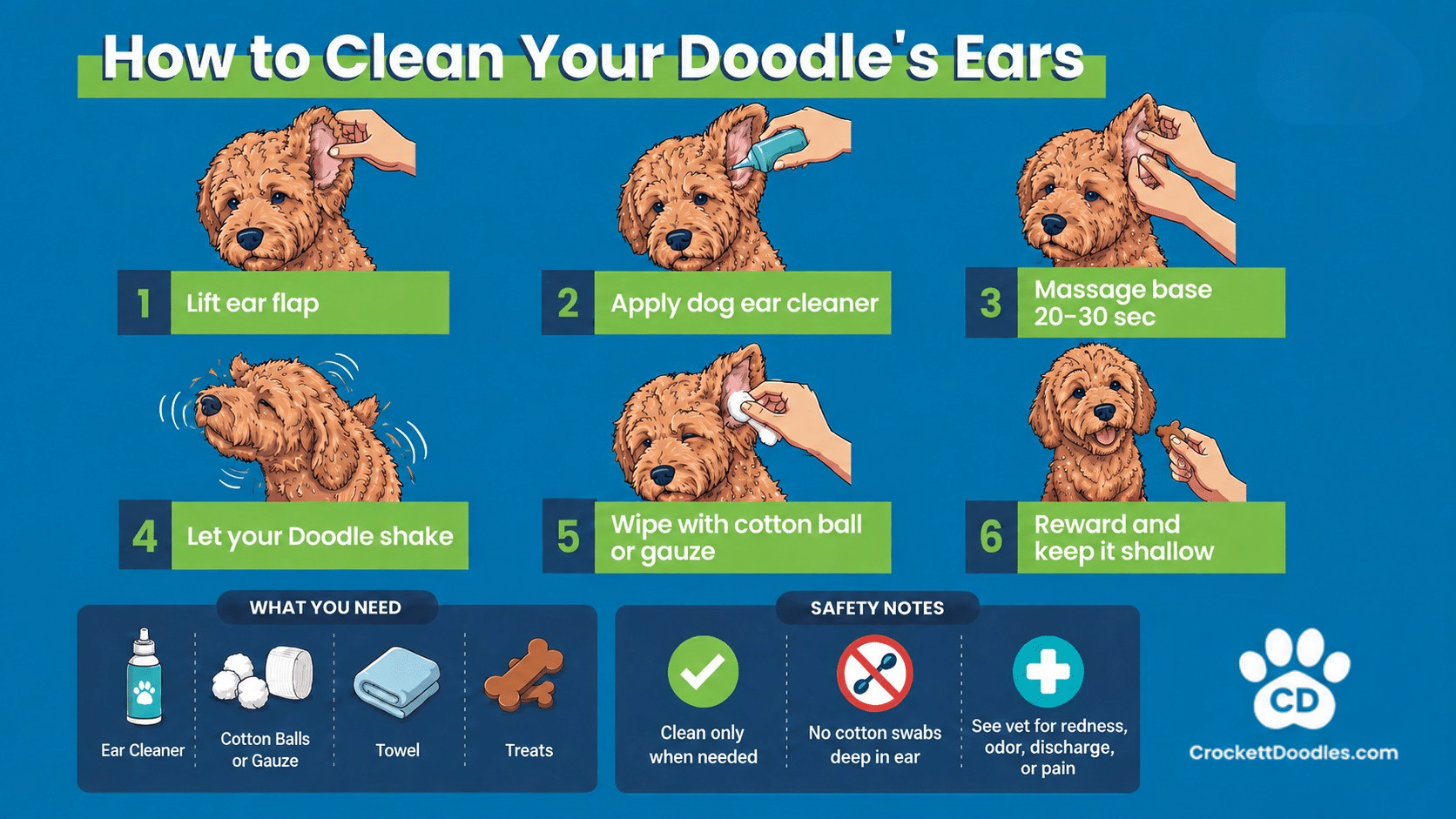
You only need a few basic supplies:
- A dog-specific ear cleaning solution recommended by your veterinarian
- Cotton balls or gauze
- A clean towel
- Treats for positive reinforcement
Avoid putting cotton swabs or other narrow objects into the ear canal. They can push debris farther inside or injure sensitive structures. Veterinary guidance also recommends avoiding homemade mixtures such as vinegar solutions when cleaning ears because irritating ingredients can make an inflamed ear worse.
How to Clean Your Doodle’s Ears – Doodle ear cleaning
Once your Doodle is comfortable and the ear appears healthy, follow these steps:
- Lift the ear flap. Gently hold the ear up so you can see the opening of the ear canal.
- Apply the ear cleaner. Follow the product directions and use enough solution to reach the ear canal without allowing the bottle tip to touch the ear.
- Massage the base of the ear. Gently massage for about 20 to 30 seconds. You may hear the cleaning solution moving inside the canal.
- Let your Doodle shake. Head shaking helps bring loosened wax and debris toward the outer ear.
- Wipe away visible debris. Use a cotton ball or gauze to clean the ear flap and the portion of the canal you can safely reach.
- Keep the cleaning shallow. Do not push your finger, cotton, or another object deep into the ear canal.
- Reward your Doodle. Praise and a treat can help make future ear care easier.
This basic technique follows veterinary guidance for routine canine ear cleaning.
Should You Pluck Hair From a Doodle’s Ears?
Ear hair should not automatically be plucked from every Doodle. Some dogs may benefit from trimming or removing excess hair when it contributes to poor ventilation or interferes with treatment, but unnecessary plucking can irritate the ear canal.
The original Crockett Doodles ear-care routine included plucking excess ear hair. Current veterinary guidance is more individualized. Ask your veterinarian or an experienced professional groomer whether your particular dog needs hair removed and how it should be done safely.
For broader coat maintenance, see our Doodle grooming tips.
How Often Should You Clean a Doodle’s Ears?
There is no single cleaning schedule that is right for every Doodle. Some healthy dogs need very little routine cleaning, while dogs that produce more wax, swim frequently, or have recurring ear problems may need a veterinarian-recommended schedule.
Check your Doodle’s ears regularly and keep them dry after bathing or swimming. Moisture in the ear canal can contribute to conditions that allow yeast or bacteria to grow.
The Puppy Start Guide also includes grooming and general care information for families preparing to bring home a Doodle puppy.
When Should You See a Veterinarian?
Redness, swelling, strong odor, discharge, frequent scratching, head shaking, or pain can indicate an ear problem that needs veterinary attention. Do not assume these signs simply mean the ear needs a deeper cleaning.
Ear inflammation can have several causes, including yeast or bacterial infections, allergies, parasites, foreign material, and underlying skin conditions. A veterinarian can examine the ear and determine the appropriate treatment.
If an ear is painful, inflamed, or producing unusual discharge, contact your veterinarian before cleaning it at home.
Regular ear checks, gentle handling, appropriate cleaning when needed, and keeping the ears dry can make Doodle ear care much easier. The goal is not to keep the ear canal constantly cleaned, but to keep your Doodle comfortable while recognizing problems early.