F1 vs F1B Goldendoodle: 5 Main Differences Explained
Picking a Goldendoodle puppy can feel like a lot at first. You may see terms like F1 or F1B and feel unsure. What does it mean? That feeling is normal. Many families feel this way when they start looking at Doodles.
The key is to understand the difference between F1 and F1B Goldendoodle genetics.
When you understand how each Goldendoodle type is bred, everything about the F1 vs. F1B Goldendoodle debate begins to click. In short, this genetic difference affects coat texture and shedding, which, in turn, impacts grooming needs.
This guide walks you through the five main differences. It keeps things simple so you can choose your dog with confidence. When you understand the F1 vs F1B Goldendoodle traits, you are more likely to find a dog that fits your home. And that’s the important thing!
Genetic Makeup and the difference between F1 and F1B Goldendoodle
What F1 Really Means
An F1 Goldendoodle is the first mix of a Poodle and a Golden Retriever. Each parent gives half of the genes. That creates a 50- 50 split. This first cross is often called the “base” generation.
Because of this, the difference between F1 and F1B Goldendoodle starts right here. The F1 is the most balanced mix. It keeps strong ties to both the parent breeds.
What F1B Adds to the Mix
An F1B Goldendoodle is bred by taking an F1 and crossing it again with a Poodle. This raises the Poodle share in the puppy to about 75 percent. That shift changes a lot. It affects the coat type and shedding levels of the new litter. It also makes the look steadier from one puppy to the next.
Our research shows this added Poodle influence is the main reason people choose an F1B puppy. It gives a clearer idea of what the puppy will look like as it grows.
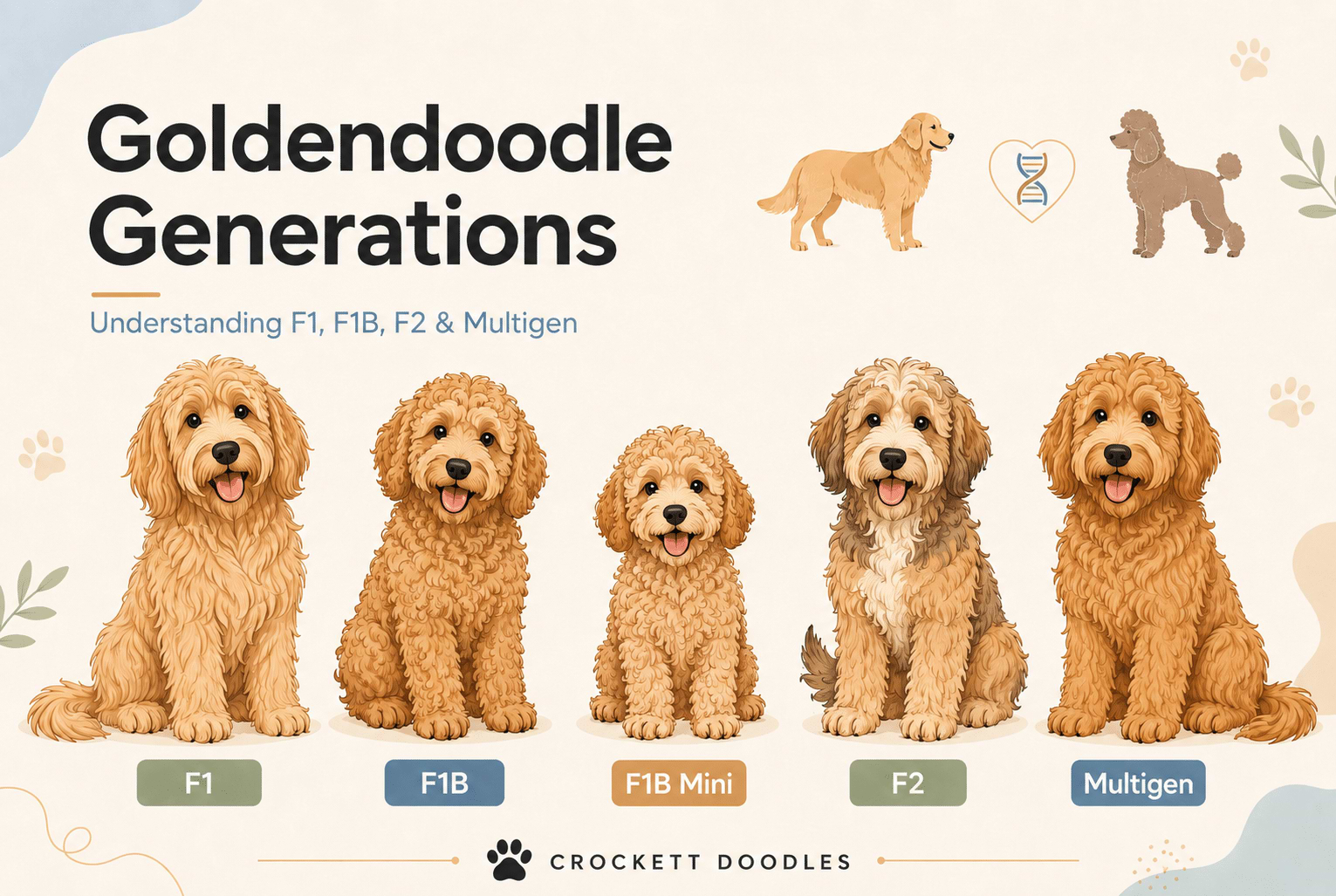
F1 vs F1B Goldendoodle Comparison
Both generations make wonderful family dogs, but their coat, shedding, grooming, and allergy-friendly traits can be different.
| Feature | F1 Goldendoodle | F1B Goldendoodle |
|---|---|---|
| Genetics | 50% Golden Retriever + 50% Poodle | About 75% Poodle + 25% Golden Retriever |
| Coat | Loose waves, shaggy, soft, sometimes straighter | Curlier, denser, more teddy-bear style |
| Shedding | Low Some loose hair possible | Very Low Closer to non-shedding |
| Allergies | May work for mild allergy concerns | Often safer for allergy-sensitive families |
| Grooming | Easier brushing routine | Needs more brushing to prevent mats |
| Temperament | Relaxed, social, easygoing | Smart, focused, highly trainable |
| Best For | Families who love the classic shaggy Goldendoodle look | Families wanting lower shedding and curlier coats |
Genetics
50% Golden Retriever + 50% Poodle
About 75% Poodle + 25% Golden Retriever
Coat
Loose waves, shaggy, soft, sometimes straighter
Curlier, denser, more teddy-bear style
Shedding
Low Some loose hair possible
Very Low Closer to non-shedding
Allergies
May work for mild allergy concerns
Often safer for allergy-sensitive families
Grooming
Easier brushing routine
Needs more brushing to prevent mats
Temperament
Relaxed, social, easygoing
Smart, focused, highly trainable
Best For
Families who love the classic shaggy Goldendoodle look
Families wanting lower shedding and curlier coats
Quick takeaway: F1 is often better for families wanting a balanced, shaggy, relaxed companion. F1B is often better for families focused on allergies, low shedding, and a curlier coat.
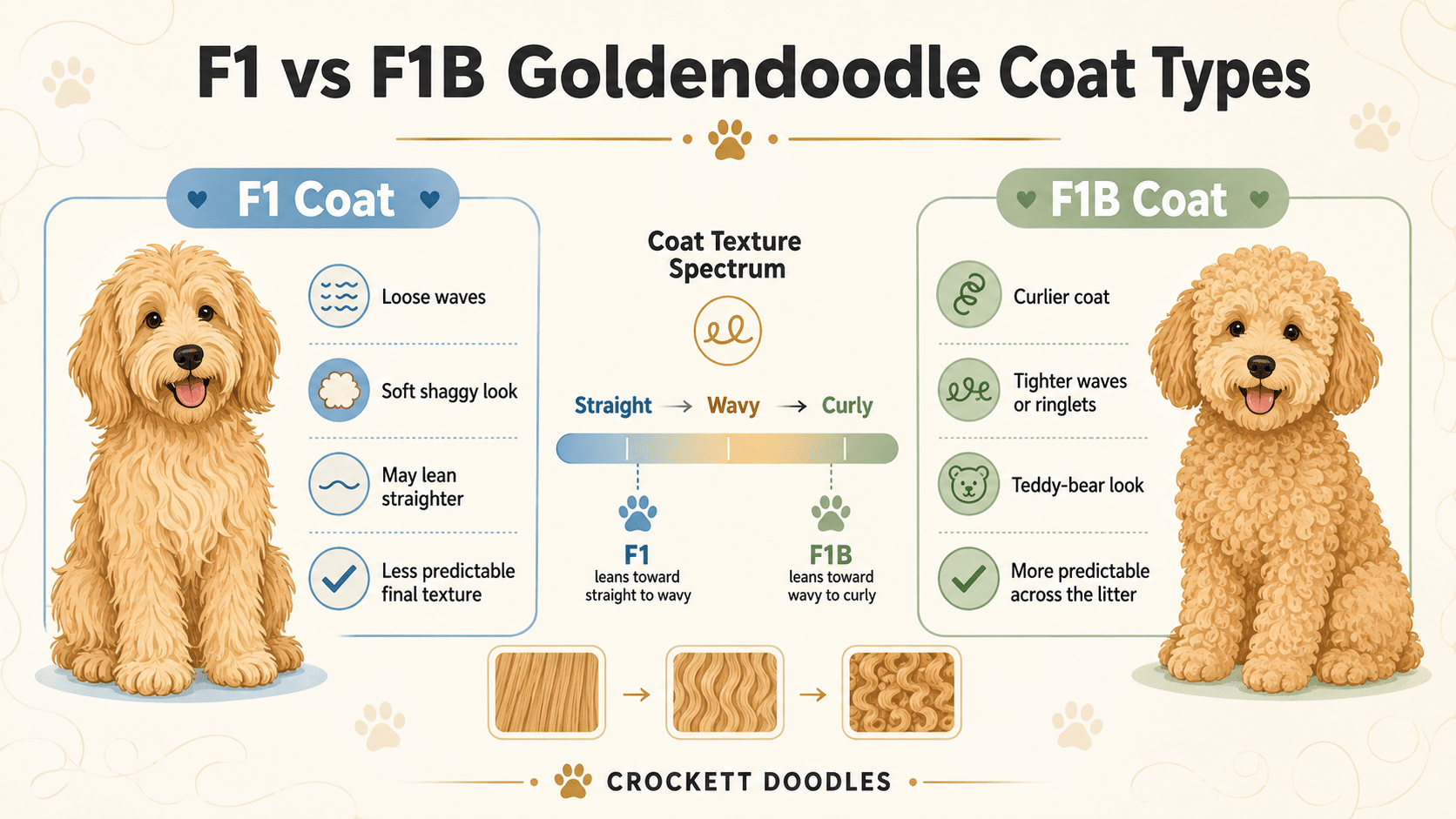
F1 vs F1B Goldendoodle Coat Type and Texture
How F1 Coats Behave
F1 coats can vary quite a bit. In many cases, the coat shows a loose wave pattern. The feel can also be soft with a shaggy look. Many people love this natural style. But, in certain pups, the coat leans toward a straighter retriever style.
This makes the F1 vs F1B Goldendoodle coat type important to think about. You may not know the final texture right away with an F1. So, you must decide if you are okay with not knowing.
Why F1b Coats Are More Predictable
F1B coats tend to be curlier. The added Poodle genes bring tighter waves or ringlets to the table. This creates the well-known “teddy bear” look these dogs have. The coat is also denser. That means it holds its shape better over time. You are more likely to get the same look across the litter.
We, as breeders, carefully track coat outcomes across many litters. F1B puppies show a higher level of consistency. That makes planning easier for new owners.
Do F1b Goldendoodles Shed Less Than F1 Generations?
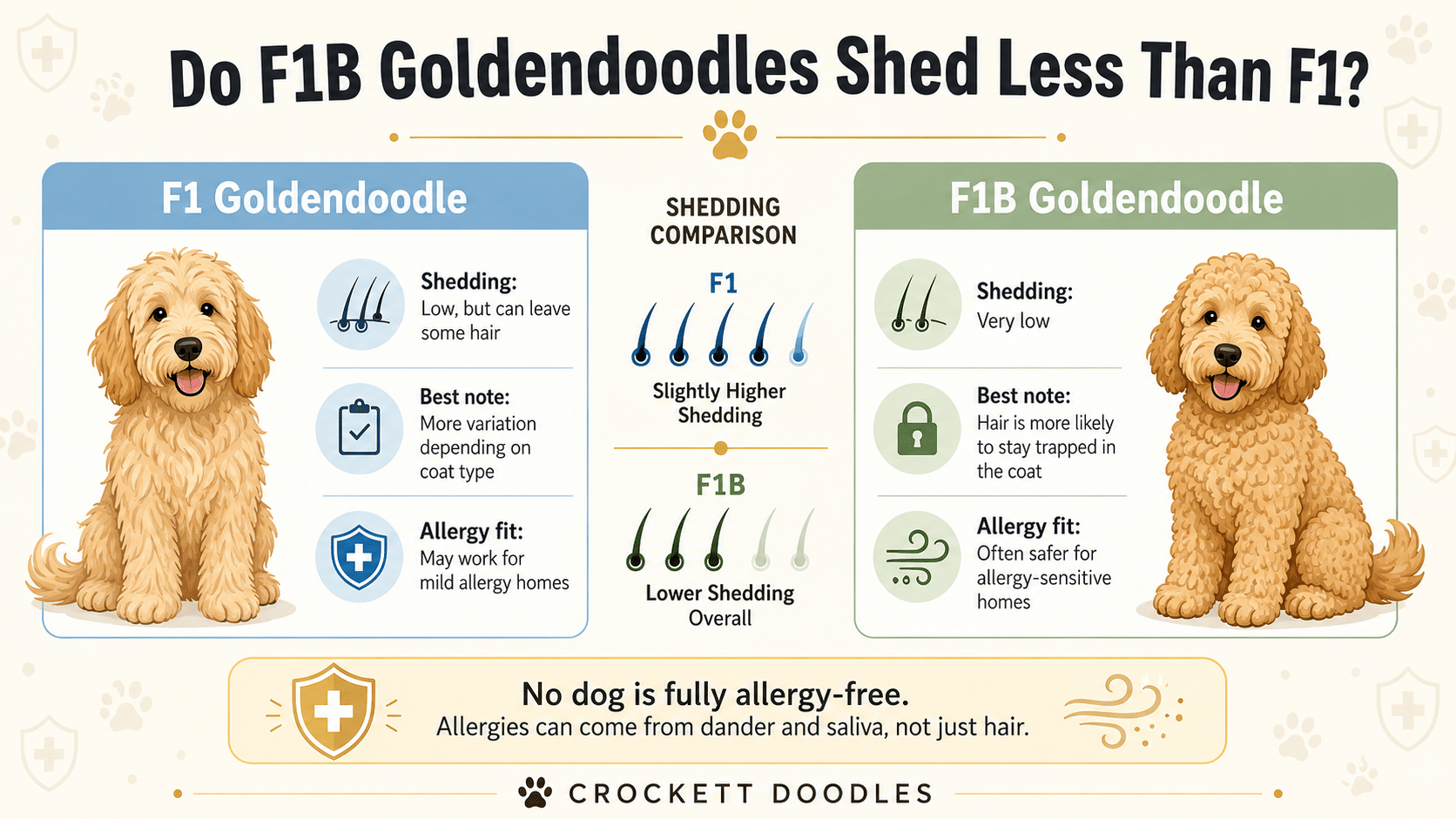
Shedding in F1 Dogs
F1 Goldendoodles are low-shedding dogs. Still, they can leave some hair lying around. This depends on which parent they take after more. If the coat leans toward the retriever side, you may see more loose hair. It is not heavy shedding, but it is there.
This is why people often ask the question of whether F1B Goldendoodles shed less than F1. This small coat difference helps explain the answer.
Why F1b is Closer to Non-shedding
F1B dogs shed very little. The higher Poodle share in their genetics helps keep hair trapped in the coat. That means less hair in your home.
For people who want a clean space, this matters a lot. Still, no dog is fully non-shedding. There will always be some loose hair. The F1B just keeps it under control much better.
Choosing an F1 or F1B Goldendoodle for Allergies
What Allergy-friendly Really Means
Many people look for an F1 or F1B Goldendoodle for allergies. It is important to be clear here. No dog is fully allergy-free.
Allergies come from dander and saliva. Hair plays a role, but it is not the only factor. That is why reactions can still happen. F1 dogs may work for people with mild symptoms. Some families do fine with them. Others may still react.
Why F1b is Often the Safer Choice
F1B dogs are often seen as the better option for allergies. Less shedding means less dander in the air. That can make a big difference.
Grooming Needs and Which is Better in the F1 or F1b Goldendoodle
Daily Care for Each Type
Grooming is a big part of Doodle care. F1 coats are often easier to brush. The looser waves do not tangle as fast. F1B coats need more work. The curls can trap hair and form mats. Daily brushing helps prevent this. Both types need regular visits to a groomer. Most owners plan a visit every few weeks.
Choose Based on the Time You Have
When asking which is better, F1 or F1B Goldendoodle, grooming time is key. For owners seeking a simpler routine, the F1 is often the easier choice.
If you prefer a low-shedding coat, you may accept the extra brushing that comes with F1B. It comes down to choosing between grooming time and a slightly cleaner home.
If your routine is packed, a coat that needs less care may be the better fit. If grooming feels relaxing to you, the F1B may suit you just fine.
Hybrid Vigor and Long-Term Health Expectations
Strength of the F1 Generation
F1 Goldendoodles often benefit from hybrid vigor. This means a broader gene mix, which can support overall health. A balanced gene pool may reduce some risks. It may help produce a dog that stays strong and full of energy. Many families value this trait.
However, careful breeding practices matter more than anything else. Health testing in parents is a must for any puppy you choose.
What to Expect From F1b Health
F1B dogs are closer to Poodles in their gene makeup. This may reduce hybrid vigor a bit. Still, they are also known to be healthy dogs. Choosing a trusted breeder is key, as they will do all the relevant testing and you will have peace of mind.
F1 vs F1B Goldendoodle Temperament Difference
How the F1 Personality Feels Day to Day
Both of these types are known for being friendly dogs. Being close to people is natural for them, and they blend into family life. This quality appears in both F1 and F1B dogs.
The F1 often shows more Golden Retriever traits. This can mean an easygoing nature. Many owners say these dogs are very social and quick to bond.
In day-to-day life, an F1 may seem a bit more relaxed. They often enjoy playtime but also settle well. It works well for families with a lot going on. When people ask about F1 vs F1B personality, this is where the F1 stands out.
How F1B behavior Compares
The F1B still has that same friendly base. At the same time, it often shows more Poodle traits. This can mean higher focus and sharper awareness. These dogs tend to be very smart. They pick up commands fast and enjoy learning. Some may have more energy during training sessions.
Both types are highly trainable. The difference is in how they approach learning. You may notice the F1B is more focused, while the F1 feels more laid back.
So, which is better, F1 or F1B Goldendoodle for temperament? It depends on what you enjoy. If you want a calm companion, F1 may feel right. If you like an alert dog that enjoys training, an F1B may suit you better.
Matching the Dog to Your Needs
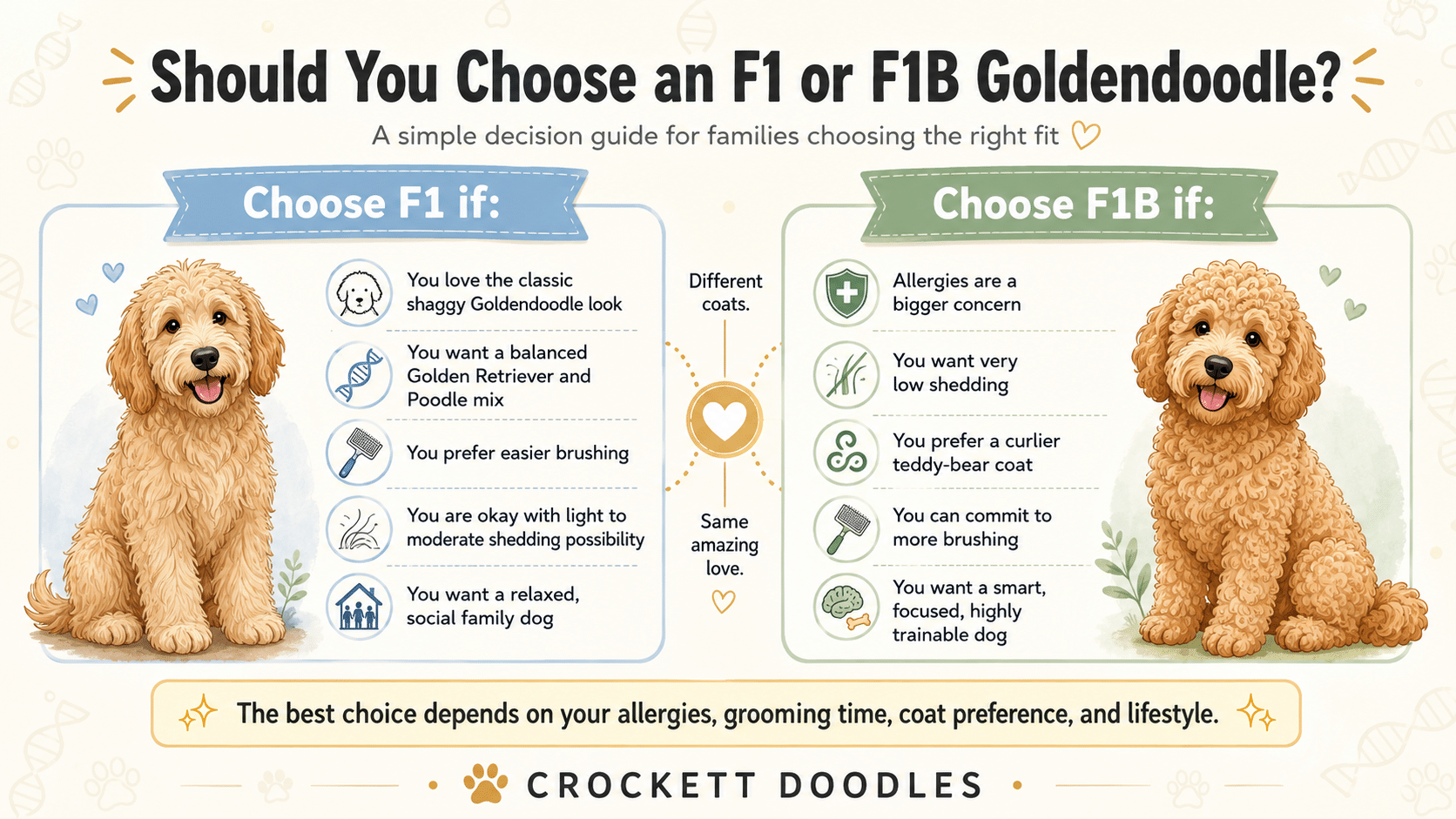
The difference between F1 and F1B Goldendoodle puppies comes down to what matters most in your home. Each type brings something unique.
If allergies are a concern, the F1B is often the safer choice. With less shedding, there is often less dander in the air.
If you love the classic shaggy look, the F1 may be a better fit. Many people picture this softer and more natural-looking coat style first when they think of Goldendoodles, and that’s why they prefer the F1.
Understanding F1 vs F1B Goldendoodle traits helps you avoid surprises later. This gives you a better sense of direction before adoption. Consider your space and habits, since small details can matter a lot later.
And when you finally hold your new puppy and feel that fantastic bond, you will know every bit of research was worth the wait.
Decided between the easygoing F1 and the low-shedding F1B? Browse our available family-raised Goldendoodle puppies for sale to find the perfect generation for your home.
F1 Goldendoodle, F1 vs F1B Goldendoodle, f1b goldendoodle