Goldendoodle Colors: Popular to Rare with Chart & Photos
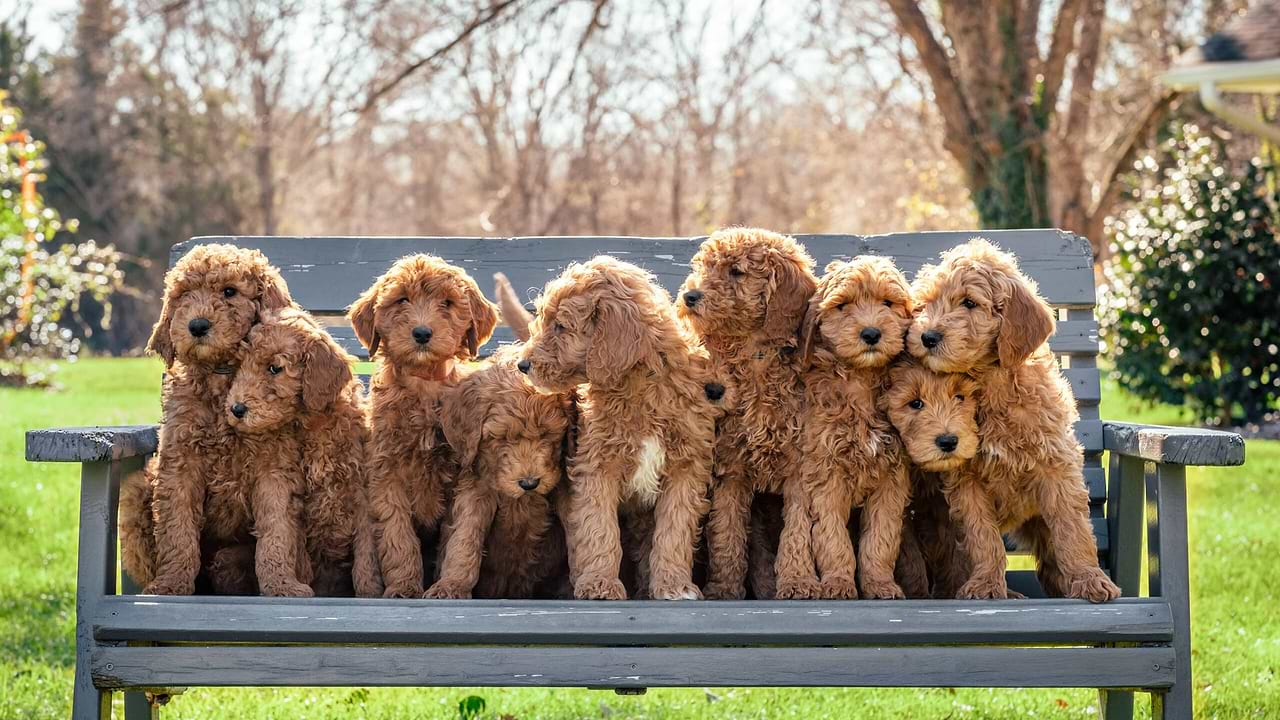
Goldendoodles are known not just for their affectionate nature and playful charm but also for their beautiful range of coat colors. Whether you’re looking for a deep red Goldendoodle or a soft, creamy hue, there’s a perfect shade for every home and personality. Some coats shimmer like chocolate, others glow like apricots, and a few even show off rare patterns like merle or phantom.
But did you know that color can also influence how a Goldendoodle’s coat fades over time, or how much grooming it might need? While color doesn’t affect temperament, it can shape the overall look and maintenance of your dog.
In this comprehensive guide, we’ll break down the most popular Goldendoodle colors, the rarest ones, and even emerging color trends. Whether you’re exploring for fun or choosing your future puppy, this article will give you breeder-level insight to help you feel confident in your decision.
Understanding Goldendoodle Coat Genetics
Goldendoodles are a cross between two well-known breeds: the Golden Retriever and the Poodle. Both parent breeds bring unique coat characteristics to the mix especially when it comes to color.
The Golden Retriever typically passes down warm, solid tones like golden, cream, and red. On the other hand, Poodles come in a wider variety of shades and patterns, including black, silver, chocolate, apricot, white, merle, and phantom. When combined, the genetic possibilities expand dramatically.
Here’s what happens:
- If both parents carry solid genes, the puppies will likely have a uniform coat.
- If one parent carries the parti gene (which causes white spotting), you may see pups with distinct markings.
- If the merle gene is present in the Poodle line, unique marbled patterns can appear.
Coat color is also influenced by recessive and dominant genes. This is why, in the same litter, you may see a red puppy, a cream one, and even a tuxedo-patterned pup. It’s one of the magical aspects of breeding Goldendoodles; their variety is unpredictable and delightful.
How Generations Affect Coat Color
Understanding Goldendoodle generations helps explain how certain coat colors and patterns appear or disappear. The generation of your Goldendoodle plays a key role in which parent breed’s traits are more dominant, including coat texture, shedding, and yes color.
Here’s a quick guide:
- F1 (First Generation): 50% Golden Retriever and 50% Poodle
- Coat color is less predictable. You may see classic golden shades, or more poodle-inspired patterns like apricot or black.
- These Goldendoodles often have more genetic variety in coat color.
- F1B (Backcross Generation): 75% Poodle, 25% Golden Retriever
- Usually results in curlier, more hypoallergenic coats with greater coat consistency.
- Phantom, parti, and merle patterns may be more common due to Poodle coat genetics.
- F2 and Multigenerational (F2B, F3, etc.): Crosses of Goldendoodles to Goldendoodles
- These often offer more predictability in coat and color.
- Breeders may refine specific traits like aiming for deep reds or reducing fading in creams.
So, if you’re looking for a certain color (or trying to avoid fading), your Goldendoodle’s generation is an important factor to discuss with the breeder.
Popular Goldendoodle Colors (Most Requested by Families)
These are the colors families request the most when applying for a puppy. They’re camera-friendly, clean-looking, and full of charm. Most importantly, they stand the test of time whether your pup is lounging on the couch or playing in the yard.
Red Goldendoodle

Red Goldendoodles have a rich, fiery coat that stands out wherever they go. The shade ranges from deep cherry to copper. It’s one of the most sought-after colors, partly because of how striking it looks in photos.
Some red coats may lighten slightly over time, especially in F1B or multigen Goldendoodles. But many hold onto their bold hue well into adulthood. Red Goldendoodles are often associated with energy, warmth, and fun-loving personalities.
Apricot Goldendoodle

Apricot coats are soft, peachy, and warm-toned. They’re slightly lighter than red, but still rich in warmth. Families love apricot Goldendoodles because their coat seems to “glow” in the sun.
Apricot is also one of the most common colors to fade, especially in Poodle-heavy generations. Many apricot pups may grow into a creamy, pale tone as they mature but they remain gorgeous.
Caramel Goldendoodle

Caramel is a golden-beige color that sits between apricot and cream. It’s warm and comforting without being too light. This color often holds its richness better than apricot and is a favorite for families who want something bright but less prone to fading.
Caramel Goldendoodles often look like soft teddy bears with an inviting, cozy appearance.
English Cream (Cream) Goldendoodle

Cream or “English Cream” Goldendoodles have soft ivory or off-white coats. They often come from English Golden Retriever lines and are known for their calm and gentle appearance.
These dogs can look almost white in certain lighting but have subtle yellow or tan undertones. Cream coats are elegant and clean, though they may require more grooming to stay bright.
Chocolate Goldendoodle
Chocolate Goldendoodles are a fan favorite. Their coat resembles milk chocolate or dark cocoa and adds a rich, earthy tone to their appearance. Chocolate can vary in depth some coats are deep and dark, while others have warm, mocha undertones.
This color is eye-catching and timeless. However, chocolate coats may lighten as the dog ages, sometimes fading to a latte or taupe tone.
Common Goldendoodle Colors (Frequently Seen in Litters)
These colors aren’t rare, but they’re still beautiful, unique, and often found in Crockett Doodles litters. Many of them pair well with white markings or create bi-color combinations that are loved by families.
White Goldendoodle
White Goldendoodles have bright, snow-like coats. They may be solid white or have slight cream shading on their ears or back.
While stunning, white coats may show dirt or tear stains more easily. But with regular grooming, they look fresh, clean, and elegant like a walking cloud.
Tan Goldendoodle
Tan coats are soft and subtle. This color feels warm and gentle, like a classic teddy bear. Some tan Goldendoodles have white chest spots or lighter paws, adding to their charm.
It’s a lovely neutral color that fits well into any home or lifestyle.
Black Goldendoodle

Black Goldendoodles have sleek, shiny coats that often resemble velvet. While they may not photograph as brightly as red or cream, they’re easy to keep looking clean and polished.
This color is less likely to fade and is great for families who want a bold, low-maintenance coat.
Parti Goldendoodle
“Parti” means the dog’s coat is at least 50% white with bold patches of another color like red, black, or chocolate. Each Parti Goldendoodle is one of a kind.
The playful patterns make them highly photogenic and eye-catching. They’re ideal for families who want a unique look.
Tuxedo Goldendoodle
Tuxedo coats feature a solid base color (often black, red, or chocolate) with white markings on the chest, paws, and sometimes the nose or forehead.
They look like they’re dressed for a formal event hence the name. The pattern is striking but balanced, giving these dogs a neat, classy vibe.
Rare Goldendoodle Colors (Unique and Eye-Catching)
These colors are harder to produce, more genetically complex, or simply uncommon in litters. Families who request these shades often join waitlists because they’re so rare and unforgettable.
Red Merle Goldendoodle
This is a beautiful swirl of red, cream, and peach tones. The merle pattern creates a marbled effect, making each dog look like a piece of artwork.
Red merle Goldendoodles may also have light eyes like blue or hazel which adds even more uniqueness. This color comes from the merle gene and is not seen in every generation.
Chocolate Merle Goldendoodle
A mix of chocolate, beige, and cream in a dappled, spotted coat. Chocolate merle coats look soft and artistic, with swirls that catch the light.
Because merle is a dominant gene, breeders need to be cautious when pairing it. Responsible breeding ensures the puppies are healthy and the color appears safely.
Blue Merle Goldendoodle
This striking pattern blends black, gray, and white. Despite the name, “blue” refers to the gray-silver base tone.
Blue merle Goldendoodles often stop people in their tracks. They’re among the rarest of all Goldendoodle coat types and may come with blue or mixed-colored eyes.
Phantom Goldendoodle
Phantom Goldendoodles have two colors, usually black with tan or gold “points.” These points appear above the eyes, on the muzzle, chest, and lower legs.
The placement of the colors is what defines the phantom pattern. It’s highly sought after and more commonly seen in Poodle-heavy generations (like F1B).
Tri-Color Phantom Goldendoodle
This variation features three distinct colors typically black, tan, and white placed in very specific patterns.
The tri-color phantom is both rare and elegant. It gives the Goldendoodle a look similar to certain working breeds, with high contrast and expressive features.
Uncommon Color Variants (Occasional but Not Frequent)
These colors aren’t considered rare, but they don’t appear in every litter either. They add variety and visual interest to the breed, especially when paired with certain markings.
Chocolate Tuxedo Goldendoodle
This is a chocolate base coat with white markings on the chest, and sometimes on the toes or chin. It’s a blend of two classic traits: the richness of chocolate and the symmetry of a tuxedo pattern.
They’re eye-catching without being flashy, perfect for families who want something distinctive but not too bold.
Red/White Tuxedo Goldendoodle
A red base with white on the chest and paws, often shaped like a bowtie or bib.
This coat is visually charming and makes puppies look “dressed up.” It’s a hit in photos and always gets compliments.
Red/White Parti Goldendoodle
White-coated with large red patches across the body. Parti-colored dogs are often 50% or more white.
This pattern is fun, irregular, and makes every puppy unique. No two red/white parti Goldendoodles are exactly the same.
Tan with White Markings
This is a warm tan coat with soft white patches on the chest, toes, or forehead. It’s not as high contrast as a parti coat but still gives a unique appearance.
It’s an easy-to-maintain coat that looks soft and natural, ideal for families who want something subtle but not plain.
Unconfirmed or Emerging Goldendoodle Colors
These colors are rare, debated, or just beginning to emerge through selective breeding. While not always officially recognized, they offer exciting possibilities for the future of the breed and your SEO reach.
Silver Goldendoodle
Silver coats usually start black and slowly fade to a cool gray-silver as the puppy grows. This change can take up to a year or more.
Silver is a recessive color mostly inherited from the Poodle side and can be hard to spot early in life.
Lavender / Lilac Goldendoodle
An extremely rare color, lavender coats have a soft gray-purple tone. They come from combining specific recessive genes often with dilution factors.
Most breeders rarely see this color, but it is gaining interest as genetics continue to diversify.
Brindle Goldendoodle
Brindle is a striped pattern across the coat, like tiger markings. The stripes can be black, brown, or gray over a lighter base.
This is highly unusual in Goldendoodles and may come from ancestral lines. While not common, brindle Goldendoodles do exist.
Café au Lait Goldendoodle
This French-inspired name means “coffee with milk,” and that’s exactly what the coat looks like: a creamy light brown with soft gray undertones.
It’s sometimes confused with faded chocolate or light caramel but has a more subtle, dusty tone.
Champagne / Platinum Goldendoodle
These coats appear pale cream or off-white with a metallic shimmer in certain light. Some dogs shine like platinum blondes.
They’re elegant, light-reflective, and especially appealing to families who want something very soft and rare.
Mahogany Goldendoodle
Mahogany is a deep reddish-brown tone, darker than red but warmer than chocolate. It’s uncommon and bold, giving a dramatic look that’s full of richness.
This coat may appear in deeper lines of red or chocolate but is not often seen in multigenerational pairings.
Do Goldendoodle Puppies Change Color as They Grow?
Yes, many Goldendoodles change color as they age, sometimes quite dramatically. This is completely normal and expected, especially in puppies with strong Poodle genetics.
The reason for this change is a natural part of their DNA. Poodles carry something called the “fading gene.” When passed on to Goldendoodles, it can cause rich colors like red, chocolate, or black to lighten over time.
When does fading start?
- Most fading begins between 6 and 12 months of age.
- Some puppies may continue to change color until they are 2 years old.
- Common shifts include:
- Red to apricot
- Chocolate to latte or taupe
- Black to silver or charcoal
This transformation can surprise new dog owners but many find it fun to watch their pup evolve. It’s important to understand that fading is natural and doesn’t mean the coat is unhealthy.
If you’re hoping to keep a specific color for life, your breeder may suggest selecting a puppy from a line known for color retention or lower fading risk.
Color vs. Temperament: Is There a Connection?
This is one of the most common questions families ask: “Does coat color affect personality?”
The short answer? No.
Coat color is strictly about appearance, and it has no impact on your puppy’s behavior, intelligence, or energy level.
What actually shapes temperament?
- Genetics: The personalities of the parent dogs matter far more than their color. Calm parents often produce calm puppies.
- Environment: How a puppy is raised early socialization, exposure, and training has a huge influence.
- Routine and relationship: Dogs thrive on connection and consistency. The more you engage, the better they respond.
Common myths (but not facts):
- “Black dogs are more protective.”
- “Red dogs are hyper.”
- “Cream dogs are shy.”
These are just myths, with no scientific basis. We’ve raised red puppies that are calm, and black ones that are goofy and cuddly. Color has nothing to do with behavior.
Instead, we always advise families to choose based on temperament and lifestyle fit, not just looks. A red puppy who’s a perfect match for your family will always be more joyful than picking the wrong energy level in your favorite color.
Grooming Tips Based on Coat Color
While grooming needs are more influenced by coat type (wavy, curly, or straight), coat color can still play a small role especially in how often your dog needs cleaning or how easily dirt shows up.
Light-Colored Goldendoodles
Colors like cream, white, apricot, and champagne can look stunning but they often show dirt, food stains, or tear stains more easily.
Tips:
- Wipe the face daily, especially around the eyes and mouth.
- Use a tear stain remover for light coats if needed.
- Keep paws clean to prevent grass or mud stains from setting in.
Dark-Colored Goldendoodles
Black, chocolate, and mahogany Goldendoodles don’t show dirt as easily, which many families find convenient.
However:
- Mats and tangles can be harder to see on darker coats.
- Regular brushing is just as important as with lighter-colored dogs.
- Use a slicker brush to get deep into darker curls or waves.
Merle, Parti, and Phantom Coats
Multi-colored coats can have areas that tangle differently. Also, white patches on a parti or tuxedo Goldendoodle may show dirt faster than the darker sections.
Tips:
- Brush thoroughly to manage all coat textures.
- Pay extra attention to grooming around transitions between dark and light areas.
General Grooming Routine for All Colors
- Brush 3–4 times per week to prevent mats.
- Bathe every 4–6 weeks with a gentle dog shampoo.
- Trim around the eyes and sanitary areas as needed.
- Schedule professional grooming every 6–8 weeks for long-lasting coat health.
Choosing the Right Goldendoodle Color for Your Lifestyle
Every Goldendoodle color is beautiful but the best one for you might depend on your family’s habits, environment, and preferences.
Do You Have Small Kids or an Active Home?
- Darker coats (black, chocolate, red) are easier to maintain when it comes to smudges, grass stains, or food marks.
- If you prefer a light dog, be ready for a little extra cleaning.
Do You Want a Low-Maintenance Appearance?
- Cream and white coats are stunning but may need more frequent face and paw cleaning.
- Red and apricot look rich but may fade slightly over time.
Do You Have Allergies?
- Allergies are not linked to coat color, but rather to dander and coat type.
- Focus on curlier coats (often in F1B or Multigen pups) for reduced shedding.
Do You Want a Unique Look?
- Merles, phantoms, and parti coats are more uncommon and offer one-of-a-kind markings.
- Keep in mind that rarer colors may come with longer waitlists.
Our Best Advice:
Pick a color you love but prioritize personality, energy level, and family fit. The right temperament will always outshine the right coat shade.
Goldendoodle Color Chart with Attributes
Here’s a quick comparison chart to help you understand the trade-offs between colors. These are not hard rules, but general insights based on our years of experience at Crockett Doodles.
| Color Name | Rarity | Fading Risk | Grooming Difficulty | Coat Pattern Type |
|---|---|---|---|---|
| Red | Common | Medium | Medium | Solid or tuxedo |
| Apricot | Common | High | Medium | Solid or white markings |
| Chocolate | Common | Medium | Low to Medium | Solid, tuxedo, or parti |
| Cream | Common | Low | High | Solid |
| Caramel | Common | Medium | Low | Solid or parti |
| White | Common | Low | High | Solid |
| Black | Common | Low | Low | Solid or phantom |
| Parti | Uncommon | Low | Medium | 50/50 white + patches |
| Tuxedo | Uncommon | Low | Medium | Solid base + white chest |
| Red Merle | Rare | Low | Medium | Swirled / marbled |
| Chocolate Merle | Rare | Low | Medium | Swirled / marbled |
| Blue Merle | Very Rare | Low | Medium | Swirled / marbled |
| Phantom | Rare | Low | Medium | Marked points |
| Tri-Phantom | Very Rare | Low | Medium | Tricolor point pattern |
| Silver | Very Rare | High | Medium | Faded from black |
| Lavender | Extremely Rare | High | Medium | Diluted tone |
| Champagne | Uncommon | Low | Medium | Light, sometimes shimmery |
Personal Breeder Insights from Crockett Doodles
We’ve helped place thousands of puppies into loving homes and we’ve seen firsthand how color plays into the experience. Here are a few stories and lessons we love to share.
Most Requested Colors
Red and apricot are always in high demand. Families love how vibrant and photogenic these coats are.
Chocolate, cream, and parti coats are also consistently popular due to their unique and cuddly looks.
The Color That Surprised Us
We once had a black and tan phantom Goldendoodle that turned heads every time we posted a photo. The markings were so expressive it looked like the puppy was smiling!
That dog had more applications than any puppy we’ve ever posted.
When Puppies Change Color
One family chose a dark chocolate puppy. By 10 months, the coat had faded into a soft café au lait. They emailed us photos every few months, amazed at the transformation and they still loved their doodle just as much.
Our Advice to Families
We always tell future owners: choose your puppy based on temperament first, color second.
But we get it color can still be part of the excitement. That’s why we make every effort to help families find a coat that they love, from day one and through every stage of growth.
Frequently Asked Questions (FAQs)
What is the rarest Goldendoodle color?
Some of the rarest include blue merle, phantom tri-color, and lavender. These colors may require special genetics and only show up occasionally.
Do Goldendoodles change color over time?
Yes, many do, especially colors like red, chocolate, and black. This is due to the Poodle’s fading gene.
Are certain Goldendoodle colors easier to groom?
Darker coats tend to hide dirt better. Light coats look clean but may show stains more. Grooming also depends on curl type, not just color.
Which Goldendoodle color is best for families with young children?
Any color works! But black, chocolate, or red coats tend to be lower maintenance in active homes with kids.
Can I request a specific color when reserving a puppy?
Yes. At Crockett Doodles, families can request preferred colors or be added to a waitlist. Availability depends on upcoming litters and genetics.
Conclusion
Goldendoodle colors are more than just shades; they’re stories in the making. Whether your heart is set on a bold red, a creamy white, a rare merle, or a classic chocolate, there’s a doodle out there that fits your family.
But remember: what matters most isn’t the coat, it’s the connection. The joy, loyalty, and love your Goldendoodle brings will outshine any shade of fur. We’re here to help you find that perfect match one paw print at a time. Check our available Goldendoodle Puppies for Sale.
Colors of Goldendoodle, Goldendoodle Colors, Popular Goldendoodle Colors


