Goldendoodle Exercise Needs: How Much? Daily Routine Guide

Your Goldendoodle Has a Sharp Mind
It also never seems to run out of steam! The bouncy personality of the Goldendoodle is quite charming, but it can also feel like a lot if you are not ready for it. Understanding their energy level and planning the right Goldendoodle exercise is the first step to raising a pet that is relaxed and content.
Many owners ask the same question early on. How much exercise does a Goldendoodle need each day to stay healthy and well-behaved? The answer is not just about walks. These dogs need both body and brain work.
This blog maps out every part of a real daily routine that works for most homes. It covers walks, play, and simple games you can do inside. It also explains why rest matters just as much as activity.
You will find that a well-exercised dog is a joy to live with because they spend their indoor time napping instead of looking for trouble.
How Much Exercise Does a Goldendoodle Need?
Most adult dogs do best with about one to one and a half hours of activity each day. This is the core of healthy Goldendoodle exercise needs. It sounds like a lot at first, but it becomes part of your routine quickly.
Their energy comes from both sides of the family. Poodles are sharp and active. Golden Retrievers are playful and driven. When you combine the two, you get a dog that needs steady movement to feel their absolute best every day.
Why Routine Matters
It helps to split exercise into two or three smaller sessions. A walk in the morning, a play session in the afternoon, and a shorter walk at night works well for many homes. This keeps your dog from overexerting themselves during a single long session.
Consistency also matters more than people expect. Dogs like knowing what comes next. When exercise happens at the same time each day, it helps reduce stress. You might find that your dog finally learns to settle down on their bed instead of constantly nudging you for more play.
Signs That Your Goldendoodle Needs More Exercise
Behavior Changes at Home
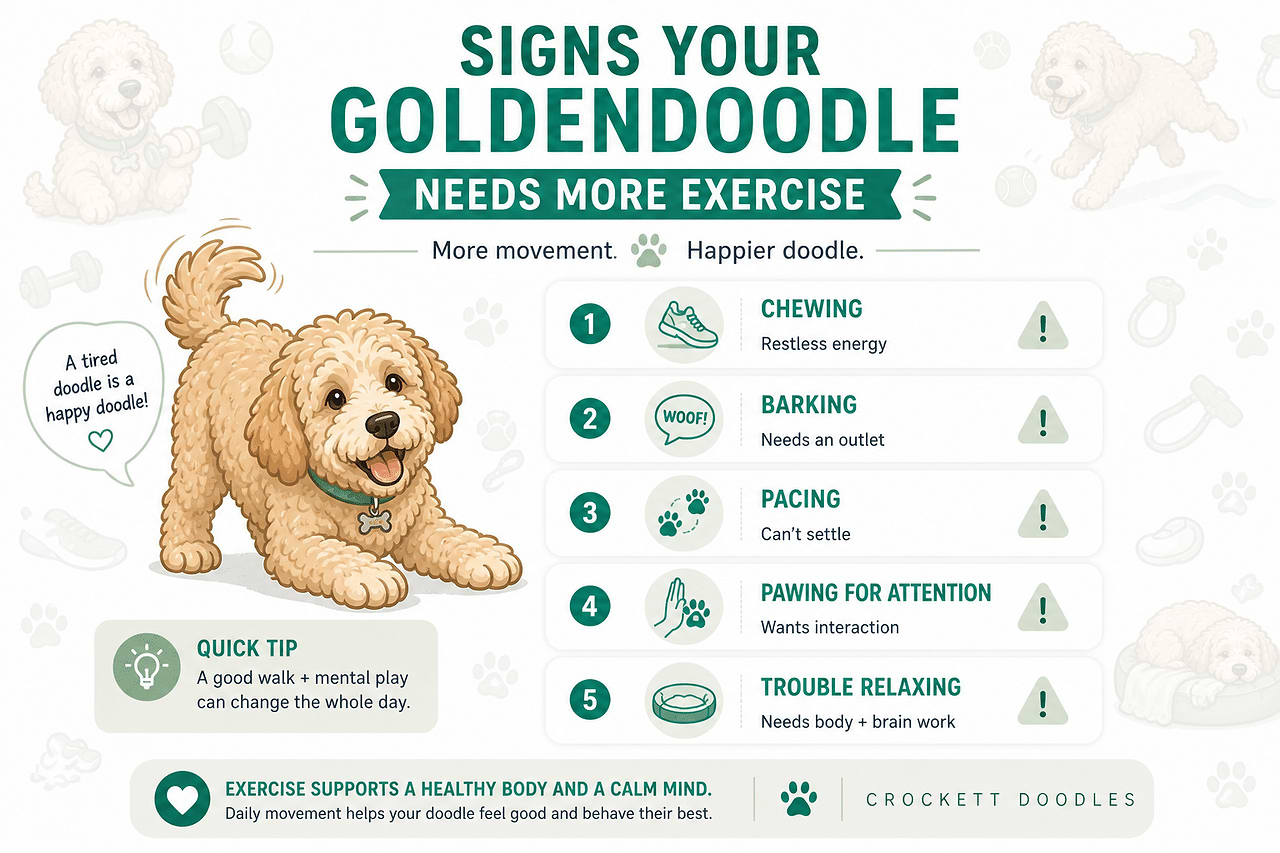
When a dog does not get enough activity, their frustration often comes out in ways that are hard to miss. Shoes, or even furniture, may become objects they use to soothe their restless energy. Some dogs start barking more than usual. Others walk around the house and cannot seem to relax.
Attention Seeking Habits
Another sign is constant attention seeking. Your dog may paw at you or grab random items just to get a reaction. Most owners find it difficult to manage these behaviors when they are already feeling tired or stressed.
In our practice, we see this often with young Doodles. Once their daily movement improves, these behaviors usually give way to a much more relaxed personality. We often say that what looks like a “bad” dog is actually just a dog that needs a job to do.
How Many Walks Does a Goldendoodle Need a Day?
Most owners find that two or three walks a day works best. If you have been unsure how many walks a Goldendoodle needs a day, this simple routine works well for most dogs.
A morning walk helps burn off energy from the night. Your dog wakes up ready to move, and this walk sets the tone for the day.
Making Walks More Engaging
An evening walk helps your dog wind down. It gives them time to sniff and relax before bed. Try to change your route now and then. New smells and sights keep your dog interested.
Where to Walk My Goldendoodle if We Live in the City?
Even if you live in the city, you can still meet your Goldendoodle’s exercise needs.
Parks (especially those with wide paths) give your dog the space to move and explore safely. These spaces also give you a chance to work on those loose-leash walking skills.
Find a few quiet streets in your neighborhood and walk there early in the morning. Less traffic means less stress, which makes the walk more enjoyable for your doggie.
Adding Variety
Greenways and trails are great if there are some nearby. With fewer stops along the way, your dog can enjoy a nonstop walk.
Dog parks can work too, but only if your dog has good manners and comes when called. A busy park is not the best place for a dog still learning.
Goldendoodle Puppy Exercise Requirements
Puppies need much less exercise compared to full-grown Goldendoodles. Their bodies are still growing, and too much activity too soon can cause problems later.
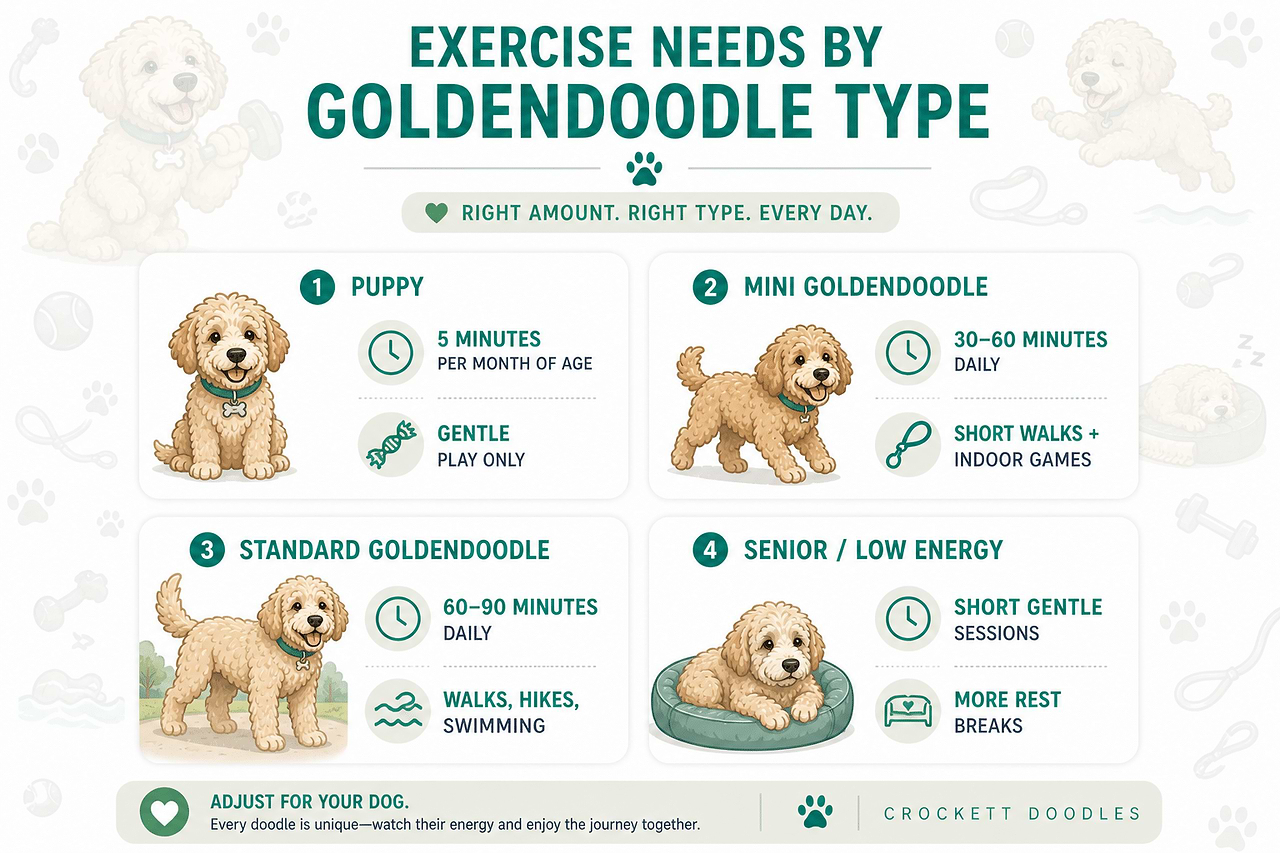
A simple guide is the five-minute rule. For each month of age, allow five minutes of structured walking. A three-month-old puppy, therefore, can handle about fifteen minutes at a time.
Focus on Play and Learning
Controlled, short activities are more appropriate than long walks at this stage. Gentle games, light training, and social time help your puppy learn without overdoing it. Since their bodies are still developing, it is important to keep play soft and avoid anything too rough or high-impact.
Signs That Your Puppy is Getting Too Much Exercise
Physical Warning Signs
It is often hard to tell when a young dog has done too much, as the signs are not always obvious. Limping or stiffness after play is one of the clearest signals. When a puppy slows down or pants a lot, it is time to head home and let them rest their growing body.
Mood and Behavior Changes
Some puppies become cranky when overtired. They may snap, show a sensitivity to being handled, or display signs of general physical discomfort. In our practice, we find that “bad” puppy behavior is frequently just a result of being overtired and overstimulated.
The Exercise Needs for Different Goldendoodle Life Stages and Sizes
| Goldendoodle Type | Daily Exercise Duration | Best Activity Types | Key Considerations |
|---|---|---|---|
| Goldendoodle Puppy | 5 mins per month of age (twice daily) | Short walks, gentle play, socialization | Protect growing joints; avoid high-impact jumping. |
| Mini Goldendoodle | 30–60 minutes | Brisk walks, indoor fetch, zoomies | High energy in a small package; needs frequent bursts. |
| Standard Goldendoodle | 60–90 minutes | Hiking, jogging, swimming, long walks | Built for endurance; requires space to run and stretch. |
Mini Goldendoodle Exercise Needs puppy
Do not let their tiny size fool you, because these smaller dogs have just as much energy as the big ones. They are not just lap dogs. Many have a playful and lively nature that needs daily outlets. They often get bursts of energy that show up as zoomies. These short, fast runs around the house or yard are normal.
Best Ways to Exercise Minis
Indoor games work well for them. Playing fetch in the house or a tiny yard is a great way to tire them out, and taking several short walks works better than one long one.
The Big Athletes: Standard Goldendoodle Exercise Needs
Built for Endurance
Standard Goldendoodles are strong. These big athletes have a lot of vigor and are happy to stay on the move for an hour or more without getting tired. You can take them jogging or on long hikes. These dogs really enjoy having a “job” to do while they move.
Great Activities for Large Doodles
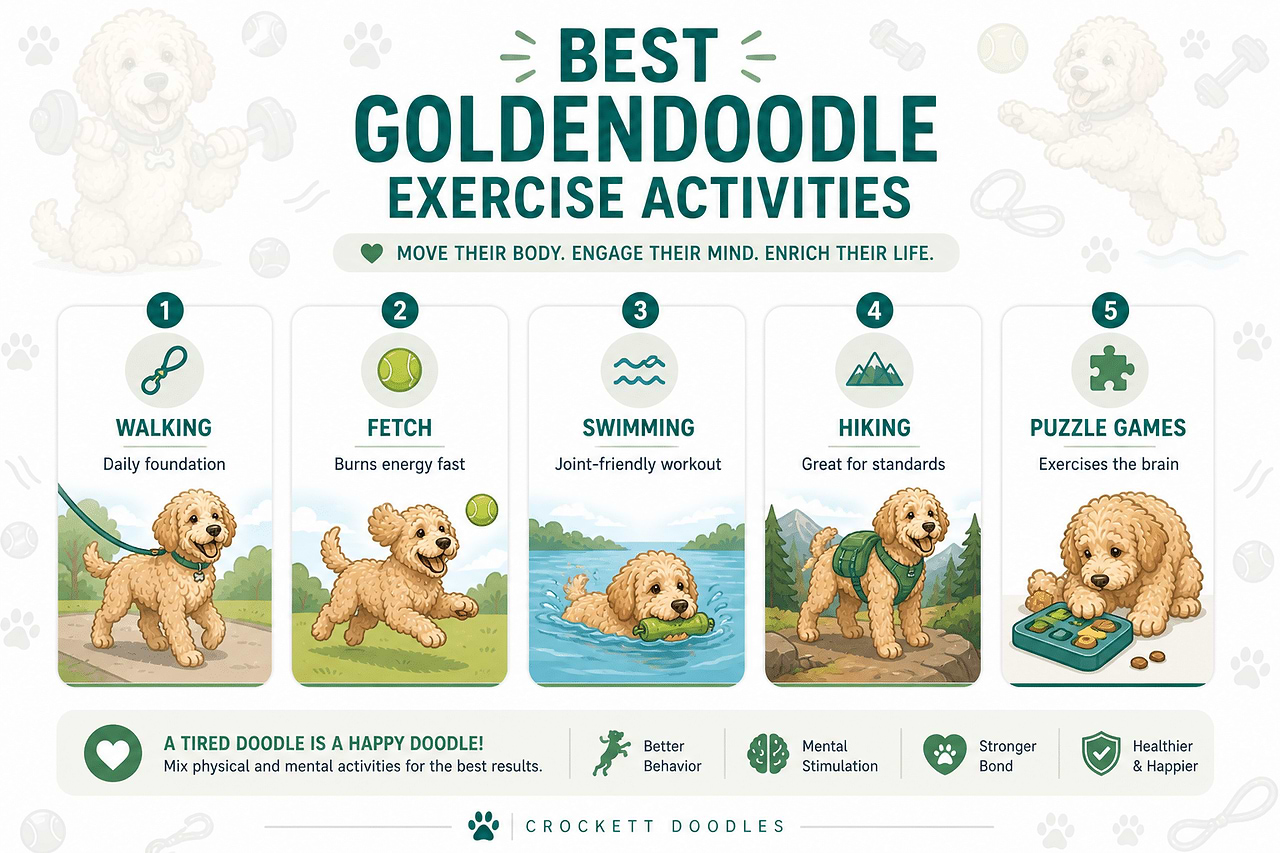
Swimming is one of the best choices. It is easy on the joints and taps into their natural love of retrieving. Many Doodles take to water quickly.
A bored doodle will often bark a lot or won’t be able to sit still because they really need to get outside and run.
Goldendoodle Mental Stimulation Activities
Physical exercise is only part of the picture. These dogs are very clever, so they need to use their brains just as much as their legs to stay happy. Spending a little time each day on training is a great way to tire out a smart dog without leaving the house.
Easy Ways to Add Brain Games
Puzzle feeders and snuffle mats turn meals into a game. Your dog has to think and work to get their food. Watching your dog use their nose to track down a hidden treat is fun for you and a great workout for their brain.
Best Exercise Activities for Goldendoodles
Outdoor Activities
Many Goldendoodles love swimming. It gives them a full-body workout without stress on the joints. Hiking is another great choice, offering both exercise and new smells. Fetch is simple but effective. A short game can burn a lot of energy quickly, especially for these high-energy dogs.
Indoor and Social Options
Agility-style games can challenge both body and mind. Even simple setups at home can work. You might use a broomstick for a low hurdle, a pop-up tunnel from a toy store, or a series of pillows to step over. Tug games also help build strength and create a bond between you and your dog.
Playdates with other dogs give them a chance to run and interact. Social time can be just as tiring as physical exercise.
FAQ
What do I do if my puppy is acting wild even after we have been playing for a long time?
Keep sessions short and structured. Add simple training games to help your puppy focus. Too much rough play can lead to an overtired puppy that nips and struggles to settle.
What if I don’t have a backyard? How do I exercise my standard Goldendoodle?
You can still meet standard Goldendoodle exercise needs without a yard. Use longer walks or planned routes for jogging.
Are standard Goldendoodle exercise needs met by just letting them out in the backyard?
A yard helps, but it is usually not enough on its own. Most dogs need structured activity like walks or games. You will quickly learn that a bored doodle is a creative doodle, and you might not like what they choose to do with their time.
Conclusion
Finding the right routine takes a little time. No two dogs are the same, and what works for one may not work for another. You should be ready to change your plan based on whether your dog is calm after exercise or still looking for things to do.
A tired dog is a good dog, and you will notice they stop acting out once they have had enough to do.
But remember: These daily walks and games are not just for the dog. They are also a special time for both of you to enjoy each other. If you’re prepared to meet their exercise needs, you’re ready for a lifetime of joy, check out our available Goldendoodle puppies now.