Goldendoodle Grooming: Brushing, Mat & Grooming Schedule
Goldendoodles need regular brushing and combing, bathing when appropriate, nail care, ear checks, and professional grooming to keep their coats clean, comfortable, and free of painful mats. How often a Goldendoodle needs grooming depends on coat type, coat length, density, activity, lifestyle, and how much maintenance you can consistently do at home.
A fluffy Goldendoodle coat can hide tangles close to the skin. Tight mats may pull on the skin, trap moisture, conceal irritation, and make normal movement uncomfortable. Goldendoodle grooming is therefore an animal-welfare responsibility, not simply a way to keep a dog looking neat.
First-time owners do not need professional grooming skills. Learning how to brush through the full coat, checking common matting areas, and following a realistic routine can prevent many problems before they become difficult or painful.
How Often Should You Brush a Goldendoodle?
Most Goldendoodles need brushing several times each week, while longer or curlier coats may need daily or near-daily attention. The right frequency depends more on the individual coat than on the Goldendoodle label alone.
Crockett Doodles identifies three broad Doodle coat types:
- Straight
- Wavy
- Curly
More than one coat type can appear within the same litter. A curlier coat may release less visible loose hair around the home, but it can also trap that hair within the coat and require more brushing and combing to prevent mats.
The Crockett Doodles coat types guide explains straight, wavy, and curly coats in more detail. For grooming, the practical rule is simple: the longer, denser, or curlier the coat becomes, the more carefully it usually needs to be maintained.
No Goldendoodle coat type is maintenance-free.
Why Do Goldendoodles Mat So Easily?
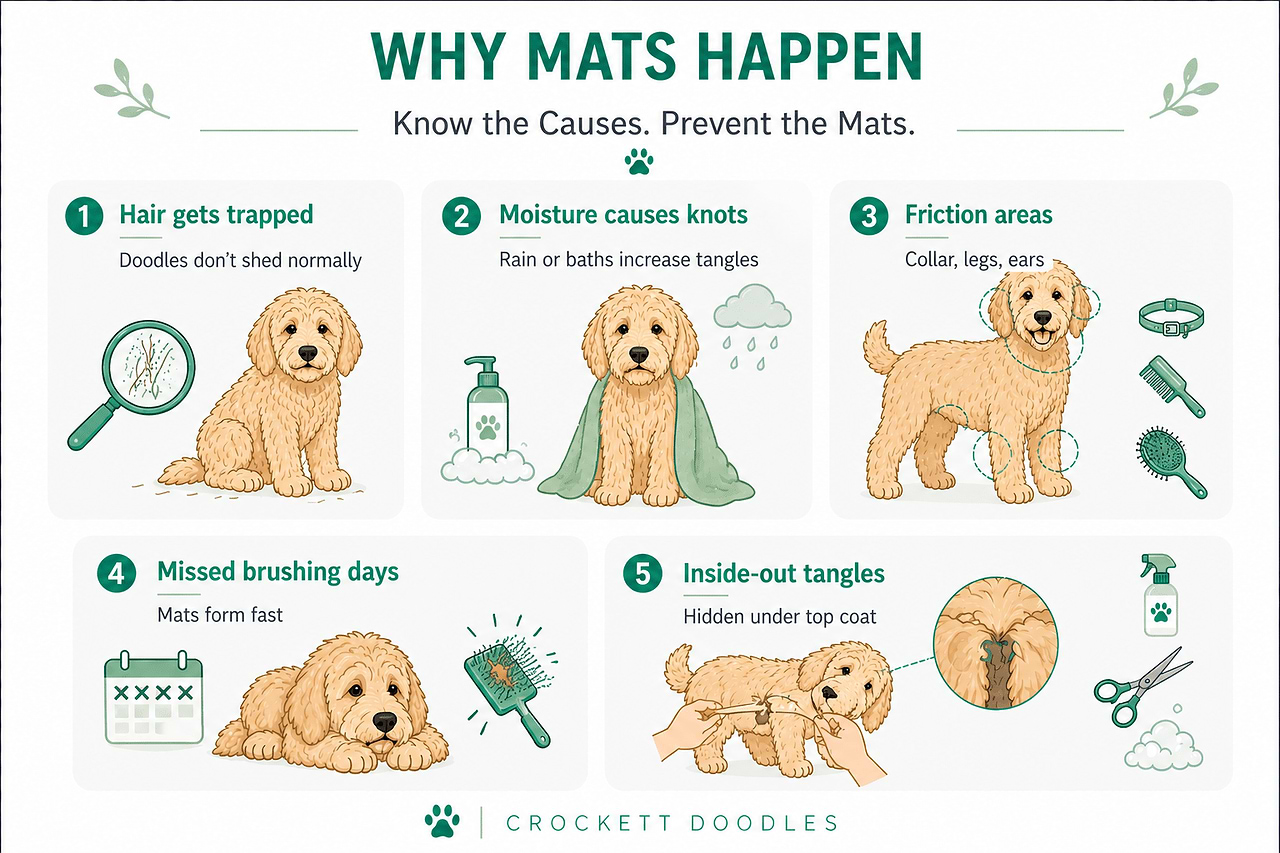
Goldendoodles can develop mats when loose hair, moisture, friction, coat length, and density cause individual hairs to twist and bind together.
Some Goldendoodles shed more visibly than others. In lower-shedding coats, loose hairs may remain caught within the surrounding coat instead of falling onto the floor. Those hairs can tangle, especially when brushing only smooths the fluffy surface.
VCA Animal Hospitals’ dog grooming guidance notes that long and curly coats often require frequent brushing to prevent tangles and mats, especially around areas such as the ears, armpits, and backs of the legs.
Water can also make existing tangles harder to remove. Brush and comb manageable knots before bathing whenever possible.
Where Do Goldendoodles Mat Most?
Pay extra attention to high-friction and hard-to-see areas:
- Behind and underneath the ears
- Beneath the collar
- Under harness straps
- Armpits
- Inside and behind the legs
- Belly and groin
- Beard and chin
- Tail and tail base
- Feet and heavily coated areas around the toes
Do not judge the coat only by how it looks. A Goldendoodle can appear fluffy and smooth on top while tight tangles are developing close to the skin.
What Grooming Tools Does a Goldendoodle Need?
A slicker brush and metal grooming comb are two of the most useful tools for routine Goldendoodle coat care. The brush helps remove loose hair and developing tangles, while the comb checks whether you have actually reached through the coat.
A practical home kit may include:
- Slicker brush: Useful for loose hair and developing tangles, particularly in wavy and curly coats.
- Metal grooming comb: Helps identify tangles that remain underneath the brushed surface.
- Dog-safe detangling or conditioning spray: May make some coats easier to work through without excessive pulling.
- Stable, non-slip grooming surface: Provides safer footing while you brush or inspect the dog.
- Nail clippers or grinder: Used for routine nail maintenance when you are comfortable doing it safely.
Different coats may respond better to different tools. Use brushes and combs gently rather than repeatedly pulling through resistance.
Families preparing for a puppy can review the Crockett Doodles Puppy Shopping List for grooming tools and other supplies. You do not need to purchase every item listed to provide good coat care.
How to Brush a Goldendoodle Correctly
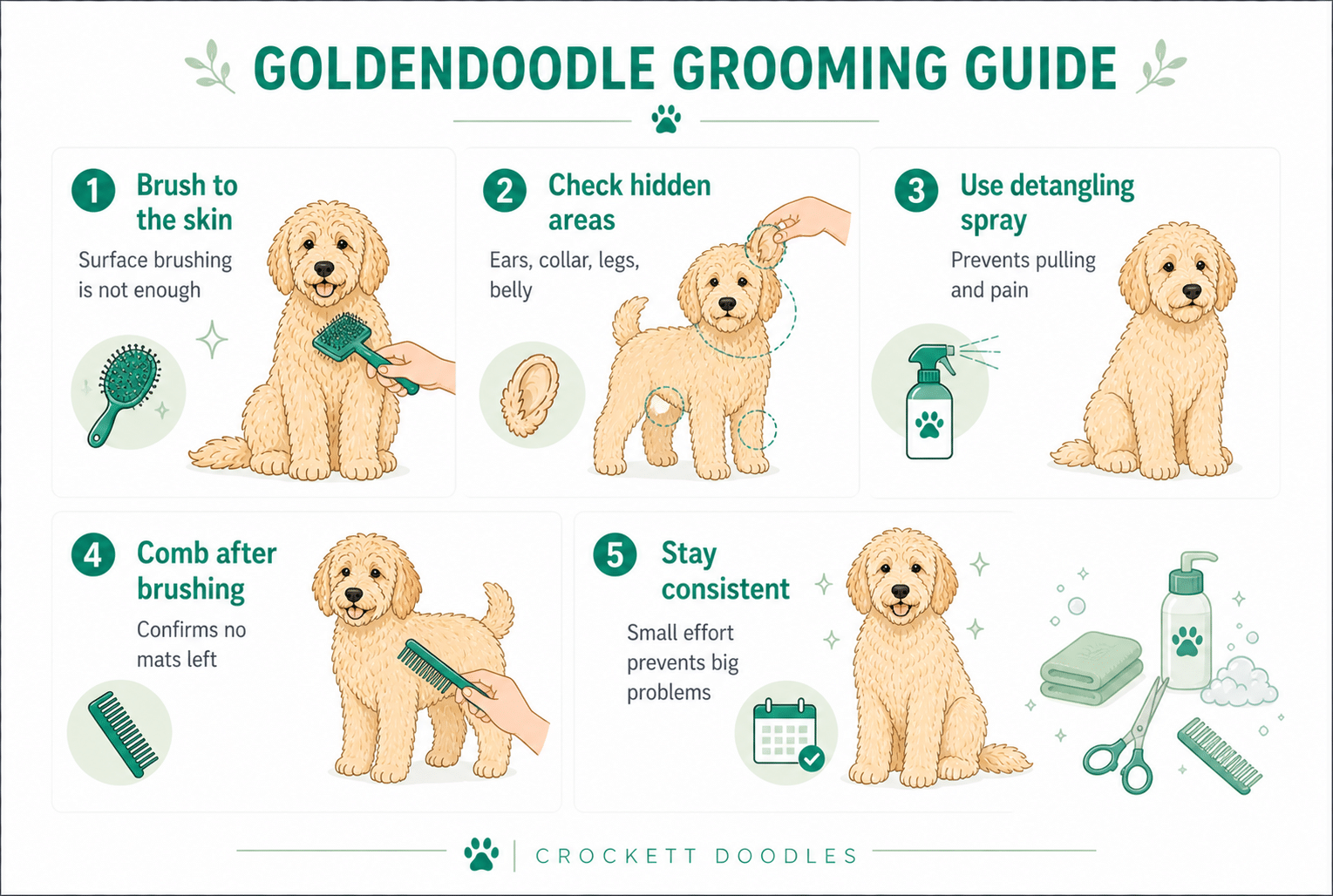
The key to brushing a Goldendoodle is working through the full coat in small sections and checking each finished area with a metal comb. Brushing only the surface can leave mats underneath.
How to Line Brush a Goldendoodle
Line brushing means working through the coat one small layer at a time so the brush reaches the hair close to the skin.
- Place your Goldendoodle comfortably on a stable, non-slip surface.
- Separate a small section of hair so you can see toward the skin.
- Brush gently from near the skin toward the ends of the hair.
- Move across the body one small section at a time.
- Spend extra time behind the ears, beneath the collar or harness, in the armpits, around the legs, and near the tail.
- Follow each brushed area with a metal comb.
- If the comb catches, return to that small section instead of pulling through the resistance.
Never repeatedly force a brush or comb through a tight mat. Grooming should not require painful pulling.
How Can You Tell if a Goldendoodle Is Tangle-Free?
A metal comb should pass through the coat from near the skin to the ends without repeatedly catching.
The comb check is useful because a slicker brush can make the outer coat appear smooth even when tangles remain underneath.
If the comb repeatedly stops in one area, return to that section with the brush. Do not pull the comb through resistance.
What Should You Do if Your Goldendoodle Is Already Matted?
Small, loose tangles may sometimes be worked apart gently, but tight, extensive, or close-to-skin mats are safer for a professional groomer or veterinarian to handle.
Matted hair can pull the dog’s skin upward into the tangled coat. This makes household scissors particularly dangerous because the skin may be much closer to the blades than it appears.
VCA advises using clippers rather than scissors when mats must be cut out and recommends professional care for severe or extensive matting. Skin that is red, sore, swollen, or irritated beneath a mat may also require veterinary treatment.
A shorter haircut may be the safest and most comfortable option when a coat is heavily matted. Preserving a fluffy style should never take priority over the dog’s comfort.
Goldendoodle Grooming Schedule by Coat Type
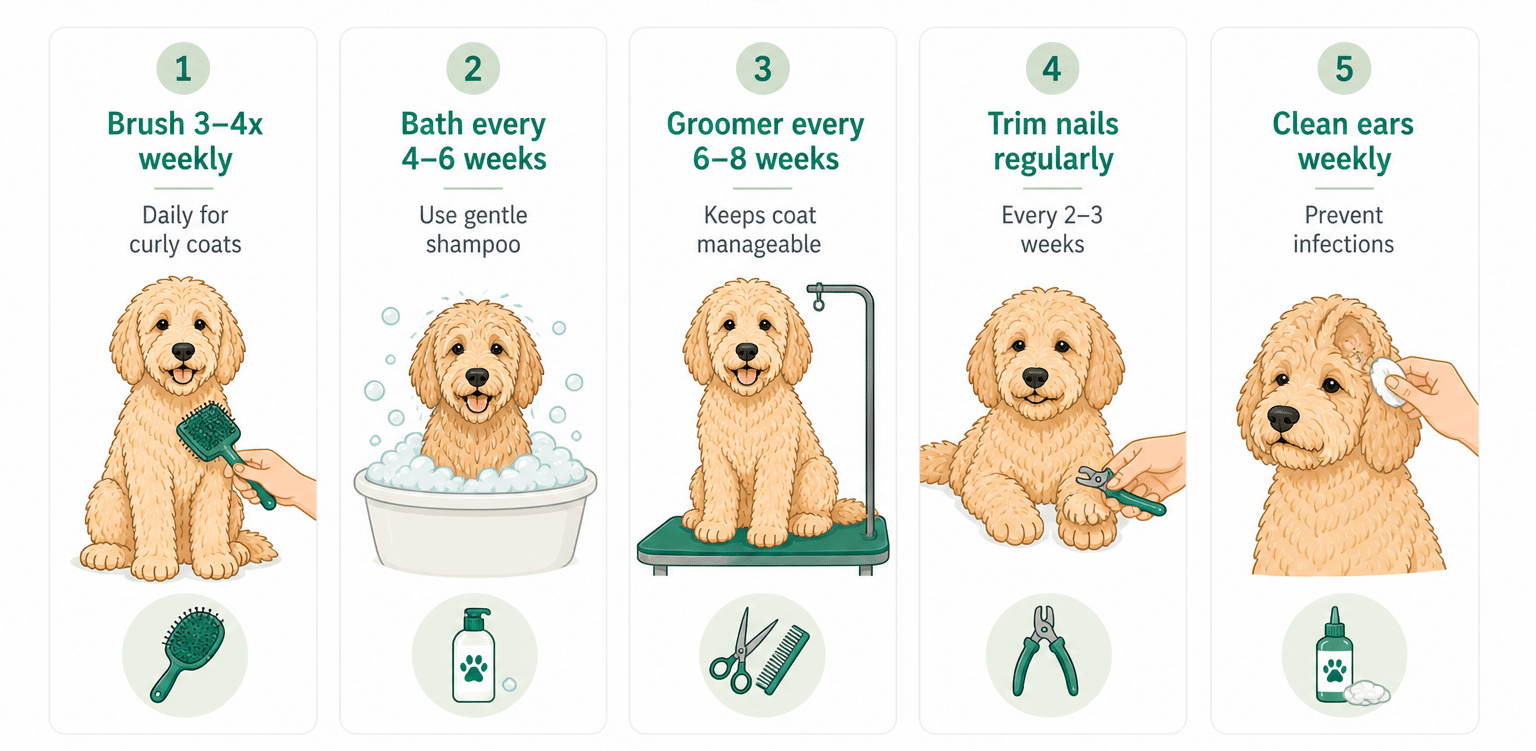
There is no universal Goldendoodle grooming calendar. Use this chart as a starting point, then adjust it for coat length, density, activity, matting tendency, and your groomer’s recommendations.
| Coat Type | Home Brushing | Comb Check | Professional Grooming | Main Concern |
|---|---|---|---|---|
| Curly | Daily or near-daily when kept longer | After brushing | Often about every 4 to 8 weeks | Dense curls can conceal tangles quickly |
| Wavy | Several times per week | After brushing, especially in friction areas | Often about every 6 to 8 weeks | Tangles may develop beneath the fluffy outer coat |
| Straight | About 2 to 3 times per week, adjusted for length and density | Focus on feathering and friction areas | Based on coat length and condition | May release more visible hair but can still mat |
These are starting points rather than rules. Veterinarian reviewed Goldendoodle care guide similarly notes that Goldendoodles commonly need brushing several times each week and may require professional grooming about every four to eight weeks.
A longer, fluffier haircut generally requires more frequent home brushing. Keeping the coat shorter may make maintenance more manageable.
How Often Should You Bathe a Goldendoodle?
Bathe a Goldendoodle when the coat, lifestyle, and skin condition require it rather than following one fixed schedule.
A dog that swims, plays in mud, or regularly gets dirty may need baths more often than a mostly indoor dog whose coat stays clean.
Use shampoo made for dogs. Dogs with allergies, recurrent skin problems, or medicated bathing needs should follow their veterinarian’s recommended products and bathing schedule.
Before the Bath
Brush and comb out manageable tangles first. Wetting an already tangled coat can make knots more difficult to remove.
During the Bath
Work shampoo through the coat gently without aggressively rubbing sections of hair together. Avoid getting shampoo in the eyes and unnecessary water in the ears.
Rinse thoroughly so shampoo does not remain against the skin.
After the Bath
Dry the coat thoroughly. Dense, damp hair can tangle and may hold moisture against the skin.
Brush and comb again as appropriate during or after drying, using the technique recommended by your professional groomer.
How Often Does a Goldendoodle Need Professional Grooming?
Many Goldendoodles benefit from professional grooming approximately every four to eight weeks, but coat length and home maintenance should determine the actual interval.
A short coat that is carefully maintained at home may follow a different schedule from a long, dense curly coat that tangles quickly.
A professional grooming appointment may include:
- Bathing and thorough drying
- Full brushing and combing
- Clipping or trimming
- Face and beard shaping
- Paw and sanitary-area trimming
- Nail care
- Ear-area maintenance when appropriate
- Skin and coat inspection
Do not wait for severe mats before making the next appointment. A predictable schedule is usually more comfortable for the dog and easier to maintain.
Which Goldendoodle Haircut Is Easiest to Maintain?
The easiest Goldendoodle haircut to maintain is usually a shorter style that matches the dog’s coat and the amount of brushing the family can realistically provide.
A longer coat is not automatically better. More length means more hair that can collect debris, retain moisture, and form tangles.
Teddy Bear or Puppy Cut
A teddy bear style generally keeps the body evenly fluffy with a rounded facial appearance. Exact lengths vary between groomers, so bringing a reference photo is often more useful than relying only on the haircut name.
The trade-off is maintenance. A longer teddy bear coat usually needs thorough brushing and combing at home.
Shorter or Kennel-Style Cut
A shorter body clip can make brushing, drying, outdoor cleanup, and mat prevention easier. It may suit active dogs or families who prefer less day-to-day coat maintenance.
A short haircut still requires grooming as the coat grows back.
Poodle-Inspired Styles
Goldendoodles can also wear Poodle-inspired trims. The final appearance depends on coat texture, density, furnishings, body structure, and the groomer’s technique.
For visual examples to show your groomer, see Crockett Doodles’ Doodle haircut and hairstyle guide.
Goldendoodle Ear Care
Check a Goldendoodle’s ears regularly, keep them dry after bathing or swimming, and clean them only as needed using a veterinarian-approved product and technique.
Floppy ears, moisture, allergies, ear-canal anatomy, and other factors can contribute to ear inflammation in some dogs. However, every Goldendoodle does not require the same cleaning schedule.
Watch for:
- Redness
- Strong or unusual odor
- Discharge
- Swelling
- Frequent scratching
- Head shaking
- Pain or sensitivity
These signs may indicate inflammation or infection and deserve veterinary evaluation.
The Merck Veterinary Manual’s dog ear-care guidance advises following veterinary instructions and avoiding cotton swabs that can push debris deeper into the canal.
Ear-hair removal is not automatically necessary for every Goldendoodle. Ask your veterinarian or groomer whether it is appropriate for your dog.
Crockett Doodles also provides a dedicated Doodle ear cleaning guide. When an ear is painful, inflamed, or repeatedly infected, veterinary guidance should take priority over routine home cleaning.
Goldendoodle Nail and Paw Care
Goldendoodle nails should be trimmed often enough that they do not interfere with comfortable walking or become excessively long.
Many dogs need nail care approximately every three to four weeks, although activity, nail growth, and natural wear can change the interval. According to VCA’s nail-trimming guidance, nails touching the ground or regularly clicking on hard floors can indicate that a trim is due.
Remember to check dewclaws because they receive little or no natural wear.
During grooming, inspect the paws for:
- Mats around or between the pads
- Burrs, grass, or other debris
- Cracked or irritated skin
- Damaged nails
- Objects lodged between the toes
- Redness or tenderness
If you are uncomfortable trimming nails or maintaining paw hair safely, ask your groomer or veterinary team to demonstrate the technique.
How to Groom a Goldendoodle Puppy
Start Goldendoodle puppy grooming with short, positive handling sessions before the puppy has enough coat to need an extensive haircut.
Early practice can help a puppy learn that brushing, combing, paw handling, ear checks, drying, and professional grooming are ordinary parts of life.
- Gently handle the puppy’s paws, ears, legs, tail, and face.
- Introduce the brush for only a few seconds at first.
- Reward calm behavior with praise or an appropriate treat.
- Introduce grooming tools and normal sounds gradually.
- Keep early sessions short enough to finish successfully.
- Increase the length of sessions as the puppy becomes comfortable.
Do not force a frightened or struggling puppy through a long grooming session simply to make the puppy “get used to it.” Gradual, positive exposure is more useful.
Crockett Doodles’ puppy training resources and puppy socialization guide can help families build calm handling and other early-life skills.
What Happens When the Puppy Coat Changes?
As a Goldendoodle matures, the soft puppy coat gradually transitions toward the adult coat. The timing and final texture vary between individual dogs.
During this transition, brushing may suddenly take longer and tangles may form more easily as different textures temporarily mix.
Do not assume that an easy puppy coat guarantees equally simple adult grooming.
As the coat changes, ask your groomer whether you should brush more frequently, change tools, shorten the haircut, schedule appointments closer together, or focus more attention on certain matting areas.
The Crockett Doodles Puppy Guide also provides broader preparation and care information for families bringing a puppy home.
Signs Your Goldendoodle Needs Grooming Attention
A Goldendoodle needs additional grooming attention when the comb no longer moves through the coat smoothly, knots begin forming in friction areas, or the coat becomes difficult to keep clean and dry.
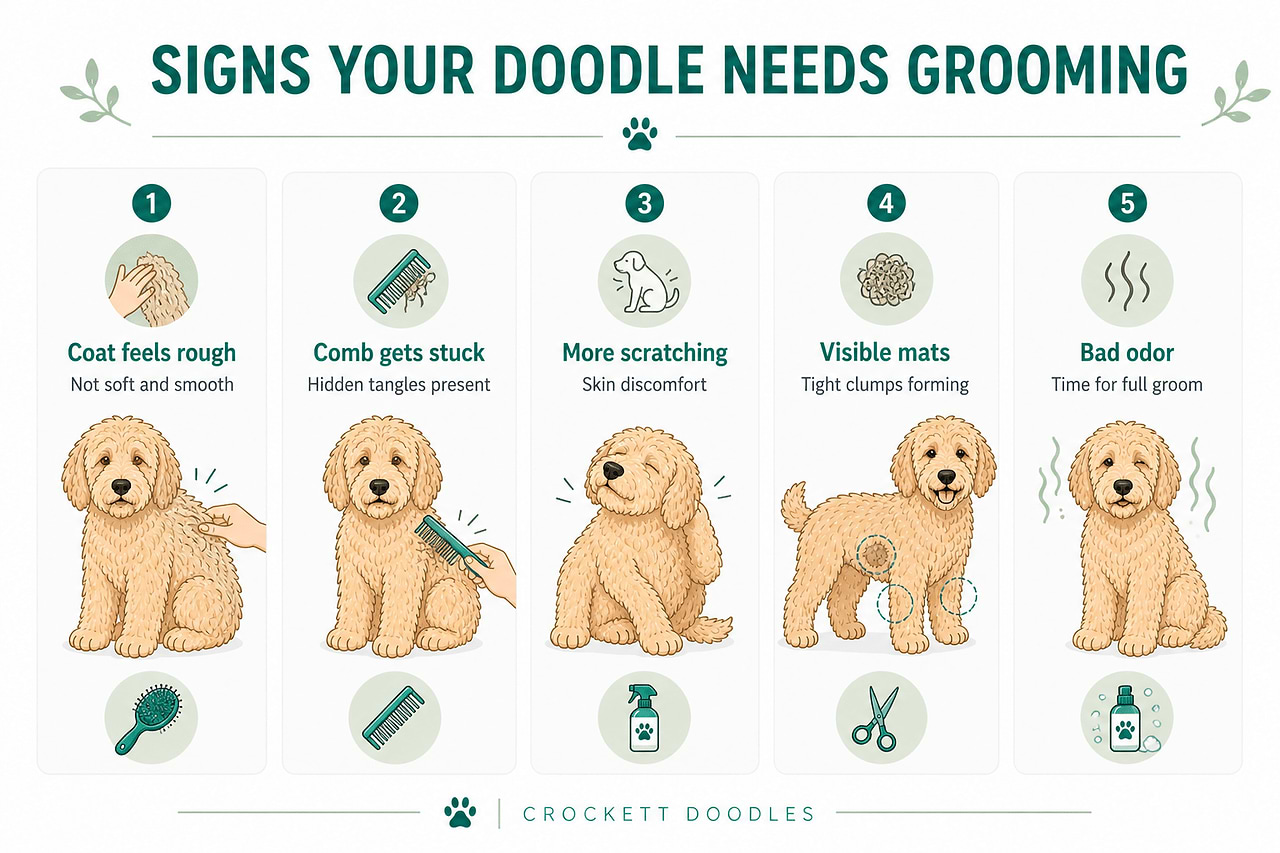
Watch for:
- A metal comb that repeatedly catches in the coat
- Knots behind the ears or beneath a collar or harness
- Hair that feels clumped or dense near the skin
- Dirt or outdoor debris that remains trapped in the coat
- Nails that become excessively long
- Hair interfering with the eyes or paw pads
- A coat that is difficult to dry thoroughly
- Discomfort when a particular area is touched
Some signs require medical attention rather than another grooming session.
Contact your veterinarian if you notice persistent redness, sores, hair loss, significant itching, strong ear odor, discharge, swelling, unexplained tenderness, or irritated skin underneath a mat.
Goldendoodle Grooming Checklist for First-Time Owners
Several Times Each Week
- Brush according to coat type and length
- Use a metal comb to check through the coat
- Check behind and beneath the ears
- Inspect areas beneath collars and harnesses
- Check armpits, legs, belly, beard, tail, and feet
Regularly
- Inspect nails and trim when needed
- Check ears for redness, odor, moisture, or discharge
- Remove outdoor debris before it becomes tangled
- Look and feel for skin changes while brushing
As Needed
- Bathe with a dog-safe shampoo
- Dry the coat thoroughly
- Increase brushing after swimming, rain, or muddy activities
- Ask a professional for help with stubborn tangles or mats
On a Professional Schedule
Book grooming according to the dog’s coat texture, haircut, activity, matting tendency, and the amount of maintenance you perform at home.
Frequently Asked Questions About Goldendoodle Grooming
How often should you brush a Goldendoodle?
Many Goldendoodles need brushing several times each week, while long or curly coats may need daily or near-daily care. Coat length, density, curl, moisture, activity, and friction affect how quickly mats form.
What is the best brush for a Goldendoodle?
A slicker brush paired with a metal grooming comb is useful for many Goldendoodle coats. The brush helps loosen hair and tangles, while the comb confirms whether grooming reached through the full coat.
The best tools still depend on the individual dog’s coat.
How often should a Goldendoodle go to the groomer?
Many Goldendoodles are professionally groomed approximately every four to eight weeks, although there is no universal schedule. Longer, denser, or faster-matting coats may require more frequent appointments.
Should you brush a Goldendoodle before or after a bath?
Brush and comb manageable tangles before bathing, then dry and check the coat thoroughly afterward. Water can tighten existing tangles and make them harder to remove.
Can I cut mats out of my Goldendoodle with scissors?
No. Household scissors should not be used underneath tight mats. Mats may pull skin into the tangled hair, increasing the risk of accidentally cutting the dog. Close or extensive mats are safer for a professional groomer or veterinarian to remove.
Do straight-coat Goldendoodles need grooming?
Yes. Straight-coat Goldendoodles still need regular grooming. They may release more visible loose hair and sometimes mat less quickly than dense curly coats, but they still require brushing, bathing as appropriate, nail care, ear checks, and attention to feathered areas.
Do Goldendoodles need their ears cleaned every week?
Not necessarily. Check the ears regularly and keep them dry, but cleaning frequency should depend on the individual dog and veterinary guidance. Dogs with recurring ear problems may need a specific treatment or maintenance plan.
Can shaving a Goldendoodle prevent future mats?
A shorter haircut can make coat maintenance easier, but it does not permanently prevent matting. Regular brushing and combing are still necessary as the coat grows.
Make Grooming Part of Goldendoodle Ownership
Goldendoodle grooming is an ongoing care responsibility, not simply an occasional haircut.
A practical routine is straightforward: brush through the full coat, check your work with a comb, pay close attention to high-friction areas, keep nails comfortable, monitor the ears and skin, and schedule professional grooming before matting becomes severe.
The coat type and haircut you choose determine how much maintenance that routine requires. Longer and curlier coats generally need more frequent attention, while a shorter style can make day-to-day coat care easier.
Starting during puppyhood also helps. A dog that gradually learns to accept brushing, combing, paw handling, drying, and professional grooming has a stronger foundation for lifelong care.
For first-time owners, the goal is not a perfectly styled Goldendoodle every day. The goal is a healthy, comfortable coat that can be brushed and combed through without painful mats.
Families considering a Goldendoodle should include grooming time and professional care in their long-term planning. Explore available Goldendoodle puppies or review Goldendoodle coat types to understand how coat texture may affect ongoing maintenance.
Goldendoodle Grooming, goldendoodle grooming chart, grooming a goldendoodle, grooming goldendoodle, how to groom a goldendoodle