Goldendoodle Growth Stages – How Big Will My Puppy Get?

Understanding Your Goldendoodle’s Growth Stages
Seeing your Goldendoodle puppy grow is exciting, but knowing what to expect makes it even better.
Goldendoodles go through amazing growth stages. When you know how Goldendoodles develop, you can tailor their food, training, and even the attention you give them to match each stage. It is all part of being an excellent Goldendoodle owner.
This blog will walk you through the stages of Goldendoodle development, from birth to when they stop growing.
The Early Weeks of Goldendoodle Growth
From Total Dependence to First Steps
In the first two weeks, Goldendoodle puppies are completely dependent on their mother. They need her for warmth and food. On their own, they cannot do much.
Around week three, their eyes open, and they start to explore a little. It’s slow and unsteady, but these early movements are the ones that spark their natural curiosity about the world. By week four, puppies begin to learn how to be social. This period is crucial since their early social experiences with their family and ‘outside’ people build the foundation for adult confidence.
Setting the Stage for Growth Success
Breeders play a big role in these first eight weeks of a puppy’s life. Through careful handling, they teach puppies ‘manners’ and help them adjust to what they hear and what they see. This is called ‘early socialization’ and is vital to healthy Goldendoodle development. Over the years, we’ve seen that puppies who get good care and attention during this time grow into happier, more balanced dogs.
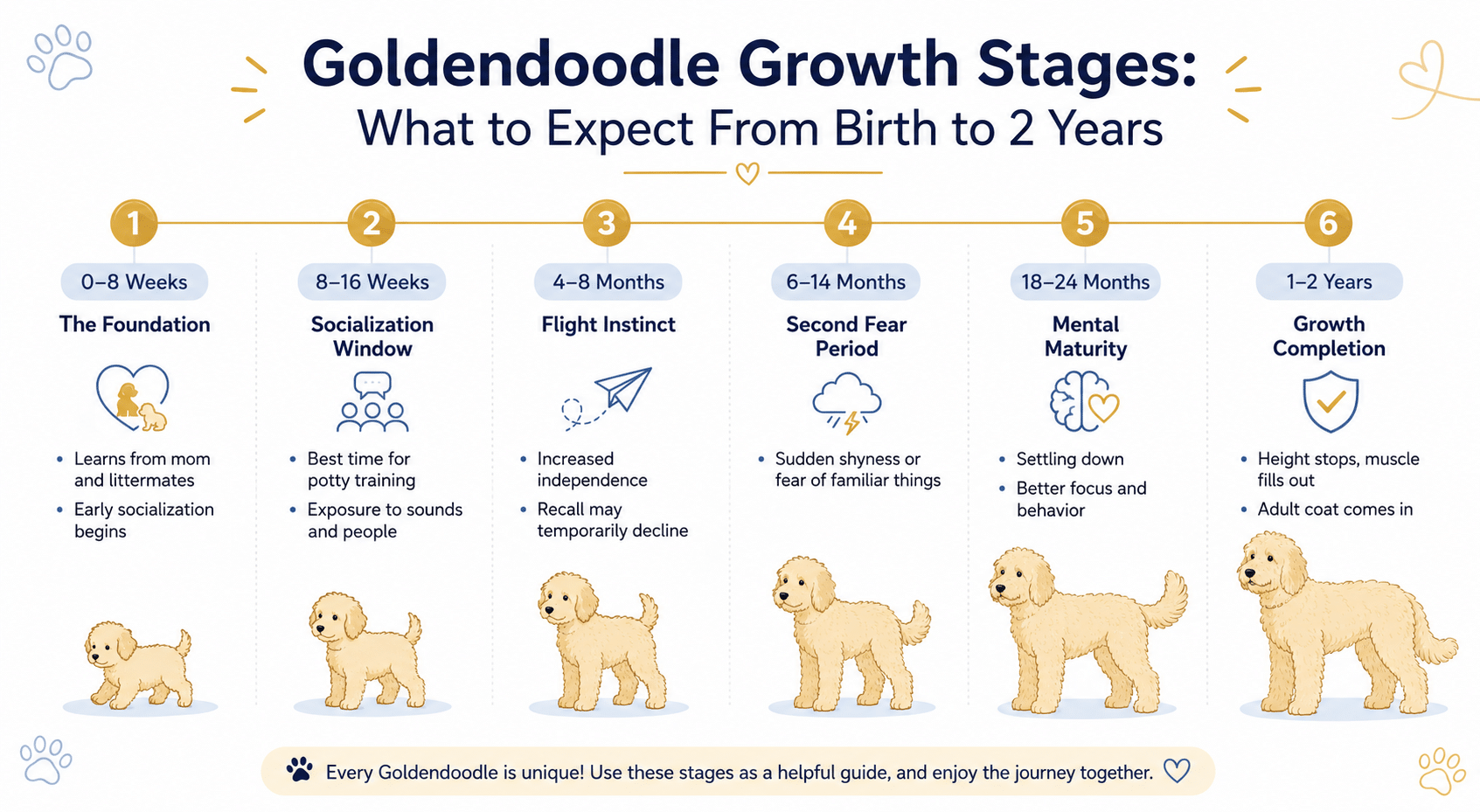
Developmental Milestone Timeline
| Age Range | Developmental Stage | What to Expect |
|---|---|---|
| 0 – 8 Weeks | The Foundation | Learning “dog manners” from mom and littermates. |
| 8 – 16 Weeks | Socialization Window | Rapid learning; best time for potty training and new sounds. |
| 4 – 8 Months | Flight Instinct | Increased independence; the puppy may “forget” their recall. |
| 6 – 14 Months | Second Fear Period | Sudden shyness or spooking at familiar objects. |
| 18 – 24 Months | Mental Maturity | The “settling down” phase, where they focus better. |
Navigating the Goldendoodle Growth Chart (2-4 Months)
Rapid Weight Gain and Skeletal Growth
During these months, Goldendoodles grow at an impressive rate. They sometimes triple their size as their bones strengthen! This is the time when a Goldendoodle growth chart is very useful. It helps you to check if your puppy is gaining weight steadily and in a healthy way.
Standard Goldendoodles often look a bit gangly during these months, because the bones in their legs tend to outpace muscle growth. Mini Goldendoodles usually reach about half their full height by four months.
Predicting Full-Grown Size
By looking at how much your puppy weighs at four months, you can get a good idea of how big they will be as adults. If you take their weight at this stage and double it, you’ll get a very good idea of the full-growth size. This can help you plan things like food portions and exercise. Monitoring your puppy’s weight closely at this stage can also help catch any sudden drops (or spikes) that could mean a visit to the vet is needed.
Goldendoodle Weight Estimate Table (By Size)
| Goldendoodle Size | 8-Week Weight | 6-Month Weight | Final Adult Weight |
|---|---|---|---|
| Petite / Toy | 2 – 5 lbs | 5 – 15 lbs | 5 – 24 lbs |
| Miniature | 4 – 9 lbs | 15 – 22 lbs | 25 – 40 lbs |
| Medium | 8 – 11 lbs | 25 – 35 lbs | 41 – 55 lbs |
| Standard | 12 – 20 lbs | 40 – 55 lbs | over 55 lbs |
The Awkward Teenage Phase: Adolescent Goldendoodle Stages (6-12 Months)
High Energy and Body Changes
Adolescence in Goldendoodles is a time of big changes. Most puppies reach about 75% of their adult weight during these months. Their height growth slows down, but their bodies start to fill out. Standard Goldendoodles may look a little out of proportion as their chest and shoulders get broader. For many owners, this stage can be challenging. It is because adolescent Goldendoodles are so full of energy and may test the limits of their training.
Also during this time, the soft fur of puppies begins to change into an adult coat that is thicker. Puppies also reach sexual maturity. This can affect their appetite and attention span. Keeping up with regular training helps channel their growing strength and boundless energy in positive ways.
Comparing Mini Goldendoodle Full Grown vs Standard Timelines
Faster Growth in Mini Goldendoodles
Mini Goldendoodles usually finish growing faster than the standard size. These dogs often stop growing (in height) between nine and twelve months. Therefore, they reach their adult height sooner. Many owners find their dogs hereafter easier to manage.
Longer Growth for Standard Goldendoodles
Standard Goldendoodles take longer to fully grow. They may keep gaining muscle and height until they are about eighteen months old.
Referring to a Goldendoodle size chart gives you a clearer picture of your dog’s potential adult dimensions.
Different-Sized Goldendoodle Growth
Of all the Doodles, Toy Goldendoodles tend to grow the fastest. They will reach their full adult height and weight much sooner than mini or standard Goldendoodles.
Mini Goldendoodles fall between the toy and standard sizes. Their growth timeline is steadier. An owner here can anticipate growth changes and won’t be surprised as much.
Standard Goldendoodles take the longest to reach their final weight and height. Overall, their growth is slower and more gradual. Standard Goldies may look as if they are still growing well into their second year. That’s totally normal.
Growth Completion Checklist (Mini vs. Standard)
| Growth Marker | Mini Goldendoodle | Standard Goldendoodle |
|---|---|---|
| Reaches 50% Adult Weight | ~ 3.5 to 4 Months | ~ 4.5 to 5 Months |
| Stops Gaining Height | ~ 9 to 11 Months | ~ 12 to 15 Months |
| Chest Fills Out / Muscles | ~ 12 Months | ~ 18 to 24 Months |
| Adult Coat Fully In | ~ 10 to 12 Months | ~ 14 to 18 Months |
Understanding Goldendoodle Puppy Fear Periods
First Fear Period (8-11 Weeks)
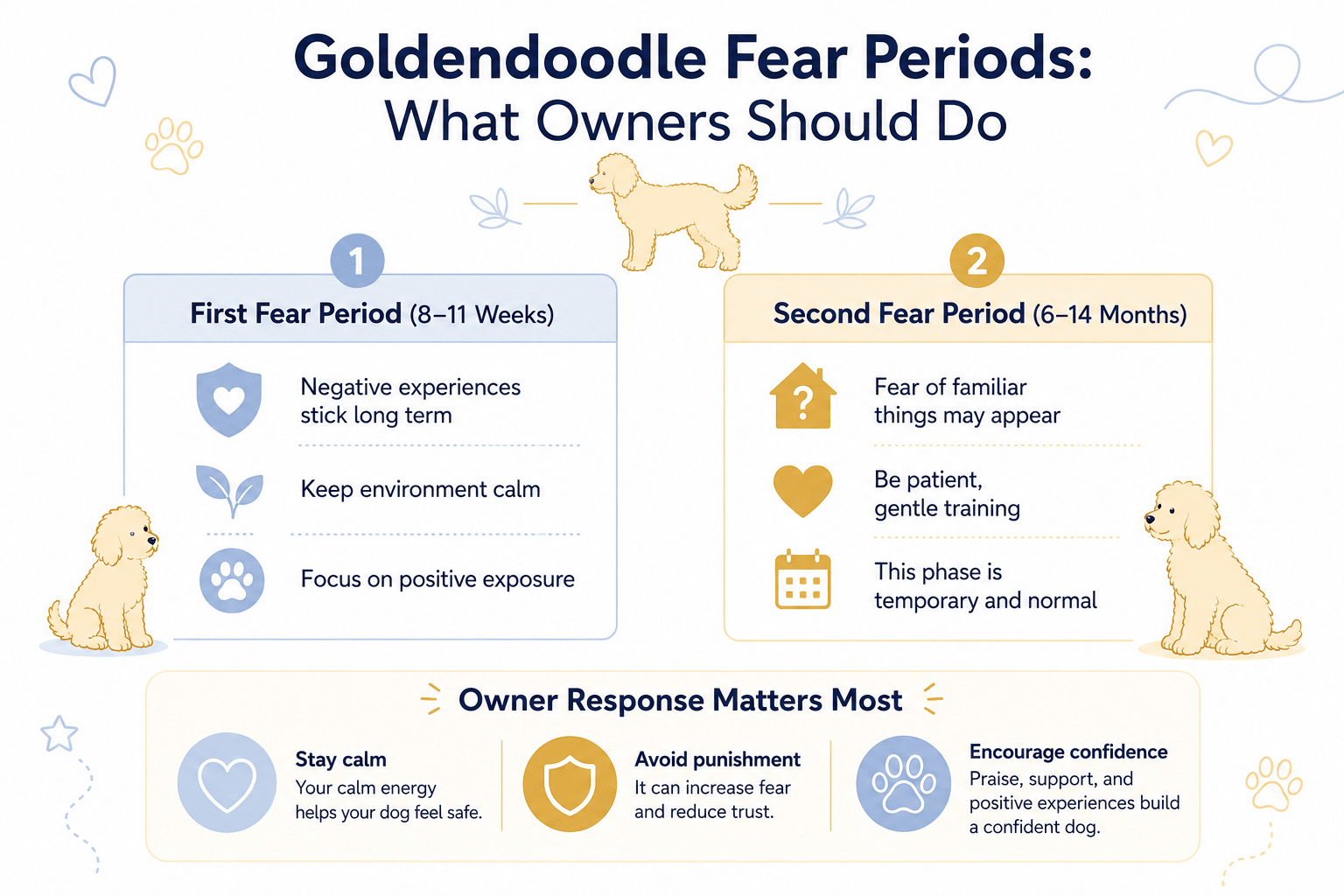
Between eight and eleven weeks, puppies can go through their first fear period. During this stage, negative experiences can stick with a puppy for a long time. It shapes their behavior well into the future. Keeping your Goldendoodle calm and safe can lower the stress for them during this phase. It is important to give them positive encounters. This plays a big role in building a well-adjusted dog.
Second Fear Period (6-14 Months)
There is also a second fear stage. It often happens between months six and fourteen.
During this phase, your Goldendoodle’s brain develops the ability to recognize and respond to potential dangers. In the wild, this is vital. You might notice that your Goldendoodle is reacting fearfully to things they once enjoyed. Again, this is totally normal and not something to worry about. Patience from you (and gentle training) will help your dog to get through this phase.
When Do Goldendoodles Stop Growing? (1-2 Years)
Height Levels Off Around One Year
Most Goldendoodles stop growing taller around their first birthday. This is true for mini and standard sizes.
Once height growth slows, their bodies start to gain muscle and definition. Their fur starts transitioning into the dense coat of a full-grown Goldendoodle. A Goldendoodle growth curve is a useful tool here for tracking weight and supporting long-term health. If something feels off, visit your vet with your dog for reassurance.
Mental Maturity Takes Longer
Even though their bodies may be full-grown, many Goldendoodles will act like puppies until they are about three years old. Yes, their behavior may take longer to mature than their physical size suggests. Ongoing guidance helps shape a calm and well-behaved full-grown Goldendoodle.
What Affects Goldendoodle Growth?
- Genetics play a big role. It will shape how big your Doodle will get and how fast the dog will grow.
- Your Goldendoodle should be fed well. It supports steady growth and overall development.
- Exercise helps build strong bodies. Regular exercise will also keep your doggo fit.
- Health issues in these dogs can slow growth. So, regular vet visits and check-ups are an important part of looking after your Goldendoodle.
Long Term Health For Your Full-Grown Goldendoodle
Once your Goldendoodle is a fully grown dog, it’s time to leave the puppy food behind and switch to adult food. Adult dog food is especially formulated and will help protect your dog’s joints and bones after their growth plates close.
Eventually, grooming becomes fundamental to manage the texture (and volume) of your dog’s adult coat. Regular motion and mental stimulation also help maintain your dog’s health and happiness.
In the end, it is this balanced lifestyle outlook that contributes to your dog’s overall well-being and longevity.
Conclusion
Raising a Goldendoodle is a journey. It is filled with lots of change (and small surprises along) the way.
Each growth stage will bring new challenges, but also moments that make the total experience worthwhile. From tracking Goldendoodle weight by age to understanding their behavior, every detail helps you become a better owner. Don’t you owe it to your dog?
And, as your dog grows into a fully grown Goldendoodle, your role shifts from that of being the constant carer to someone who gives guidance. Staying aware of their needs, even as they mature, keeps them healthy and happy. In the end, the time and effort you invest in your Goldendoodle’s growth will come back to you in the form of lots of loyalty and joy. Goldies are the best companions!
Ready to start your journey with a healthy, family-raised companion? Browse our current available Goldendoodle puppies for sale and find a pup that has been socialized for every growth stage.
full grown goldenoodle, goldendoodle development, goldendoodle growth, goldendoodle growth chart, goldendoodle stages