Goldendoodle Lifespan and Life Expectancy: How Long Do They Live?

Goldendoodles may live about 11 to 17 years, although expected lifespan varies by adult size and individual health. Crockett Doodles uses planning ranges of 11 to 14 years for Standards, 12 to 15 years for Mediums, 12 to 16 years for Traditional Minis, and 13 to 17 years for Toy/Petite Goldendoodles.
These ranges can help families understand the long-term commitment, but they cannot predict how long one dog will live. Genetics, body condition, nutrition, veterinary care, activity, injuries, environment, and unexpected illness may all affect a Goldendoodle’s life expectancy. Coat care, dental health, and home safety also matter over time.
Goldendoodle Lifespan by Size
| Crockett Goldendoodle Size | Expected Adult Weight | Estimated Lifespan |
|---|---|---|
| Toy/Petite | 5 to 24 pounds | 13 to 17 years |
| Traditional Mini | 25 to 40 pounds | 12 to 16 years |
| Medium | 41 to 55 pounds | 12 to 15 years |
| Standard | More than 55 pounds | 11 to 14 years |
Crockett Doodles’ official weight categories are expected adult ranges, not guaranteed outcomes. Final weight can vary with the parent dogs, family lines, sex, nutrition, health, and inherited traits.
The lifespan figures are also estimates. A Standard Goldendoodle may live beyond the listed range, while a smaller dog may have a health condition or accident that shortens its life. Check out our doodle’s lifespan.
Why Do Smaller Goldendoodles Often Live Longer?
Smaller Goldendoodles often have longer average lifespans because body size is associated with different patterns of growth and aging in dogs. Research across dog populations has repeatedly found that larger dogs tend to have shorter lives, although scientists continue to study the biological mechanisms involved.
The explanation is more complex than saying a small dog’s heart has less work to do. Growth rate, aging rate, genetics, disease risk, and body structure may all contribute.
Size is still only one part of the picture. Families should use Goldendoodle lifespan ranges for planning, not as promises about an individual puppy.
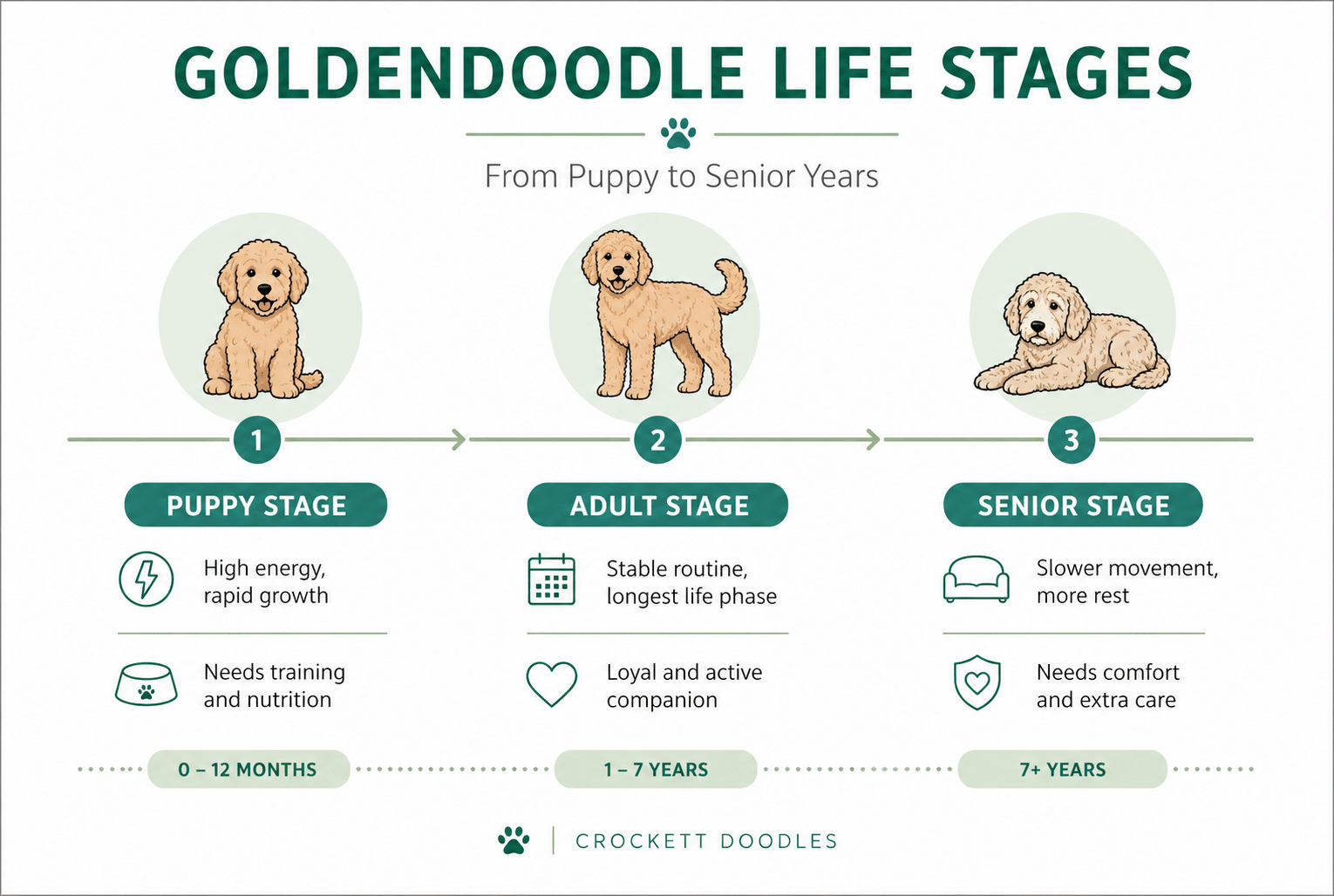
Goldendoodle Life Stages
A Goldendoodle’s care needs change with age. The American Animal Hospital Association, or AAHA, divides a dog’s life into four stages based on growth, maturity, and estimated lifespan rather than one universal age chart.
Puppy
The puppy stage lasts from birth until rapid growth slows, commonly around 6 to 9 months depending on breed and size. Puppies need a complete growth diet, positive training, socialization, suitable exercise, vaccinations, parasite prevention, grooming, and routine veterinary care.
Physical development continues after rapid growth slows, especially in larger puppies. Ask your veterinarian how to support steady growth and healthy movement without overloading developing joints.
Young Adult
Young adulthood begins when rapid growth ends and continues until physical and social maturity, often around 3 to 4 years of age. Goldendoodles still need consistent training, daily interaction, exercise, coat care, and mental enrichment throughout this stage.
Mature Adult
The mature-adult stage usually covers the longest portion of a Goldendoodle’s life. Maintaining an appropriate body condition, attending preventive appointments, and noticing small changes in appetite, mobility, behavior, or energy can help owners respond sooner when something is wrong.
Senior
AAHA defines the senior stage as the final 25 percent of a dog’s estimated lifespan. A Standard Goldendoodle may therefore enter senior care earlier than a Toy/Petite Goldendoodle. No single birthday makes every dog senior. Size, mobility, medical history, behavior, and overall condition also matter.
What Affects a Goldendoodle’s Life Expectancy?
Genetics and Parent Health
Goldendoodles have Golden Retriever and Poodle ancestry. Crossbreeding may increase genetic diversity, but it does not guarantee better health or a longer lifespan. A puppy can inherit health risks found in either family line.
Responsible parent screening may reduce certain inherited risks, but no test can guarantee a disease-free puppy. The Orthopedic Foundation for Animals maintains searchable health records that prospective owners can use to research parent dogs and relevant family information.
Ask which screenings were completed for both parent dogs and request verifiable results. DNA testing can identify certain inherited variants, but it does not replace physical examinations, orthopedic evaluations, eye examinations, cardiac testing, or other condition-specific screening.
Healthy Weight and Individual Nutrition
Maintaining a healthy body condition is one of the most practical ways to support long-term health. Excess weight can make movement harder, add stress to joints, and complicate existing medical problems.
A veterinary nutritional assessment should consider both body condition and muscle condition. Portions may need to change as a dog grows, becomes more or less active, is spayed or neutered, or enters the senior stage. AAHA recommends evaluating nutrition and body and muscle condition during veterinary visits rather than relying on one feeding amount for every dog.
Crockett Doodles currently recommends TLC Whole Life or Health Extension. Qualifying purchases through Crockett Doodles’ designated links are connected to extended Health Guarantee requirements. Confirm the puppy’s current food before Adoption Day, review the current Crockett Doodles puppy food recommendations, and avoid an abrupt switch.
A veterinarian may recommend another diet for an allergy, digestive disorder, kidney concern, growth issue, or other medical need. Follow the veterinarian’s guidance and contact Crockett Doodles to learn how a medically necessary food change may affect Health Guarantee eligibility.
Daily Exercise and Mental Enrichment
Goldendoodles need regular movement and opportunities to think, play, and interact. The right amount depends on age, expected size, health, conditioning, and individual energy.
Puppies benefit from age-appropriate play and short training sessions. Healthy adults may enjoy walks, retrieving games, swimming, scent work, or structured training. Senior dogs often do better with shorter, more frequent activity that supports mobility without causing exhaustion.
A sudden drop in stamina, stiffness after rest, reluctance to use stairs, or difficulty rising deserves veterinary attention. Slowing down should not automatically be dismissed as normal aging.
Preventive Veterinary Care
Routine wellness care may reveal changes that are difficult to notice at home. Most dogs should receive at least annual examinations, while visit frequency should increase when age, health, lifestyle, or risk factors require closer monitoring. AAHA advises at least twice-yearly physical examinations for senior dogs.
An individualized preventive plan may include:
- Vaccinations based on lifestyle and exposure
- Heartworm, flea, tick, and intestinal-parasite prevention
- Weight and muscle-condition monitoring
- Dental, skin, ear, eye, heart, and joint assessments
- Bloodwork or urine testing when recommended
- Discussion of appetite, sleep, mobility, and behavior changes
The goal is not to order every available test. It is to build an appropriate plan with a veterinarian who knows the dog.
Dental and Grooming Care
Dental disease can cause pain, infection, eating difficulty, and reduced quality of life. Regular veterinary dental examinations and plaque control at home are important. The AVMA states that daily brushing is best, although brushing several times a week can still be helpful.
Grooming is also health care. Regular brushing helps prevent painful mats and creates an opportunity to notice skin irritation, parasites, lumps, sore areas, or body-condition changes. Nail care supports comfortable movement, particularly as a dog ages.
Review the Goldendoodle grooming guide for practical coat-care and maintenance guidance.
Goldendoodle Health Concerns Owners Should Recognize
Goldendoodles are not guaranteed to develop any specific condition. Knowing common warning signs simply helps owners seek care promptly.
| Health Concern | Signs to Watch For | Appropriate Next Step |
|---|---|---|
| Hip dysplasia or arthritis | Limping, stiffness, difficulty rising, reduced movement, or a bunny-hopping gait | Schedule a veterinary examination for diagnosis and an individual treatment plan |
| Ear inflammation or infection | Head shaking, odor, redness, discharge, swelling, scratching, or pain | Arrange an ear examination and avoid putting home remedies into a painful ear |
| Progressive retinal atrophy or other eye disease | Night-vision difficulty, enlarged pupils, bumping into objects, or gradual vision loss | Request a veterinary examination or referral to a veterinary ophthalmologist |
| Dental disease | Bad breath, red gums, tartar, chewing difficulty, dropped food, or mouth pain | Ask for an oral examination and professional dental plan |
| Gastric dilatation-volvulus, or bloat | Unproductive retching, heavy drooling, restlessness, abdominal swelling, weakness, or breathing trouble | Seek emergency veterinary care immediately |
These warning signs and recommended responses are consistent with veterinary guidance for hip dysplasia, ear disease, inherited retinal disease, dental problems, and gastric dilatation-volvulus.
Hip dysplasia can affect dogs of different sizes, although larger dogs may face greater orthopedic strain. Heredity, growth, nutrition, body condition, and activity can influence joint health. Do not give joint supplements automatically. Product quality, evidence, dosing, medical history, and drug interactions vary.
Recurring ear problems may involve allergies, yeast, bacteria, parasites, foreign material, moisture, or ear anatomy. Check the ears regularly, dry them after swimming, and clean only as often as your veterinarian recommends. Cotton swabs and irritating homemade mixtures can push material deeper or worsen inflammation.
Progressive retinal atrophy describes a group of inherited eye diseases that can cause gradual vision loss. Night blindness may be an early sign. Parent screening can help identify certain inherited risks, but screening cannot guarantee lifelong eye health.
Bloat is an acute, life-threatening emergency seen most often in large, deep-chested dogs. Standard Poodles are among the breeds recognized as being at increased risk. Families with a large, deep-chested Goldendoodle should discuss individual risk and preventive gastropexy with their veterinarian.
Senior Goldendoodle Care
Senior care should protect comfort, mobility, muscle strength, mental engagement, and dignity. Older Goldendoodles may sleep more or prefer shorter walks, but major changes still deserve veterinary attention.
A practical senior-care plan may include:
- Schedule regular senior examinations. AAHA advises at least two physical examinations each year, with laboratory screening based on individual need.
- Track mobility at home. Watch for slipping, stiffness, difficulty with stairs, or hesitation when entering a vehicle.
- Improve traction and access. Rugs, ramps, secure steps, supportive bedding, and other home changes may make daily movement safer.
- Monitor muscle as well as weight. An older dog may lose muscle even when the scale changes very little.
- Continue mental activity. Scent games, gentle training, food puzzles, and predictable social time can keep daily life engaging.
- Review nutrition with the veterinarian. A dog does not need a senior formula based on age alone. Calorie and nutrient needs depend on health, activity, body condition, and muscle condition.
- Report behavior changes. Confusion, nighttime restlessness, house-training changes, withdrawal, irritability, or altered sleep can have medical, cognitive, sensory, or pain-related causes.
Older age is not a disease. With individualized support, many senior Goldendoodles continue to enjoy walks, play, training, family routines, and meaningful social time.
Frequently Asked Questions
How long do Mini Goldendoodles live?
Traditional Mini Goldendoodles have an estimated lifespan of 12 to 16 years. Crockett Doodles classifies Traditional Minis as an expected 25 to 40 pounds. Toy/Petite Goldendoodles, expected to weigh 5 to 24 pounds, have an estimated lifespan of 13 to 17 years.
These are planning ranges, not predictions for one dog.
Does a Goldendoodle’s size affect its lifespan?
Yes, adult size can affect Goldendoodle life expectancy, and smaller dogs generally live longer than larger dogs. Size does not outweigh every other factor, however. Genetics, body condition, medical care, disease, accidents, and environment also matter.
Does mixed breeding guarantee a longer lifespan?
No. Mixed breeding does not guarantee better health or a longer life. A Goldendoodle may inherit beneficial traits, neutral traits, or health risks from either side of the family. Thoughtful parent selection and appropriate health screening remain important.
At what age is a Goldendoodle considered senior?
There is no single senior age for every Goldendoodle. AAHA defines senior dogs as those in the final 25 percent of their estimated lifespan, so a Standard may enter this stage earlier than a Traditional Mini or Toy/Petite dog.
What can help a Goldendoodle live a longer, healthier life?
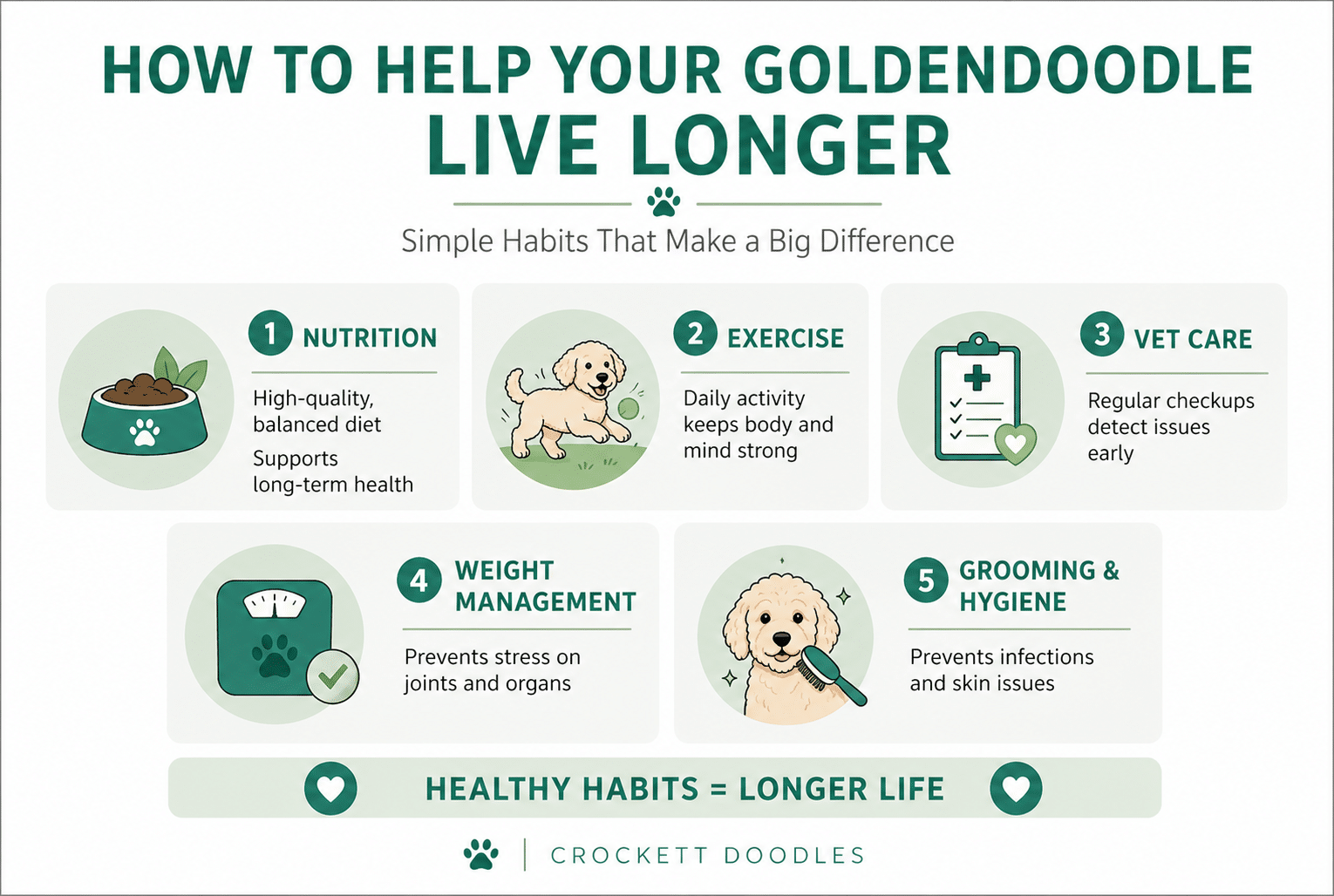
No single habit can guarantee longevity. The strongest approach combines healthy body condition, suitable nutrition, regular movement, mental enrichment, preventive veterinary care, parasite prevention, dental care, grooming, and early attention to physical or behavioral changes.
Can excellent care guarantee the upper lifespan range?
No. Excellent care can support health and quality of life, but it cannot prevent every inherited disease, accident, cancer, or age-related condition. The most useful goal is to support as many healthy and comfortable years as possible.
Helping Your Goldendoodle Live Well at Every Age
Goldendoodle lifespan is shaped by more than one number. Size provides a useful starting point, while genetics, body condition, nutrition, exercise, preventive care, dental health, grooming, and timely veterinary attention influence daily health and quality of life.
Families considering a puppy should plan beyond the first year and budget for food, grooming, training, insurance, veterinary care, exercise, and senior support.
Crockett Doodles provides a standard one-year Health Guarantee, with extended benefits under its 12-year Health Guarantee available when current food, insurance, veterinary, documentation, spay or neuter, and contract requirements are met. The current written agreement controls coverage and eligibility. Review the current Crockett Doodles Health Guarantee for complete terms.
Pet insurance and the Health Guarantee serve different purposes. Families can review Crockett Doodles’ pet insurance information to understand the current extended-guarantee requirements.
Explore available Goldendoodle puppies, compare Crockett Doodles’ official size categories, and consider which expected size may fit your family’s long-term routine.
goldendoodle health issues, goldendoodle lifespan, lifespan of goldendoodle, mini goldendoodle lifespan