Goldendoodle Nutrition Guide: What to Feed and What to Avoid
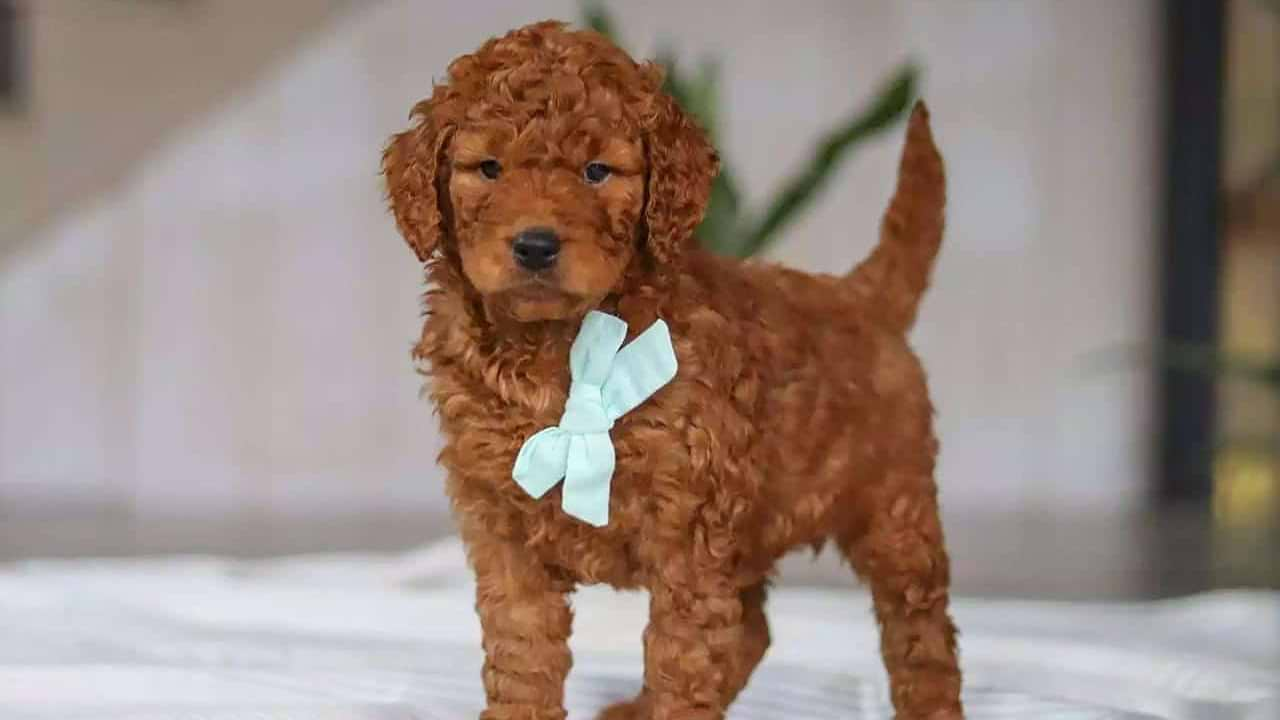
A Goldendoodle should eat a complete and balanced diet that matches the dog’s life stage, expected adult size, body condition, activity level, and individual health needs. Puppies need food formulated for growth, while healthy adults generally need an appropriate adult-maintenance or all-life-stages diet.
There is no single food, ingredient list, or number of cups that is right for every Goldendoodle. A Toy/Petite puppy and a large Standard puppy may have very different growth and calorie needs, and two adult dogs of similar weight may still require different portions.
Crockett Doodles currently recommends TLC Whole Life and Health Extension. Families bringing home a Crockett puppy should confirm which food the puppy is already eating before Adoption Day rather than making an abrupt change.
This guide explains how to choose Goldendoodle food, determine portions, feed puppies and adults, change diets safely, use treats and supplements responsibly, and keep potentially harmful foods out of your dog’s bowl.
What Should You Feed a Goldendoodle?
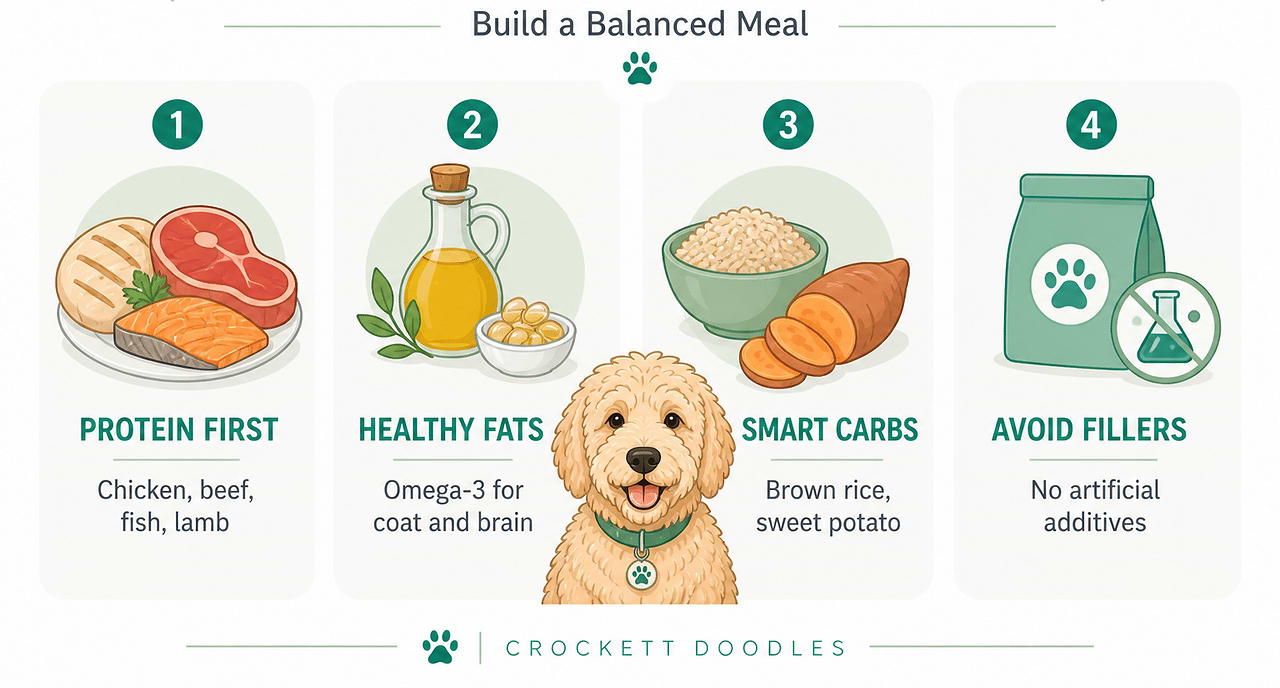
Choose a complete and balanced dog food appropriate for your Goldendoodle’s current life stage instead of judging food quality by one ingredient or marketing claim.
The FDA’s complete and balanced pet food guidance explains that these foods are intended to supply the nutrients a dog needs when fed as the primary diet. The nutritional adequacy statement should also tell you whether the food is appropriate for growth, adult maintenance, or another life stage.
When evaluating a food, consider:
- Nutritional adequacy statement
- Intended life stage
- Calories per cup, can, or serving
- Feeding directions
- Manufacturer information
- Expected adult size
- Current body condition
- Stool quality and tolerance
- Veterinary recommendations
- Any diagnosed medical needs
Claims such as “premium,” “natural,” “limited ingredient,” or “meat first” do not prove that one food is nutritionally superior.
Ingredient lists can be useful, particularly when a veterinarian is investigating a confirmed or suspected food reaction, but they do not show the full picture of nutrient balance, digestibility, quality control, or calorie density.
What Food Does Crockett Doodles Recommend?
Crockett Doodles currently recommends TLC Whole Life and Health Extension for puppies and adult dogs in its program.
Before ordering food, confirm what your puppy is currently eating through your Adoption Account, puppy emails, Adoption Assistant, or other current Crockett Doodles instructions. The Crockett Doodles Puppy Food page advises families to confirm the puppy’s current diet and avoid an abrupt switch when the puppy comes home.
Crockett Doodles’ current extended Health Guarantee also connects qualifying ongoing purchases of TLC or Health Extension with guarantee eligibility. The food must be purchased through Crockett Doodles’ designated links so qualifying purchases can be verified.
The full extended guarantee has additional requirements, including qualifying pet insurance that begins when ownership starts and remains active for at least the first six months. Families should review the current Crockett Doodles Health Guarantee because the written terms control eligibility and coverage.
Families can also review Crockett Doodles’ pet insurance information before Adoption Day.
This is a Crockett Doodles business requirement, not a claim that TLC or Health Extension is the only nutritionally appropriate food for every dog.
If your veterinarian recommends another diet because of an allergy, gastrointestinal disorder, prescription need, growth concern, kidney disease, or another medical condition, follow the veterinarian’s medical guidance and contact Crockett Doodles to understand how the change may affect Health Guarantee eligibility.
How to Choose Goldendoodle Puppy Food
Goldendoodle puppies need a complete and balanced diet formulated for growth until they approach skeletal maturity.
Puppies are developing bones, muscles, organs, and nervous tissue, so their nutritional needs differ from those of adult dogs. The goal is steady, healthy growth rather than making a puppy grow as quickly as possible.
AAHA nutrition guidance recommends feeding an appropriate growth diet until skeletal maturity. Small and medium dogs often reach this point around one year, while some large dogs continue growing until approximately 15 to 16 months.
Large Standard Goldendoodles Need Individual Planning
Some Standard Goldendoodles may be large enough to benefit from food specifically formulated for large-breed puppy growth.
AAHA recommends a large-breed growth diet when a puppy is predicted to reach about 70 pounds or more as an adult. Keeping these puppies at an appropriate body condition and avoiding excessive calorie and mineral intake are especially important during rapid skeletal development.
Crockett Doodles defines Standard Goldendoodles as dogs expected to weigh more than 55 pounds, so not every Standard falls into the same nutritional category.
Ask your veterinarian to consider the puppy’s expected adult weight, parent sizes, current growth pattern, and body condition rather than choosing a large-breed formula based on the word “Standard” alone.
How Much Should You Feed a Goldendoodle Puppy?
Start with the feeding directions for the specific food, then adjust the amount according to the puppy’s growth, body condition, activity, treat intake, and veterinary guidance.
A universal Goldendoodle feeding chart based only on cups per day can be misleading because foods have different calorie densities. One cup of one kibble may contain significantly more energy than one cup of another.
Puppy needs also change during growth.
| What to Check | Why It Matters |
|---|---|
| Food label | Provides a starting feeding amount for that specific formula |
| Puppy age | Calorie and nutrient needs change during growth |
| Expected adult size | Larger puppies often grow for longer |
| Current weight | Helps monitor the growth trend over time |
| Body condition | Shows whether the puppy is becoming too lean or carrying excess fat |
| Activity | Energy expenditure varies between individual dogs |
| Treat intake | Treat calories count toward the daily total |
| Veterinary assessment | Helps confirm healthy growth and condition |
More food is not automatically better. Excess calories can produce excess body fat and overly rapid growth rather than a healthier or larger adult dog.
How Can You Tell if Your Goldendoodle Is Eating the Right Amount?
A Goldendoodle should maintain an appropriate body condition rather than simply reaching a particular number on the scale.
For many dogs at ideal body condition, the ribs should be easy to feel without pressing through a thick layer of fat. A waist should generally be visible when viewed from above, with an abdominal tuck visible from the side.
AAHA recommends assessing both body condition score and muscle condition score because body weight alone cannot show whether a dog carries excess fat or has lost muscle.
Ask your veterinarian for guidance if you notice:
- Rapid or unexpected weight gain
- Poor weight gain
- Loss of muscle
- Persistent hunger despite an appropriate ration
- Reduced appetite
- Repeated vomiting or diarrhea
- A sudden change in food tolerance
- Difficulty assessing body condition
Do not make a large portion change simply because a growing puppy looks temporarily lanky or heavier. Puppy growth is not always visually even.
How Often Should You Feed a Goldendoodle?
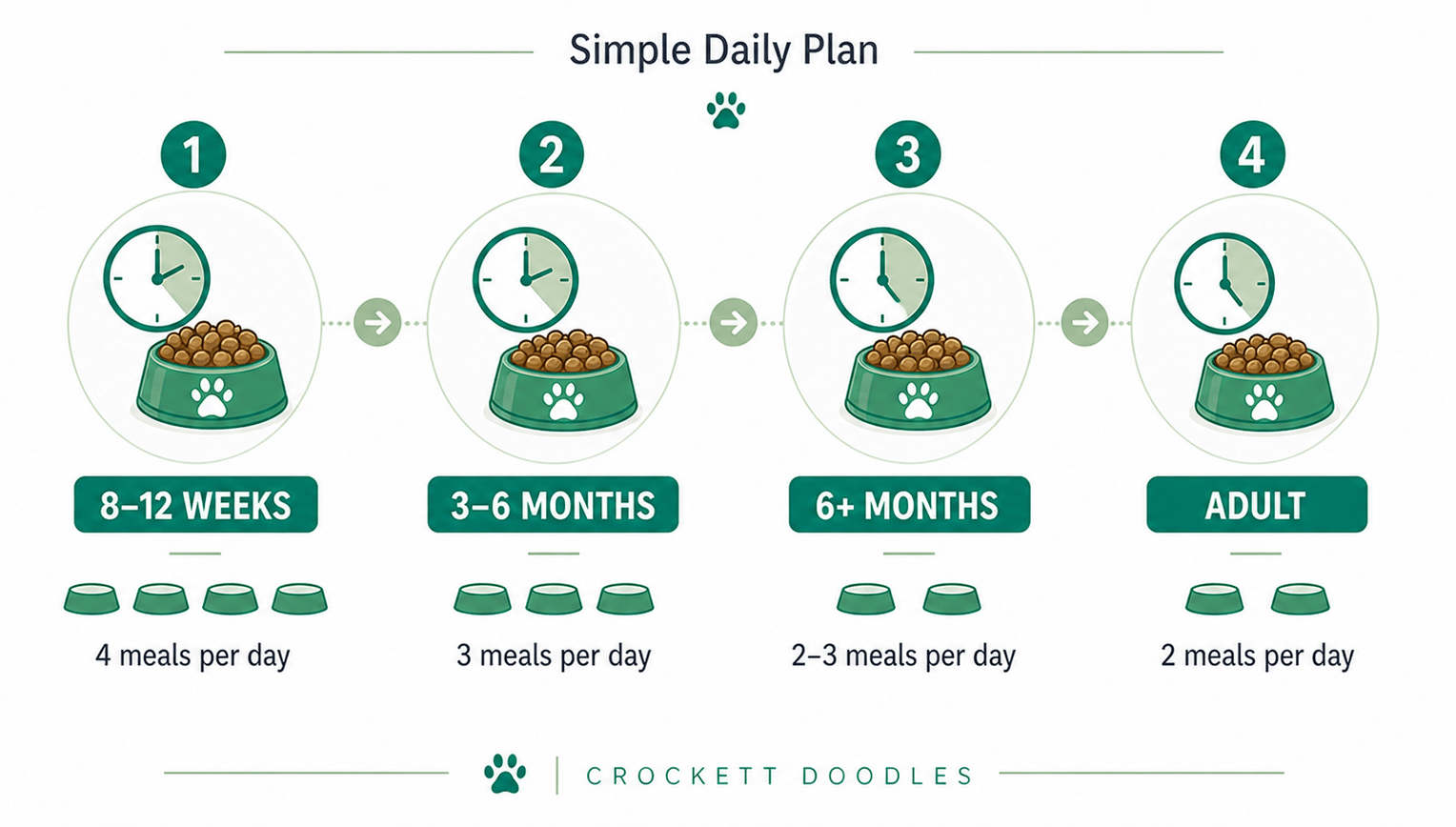
Young Goldendoodle puppies usually benefit from several measured meals each day, while many healthy adults do well with two measured meals.
| Life Stage | Typical Meal Pattern |
|---|---|
| Young puppy | Usually about 3 measured meals per day |
| Older puppy | Often 2 to 3 meals per day |
| Adult | Commonly 2 measured meals per day |
| Senior | Based on health, appetite, medication, and veterinary guidance |
Crockett Doodles currently feeds its young puppies three times daily, but your veterinarian may recommend another schedule based on age, size, health, or medical needs.
Measured meals make it easier to monitor appetite and calorie intake than continually topping off a bowl.
Fresh water should normally remain available unless a veterinarian gives different instructions for a specific medical reason.
When Should a Goldendoodle Switch to Adult Food?
A Goldendoodle should usually transition away from growth food after approaching skeletal maturity, not automatically on the first birthday.
Small and medium Goldendoodles may be ready around 12 months, while larger Standards may need growth nutrition for longer. AAHA notes that some large dogs continue skeletal development until approximately 15 to 16 months.
Ask your veterinarian to consider:
- Expected adult weight
- Current height and weight
- Growth rate
- Body condition
- Current food
- Activity level
- Spay or neuter status
- Overall health
Switching too early may remove growth nutrition while the puppy is still developing. Continuing a calorie-dense puppy diet after growth has slowed may contribute to excess weight in some dogs.
How Should You Change Your Goldendoodle’s Food?
Change your Goldendoodle’s food gradually when possible because sudden diet changes may cause digestive upset.
AAHA suggests making routine diet changes over approximately four to seven days, while sensitive dogs may benefit from a slower transition.
- Begin with mostly the current food and a small amount of the new food.
- Gradually increase the proportion of new food.
- Monitor appetite, stool quality, and comfort.
- Slow the transition if mild digestive upset develops.
- Contact your veterinarian if symptoms persist or become significant.
For a new Crockett Doodles puppy, avoid changing food immediately simply because another brand is your personal preference. Confirm the current diet before Adoption Day and maintain continuity during the first transition home unless your veterinarian advises otherwise.
Repeated vomiting, significant diarrhea, lethargy, pain, dehydration, or refusal to eat should not automatically be blamed on a food transition. Seek veterinary advice.
Do Goldendoodles Need Grain-Free Food?
Goldendoodles do not need grain-free food simply because they are Goldendoodles, and grain-free diets are not automatically better for itching or digestive problems.
The FDA continues to investigate nonhereditary dilated cardiomyopathy, or DCM, associated with certain diets. Reports have involved both grain-free and grain-containing foods, although many reported diets have contained high levels of peas, lentils, or other pulse ingredients.
The FDA has not identified one simple cause-and-effect relationship. The practical takeaway is not that every grain-free diet is dangerous. It is that there is no general nutritional reason to remove grains from a healthy Goldendoodle’s diet solely because grain-free sounds healthier.
Review the FDA’s current information about diet and nonhereditary canine DCM for more detail.
If your dog needs a specialized diet, make that decision with your veterinarian rather than following a food trend.
Are Goldendoodles Prone to Food Allergies?
Goldendoodles can develop food allergies, but itching, paw licking, recurring ear problems, or loose stool do not prove that food is the cause.
Environmental allergies, parasites, infections, gastrointestinal disease, and other conditions can produce similar signs.
The Merck Veterinary Manual’s food-allergy guidance explains that the reliable way to diagnose a food allergy is a controlled elimination diet followed by a dietary challenge.
Changing from chicken to salmon or buying a “limited ingredient” food does not confirm a food allergy.
If your Goldendoodle has ongoing itching, digestive problems, recurring ear inflammation, or skin disease, ask your veterinarian to investigate the cause before removing ingredients at random.
If a medically necessary diet change affects the food required for Crockett Doodles’ extended Health Guarantee, follow your veterinarian’s advice and contact Crockett Doodles about the policy implications.
Do Goldendoodles Need Supplements?
A healthy Goldendoodle eating an appropriate complete and balanced diet does not automatically need extra vitamins, joint products, probiotics, calcium, or other supplements.
A veterinarian may recommend a supplement for an individual dog, but the product, dose, evidence, ingredients, and possible medication interactions matter.
Do not automatically add:
- Calcium
- Multivitamins
- Glucosamine or joint products
- Fish oil
- Probiotics
- Digestive enzymes
- Skin-and-coat products
Growing puppies deserve particular caution because unnecessary nutrient supplementation can interfere with a carefully balanced growth diet.
Crockett Doodles discusses optional products in its Doodle supplement guide. Supplements should be treated as targeted support when appropriate, not as replacements for complete food or veterinary care.
How Many Treats Can a Goldendoodle Have?
Treats, table foods, toppers, and other extras should generally provide no more than about 10% of a Goldendoodle’s daily calories.
AAHA recommends limiting treats and other additional foods to 10% or less of total daily caloric intake so they do not displace the balanced nutrition supplied by the primary diet.
This includes:
- Training treats
- Table food
- Dental chews
- Food used to give medication
- Toppers
- Peanut butter
- Fruit and vegetables
- Long-lasting edible chews
For a Toy/Petite Goldendoodle, a few large treats may represent a surprising portion of the day’s calorie allowance.
One practical training strategy is to reserve part of the dog’s normal measured kibble and use it as rewards. Crockett Doodles’ puppy training resources can help families build reward-based routines without relying on unlimited treats.
Can Goldendoodles Eat Human Food?
Some plain human foods can be offered in small amounts if they are safe for dogs and do not replace the complete primary diet.
Examples may include small portions of:
- Plain cooked lean meat without bones or seasoning
- Carrots
- Green beans
- Plain pumpkin
- Small pieces of banana
These foods are optional treats, not nutritional necessities.
Do not assume that a food has a special health benefit merely because it contains a particular vitamin or nutrient. A complete and balanced dog food is already designed to supply essential nutrition.
Remember that nutritious human foods still contain calories.
Foods Goldendoodles Should Avoid
Goldendoodles should never be intentionally fed known canine toxins such as xylitol, grapes, raisins, chocolate, or unsafe amounts of onion and garlic.
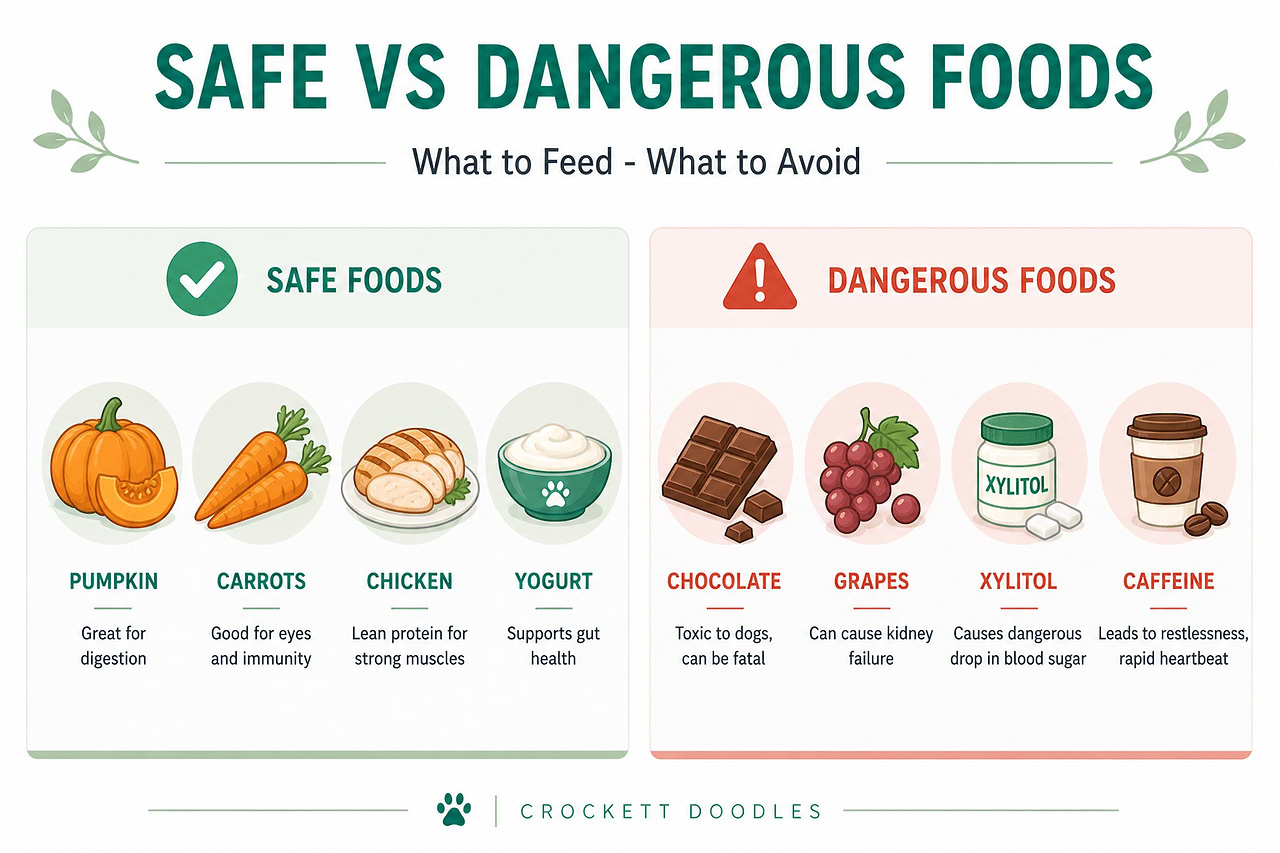
The ASPCA Animal Poison Control Center identifies several common household foods that may harm dogs.
| Food or Substance | Why It Is a Concern |
|---|---|
| Xylitol | Can cause dangerous hypoglycemia and liver injury |
| Grapes and raisins | Can cause serious kidney injury |
| Chocolate | Methylxanthines may affect the heart and nervous system |
| Coffee and caffeine | Can cause dangerous stimulant effects |
| Onion, garlic, and chives | Can damage red blood cells |
| Macadamia nuts | May cause weakness, tremors, vomiting, and other signs |
| Alcohol | Can cause serious poisoning |
| Raw yeast dough | Can expand in the stomach and create additional toxic risks |
| Cooked bones | May splinter, obstruct, or injure the gastrointestinal tract |
| Very fatty table scraps | Can cause digestive upset and may contribute to pancreatitis in susceptible dogs |
The risk depends on the substance, amount eaten, dog’s weight, and timing.
If your Goldendoodle may have eaten something toxic, contact a veterinarian or animal poison-control service promptly. Do not wait for symptoms and do not induce vomiting unless a qualified professional tells you to do so.
Families can also review pet insurance when planning for unexpected veterinary expenses. Coverage depends on the insurer’s terms and should not be assumed for any specific emergency.
Does a Senior Goldendoodle Need Senior Food?
A Goldendoodle does not automatically need food labeled “senior” because the dog reaches a particular birthday.
AAHA notes that there is no single AAFCO nutritional profile specifically for senior dogs. Older dogs can also vary widely in calorie, protein, body-condition, and medical needs.
A senior Goldendoodle doing well on a complete and balanced adult diet may be able to continue it unless health or nutritional needs change.
Your veterinarian may recommend adjustments when there are changes in:
- Body weight
- Muscle mass
- Calorie needs
- Kidney or liver health
- Digestion
- Dental health
- Appetite
- Medication
- Other medical conditions
The word “senior” on the bag is less important than whether the diet meets the needs of the individual dog.
Frequently Asked Questions About Goldendoodle Nutrition
What is the best food for a Goldendoodle?
There is no universal best food for every Goldendoodle. Choose a complete and balanced diet appropriate for your dog’s life stage, expected adult size, body condition, health, and veterinary recommendations.
Crockett Doodles currently recommends TLC Whole Life and Health Extension for puppies and adults in its program.
How much food should a Goldendoodle eat per day?
The correct amount depends on the food’s calorie density, your dog’s age, weight, body condition, activity level, treat intake, and growth stage. Use the product feeding directions as a starting point and adjust based on body condition and veterinary guidance rather than relying on one universal cups-per-day chart.
How many times a day should a Goldendoodle puppy eat?
Many young Goldendoodle puppies do well with about three measured meals per day. Meal frequency can change with age, expected size, medical needs, and veterinary recommendations.
Should Goldendoodles eat grain-free food?
Not simply because they are Goldendoodles. Grain-free diets are not automatically healthier or better for allergies. Ask your veterinarian before removing grains or choosing a specialized diet.
Can Goldendoodles eat chicken?
Many Goldendoodles can eat chicken as part of a complete dog food or as a small amount of plain cooked meat. Chicken can also be an allergen for some individual dogs, but it should not be removed without a reason to suspect a reaction.
Are probiotics good for Goldendoodles?
Some dogs may benefit from specific probiotic products, but probiotics are not automatically necessary for every Goldendoodle. Products contain different organisms and doses, so recurring digestive symptoms deserve veterinary evaluation rather than relying on a supplement alone.
Can I change the food my Crockett Doodles puppy is eating?
Yes, but avoid an abrupt change. Crockett Doodles currently recommends TLC or Health Extension, and qualifying purchases through Crockett Doodles’ designated links are part of the extended Health Guarantee requirements.
If your veterinarian recommends another diet for medical reasons, follow that medical advice and contact Crockett Doodles to understand how the change may affect guarantee eligibility.
Should I use a Goldendoodle feeding chart?
A feeding chart can help organize meals, but it should not prescribe one universal number of cups based only on age or size. Use the feeding directions for the specific food, then monitor growth and body condition and adjust with veterinary guidance.
Keep Goldendoodle Nutrition Simple and Consistent
Good Goldendoodle nutrition does not require chasing every new ingredient, supplement, or diet trend.
Start with a complete and balanced diet for the correct life stage. Measure portions, watch body and muscle condition, count treats, provide fresh water, and change diets gradually. Puppies should grow steadily rather than as rapidly as possible, and adult portions should change when body condition, activity, or health changes.
For Crockett Doodles families, confirm the puppy’s current food before Adoption Day. Crockett Doodles currently recommends TLC Whole Life and Health Extension, and qualifying purchases through its designated links are tied to extended Health Guarantee benefits under the current written terms.
Families preparing for a puppy can also review the Crockett Doodles Puppy Guide and Puppy Shopping List for additional preparation resources.
If your Goldendoodle develops persistent digestive symptoms, itching, unusual weight changes, poor appetite, or another medical concern, nutrition becomes an individual veterinary question rather than a general feeding-guide question.
Review the Crockett Doodles Puppy Food recommendations for current food and purchasing information, read the Health Guarantee for eligibility requirements, and use your veterinarian to fine-tune nutrition for your individual dog.
Still preparing for puppyhood? Explore available Goldendoodle puppies and confirm the puppy’s current food before Adoption Day.
goldendoodle feeding guide, goldendoodle food, Goldendoodle Nutrition Guide, goldendoodle puppy food