Goldendoodle Temperament and Personality: What to Know
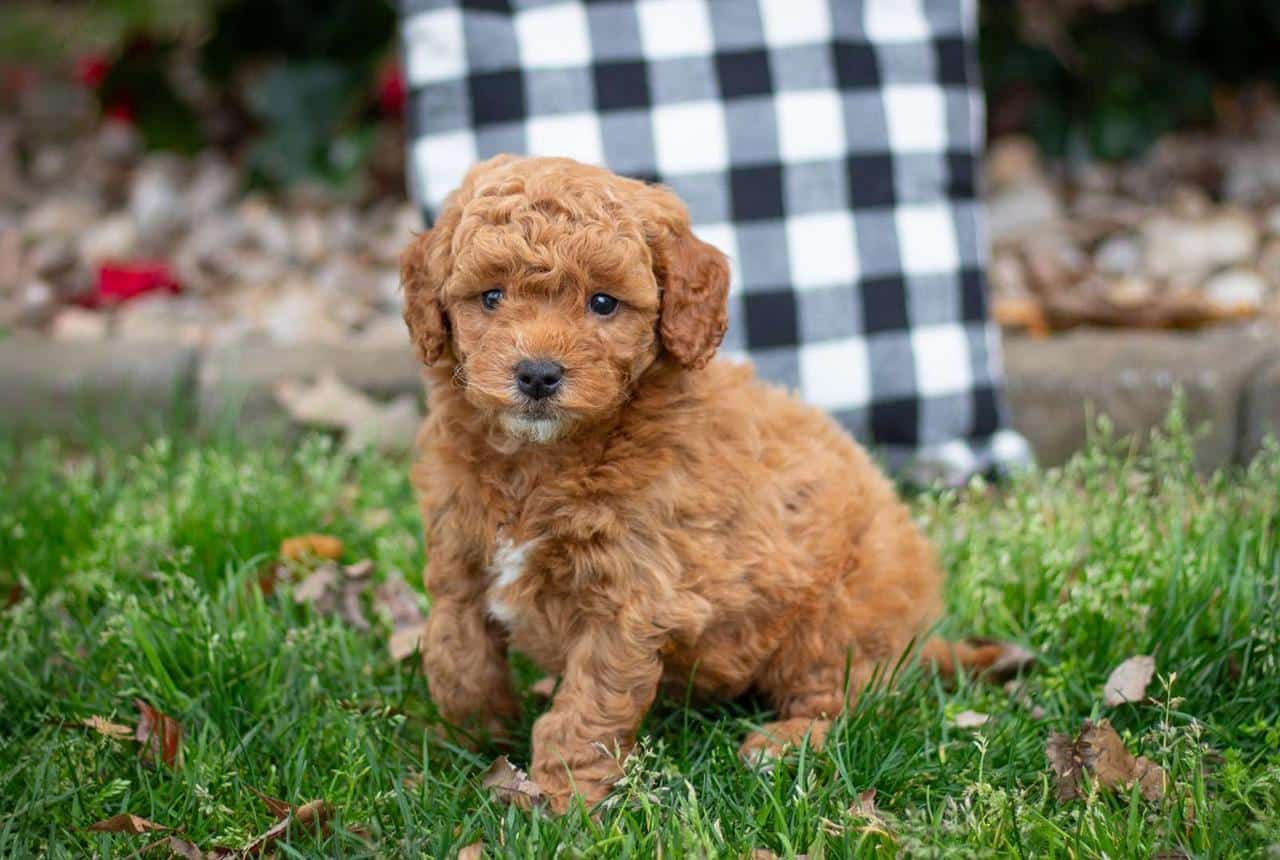
Goldendoodle Temperament and Personality: What Should Owners Expect?
Goldendoodles often have affectionate, playful, social, and people-focused personalities, but no breed mix guarantees one temperament. Parent temperament, inherited traits, early care, socialization, training, health, age, and the home environment all help shape the individual dog.
Many Goldendoodles like to stay near their families, join everyday activities, and learn through interaction. A puppy may be an enthusiastic greeter, an energetic playmate, or a quick learner. The same puppy may also jump, mouth, become overstimulated, struggle to settle, or need help feeling comfortable in new situations.
For first-time owners, the main question is not simply, “Are Goldendoodles friendly?” It is whether the household can provide patient training, companionship, mental engagement, grooming, suitable activity, predictable routines, and gradual independence.
Goldendoodle Temperament at a Glance
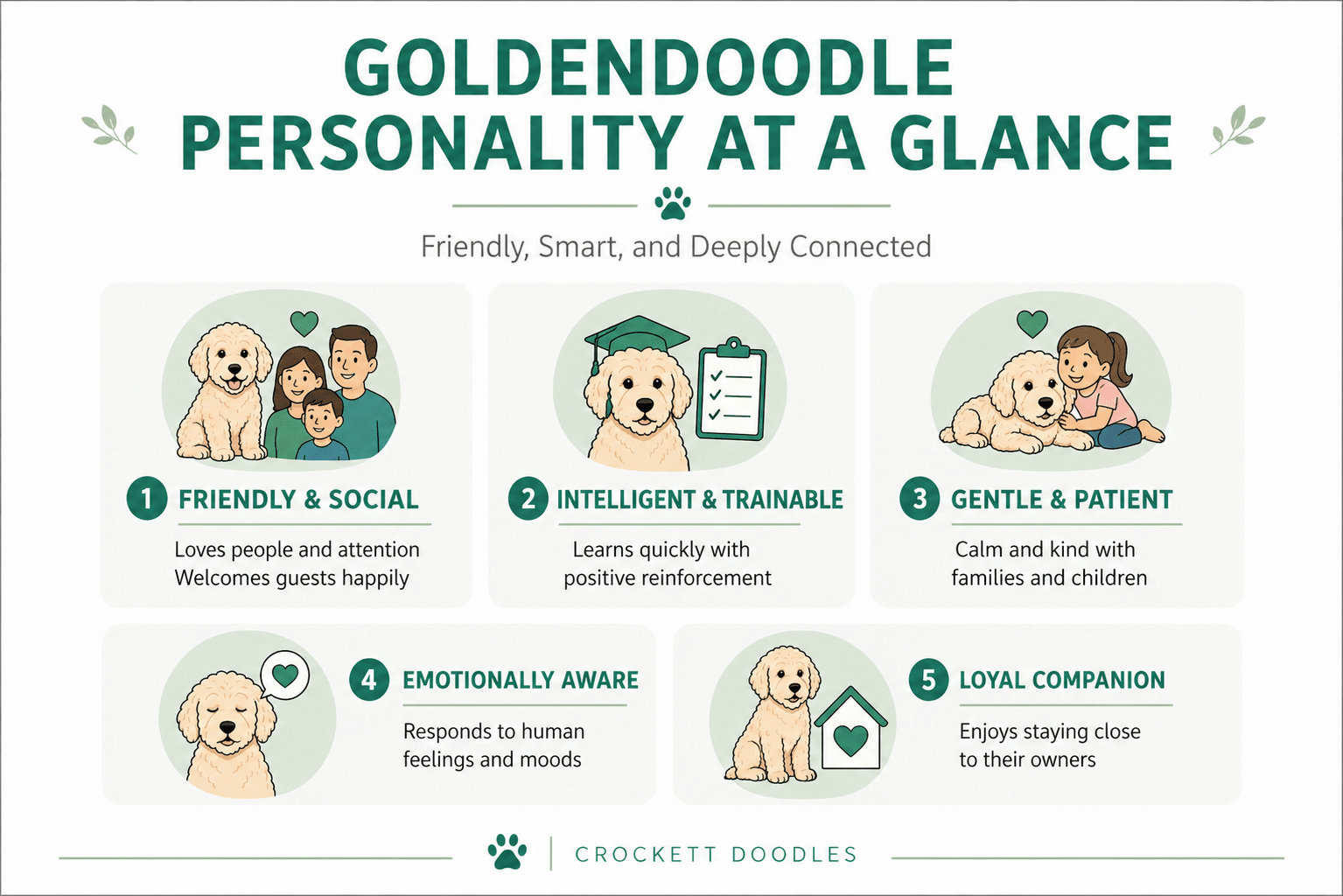
A Goldendoodle personality may include these common tendencies:
- Affectionate and interested in people
- Playful, curious, and sometimes exuberant
- Intelligent and responsive to consistent training
- Social with familiar family members
- Sensitive to routines, tone, and human reactions
- Energetic during puppyhood and adolescence
- Likely to seek attention and companionship
- Capable of becoming calm at home with maturity and guidance
These qualities describe a range, not a fixed personality. One Goldendoodle may approach visitors with a wagging body and a toy. Another may pause behind its owner, watch quietly, and approach only after several minutes. Both responses can fall within normal individual variation.
Temperament also changes with development. A settled young puppy may become more impulsive during adolescence. An excitable puppy may mature into a relaxed adult after learning household routines and appropriate ways to meet its needs.
What Shapes a Goldendoodle’s Personality?
A Goldendoodle’s personality develops through genetics, physical health, early experiences, and ongoing learning. Puppies do not inherit a predictable half of each parent breed’s behavior, and generation labels do not create one reliable temperament.
The American Kennel Club describes Golden Retrievers as outgoing, trustworthy, playful, and eager to please. It describes Standard Poodles as eager, athletic, highly intelligent, and versatile. Those parent-breed tendencies help explain why many Goldendoodles appear social, active, and interested in working with people.
Important influences include:
- The temperament and behavior of both parent dogs
- Inherited confidence, sociability, sensitivity, and arousal
- Early neurological stimulation (ENS)
- Handling and household exposure before placement
- Socialization during puppyhood
- Reward history and training methods
- Exercise and mental stimulation
- Pain, illness, fear, or physical discomfort
- Positive and frightening experiences
- Adoptive family’s routine, activity, consistency, patience, and affection
A label such as F1, F1B, F2, or Multigen describes ancestry and breeding lineage. It cannot promise calmness, friendliness, trainability, confidence, child compatibility, or therapy-dog potential.
More in this topic: Goldendoodle Generations and Genes Explained
What Is a Goldendoodle Like at Home?
Many Goldendoodles prefer being involved in family life. A dog may follow someone from the kitchen to the office, nap beside a desk, or bring a toy over when the household becomes active. After a walk and a short training game, some settle easily. Others continue searching for attention and need to be taught that quiet time is also part of the day.
Predictable routines often help. Regular patterns for meals, house training, walks, play, grooming, and bedtime give a puppy useful information about what happens next. They also make it easier for owners to notice changes in appetite, sleep, movement, or behavior.
Goldendoodles are sometimes described as “emotionally intelligent.” Dogs do notice tone, posture, movement, scent, and familiar patterns. However, owners should not assume that a dog understands every human emotion or knows why someone is upset. A dog that lowers its body after a sharp voice may be reacting to tension, not admitting guilt.
Are Goldendoodles Affectionate?
One of the most well-known traits of Goldendoodles is their friendly and affectionate nature. They typically get along well with children, other pets, and even strangers. Many Goldendoodles enjoy physical closeness and shared activities, but each dog has its own comfort level.
One may lean against family members or sleep near their feet. Another may prefer a brief scratch and then move to a cooler, quieter spot. Affection should never be forced when a dog is eating, sleeping, worried, restrained, or trying to leave.
Respecting body language builds trust. Turning away, lip licking, freezing, lowering the body, showing the whites of the eyes, or moving away can signal discomfort. Children and adults should allow the dog to choose space rather than insisting on hugs or prolonged handling.
How Energetic Are Goldendoodles?
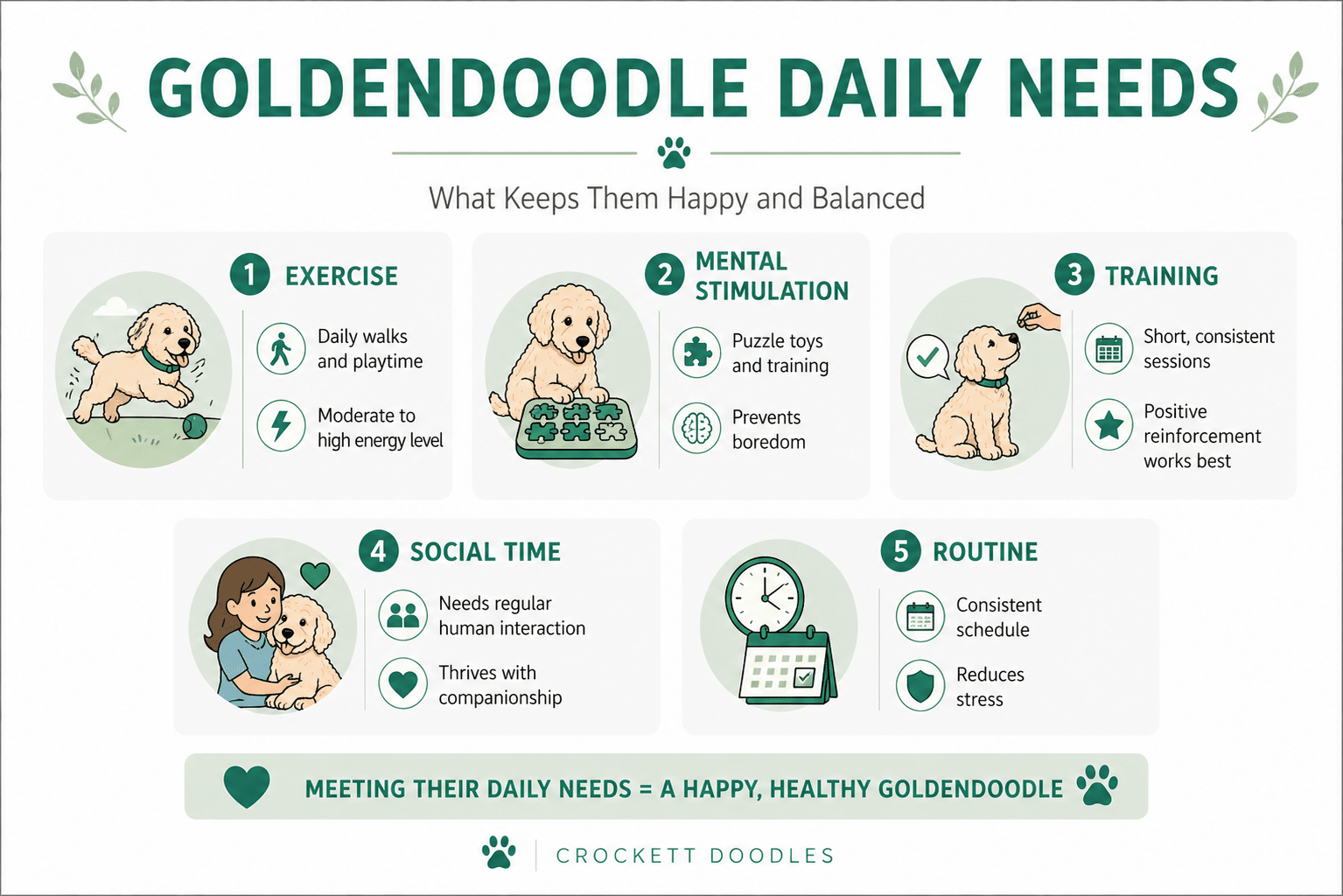
Goldendoodles are often active and playful, especially as puppies and adolescents, but energy varies by age, size, health, parentage, and individual temperament.
A young dog may race around after waking, become overexcited when visitors arrive, and struggle to focus outdoors. An adult may still enjoy walks, games, and training while becoming much easier to live with between activities.
Exercise can support good behavior, but more activity is not always the answer. An overtired puppy may become mouthier, noisier, or less able to settle. Owners should balance movement with sniffing, training, enrichment, and age-appropriate rest.
Also read: Goldendoodle Exercise Needs
Are Goldendoodles Emotionally Sensitive?
Some Goldendoodles respond strongly to tone, body language, household tension, and changes in routine. Calm guidance may help a sensitive dog learn, while shouting, intimidation, or unpredictable handling can increase avoidance or overexcitement.
Owners sometimes label a hesitant dog as stubborn or a worried dog as guilty. A more useful question is, “What is the dog communicating, and what would make the next repetition easier?”
Sensitivity does not automatically make a Goldendoodle suitable for therapy or service work. Working roles require an individual dog with appropriate health, stability, recovery, social skills, and task-specific training.
Are Goldendoodles Good With Children and Other Pets?
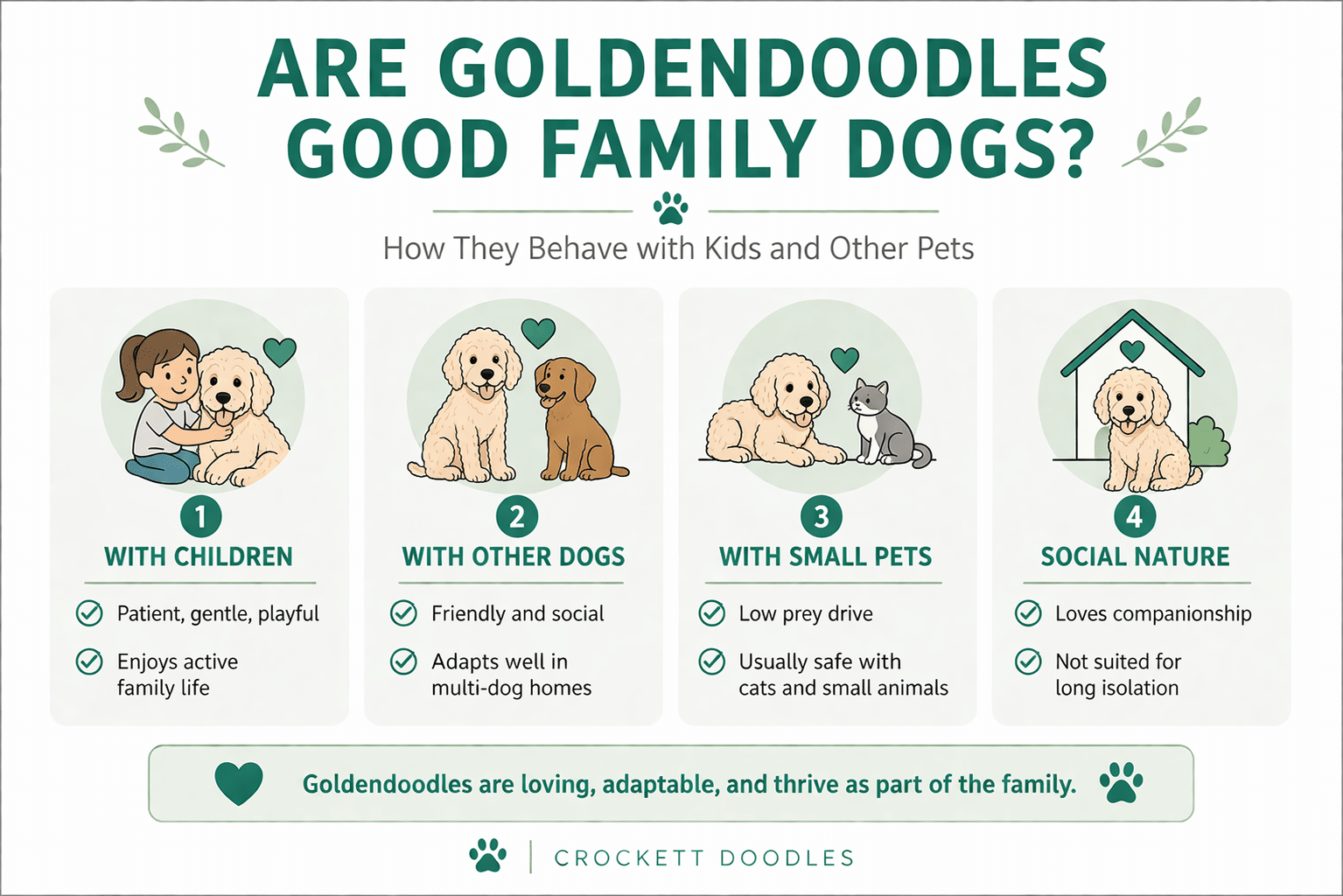
Goldendoodles can live successfully with children, dogs, or cats, but safe compatibility depends on the individual animals, supervision, socialization, previous experiences, and careful introductions.
A playful puppy can knock down a toddler, grab moving clothing, or become overwhelmed by shouting and fast handling. Adults should supervise young children around dogs regardless of breed or previous behavior. The American Veterinary Medical Association advises always supervising young children around dogs, even when both normally behave well.
Children should not climb on a dog, pull its coat, reach into its food, disturb it while sleeping, or follow it when it tries to leave. Every dog should have a quiet retreat where children and visitors do not bother it.
Pet compatibility also varies. A Goldendoodle that enjoys one familiar dog may be uncomfortable with another. Some may chase cats, rabbits, birds, or small animals. Introductions should be gradual, controlled, and based on body language rather than the assumption that a social breed will welcome every pet.
Also read: Goldendoodle Apartment and Family Suitability
Are Goldendoodles Easy to Train?
Goldendoodles are often attentive and capable learners and may be relatively easy to train, but intelligence does not produce good manners without practice.
Many respond well to food, toys, play, praise, and access to favorite activities. They can also learn unwanted habits quickly. Jumping may continue when it reliably earns attention. Stealing a sock may become a game if people chase the puppy around the house.
The American Veterinary Society of Animal Behavior recommends reward-based training for everyday skills and behavior concerns. Reward-based methods teach the dog what to do without relying on fear, pain, or intimidation.
Useful early priorities include:
- Reward four paws on the floor during greetings.
- Reinforce calm behavior before opening doors or starting play.
- Practice name response and recall in easy settings.
- Teach the puppy to rest behind a gate, in a pen, or on a bed.
- Prevent access to items the puppy is likely to steal or chew.
- Keep training sessions short enough for the puppy to succeed.
Families who want personalized help can review Crockett Doodles’ pre-adoption and post-adoption training options or schedule an Ask a Trainer consultation. Available services include home-based training formats, and availability varies by program and location.
Also read: Goldendoodle Trainability and Behavior
What Is Goldendoodle Puppy Temperament Like?
Goldendoodle puppies are often curious, playful, energetic, and socially interested, but they can also be cautious, mouthy, easily distracted, or quickly overwhelmed.
Common puppy behaviors include:
- Exploring objects with the mouth
- Jumping during greetings
- Following people closely
- Showing short bursts of intense activity
- Hesitating around unfamiliar surfaces or sounds
- Losing focus in stimulating environments
- Becoming irritable or wild when overtired
- Needing frequent sleep and quiet breaks
One visit cannot reveal an adult personality. A puppy that hangs back may be tired after play. A puppy that rushes forward may be highly social, overstimulated, or simply first to notice movement. Observations become more useful when they are repeated during play, rest, gentle handling, mild novelty, and recovery.
Early socialization should provide safe, positive exposure to suitable people, animals, sounds, surfaces, handling, and environments. AVSAB identifies the first three months as an especially important socialization period. The goal is not to meet the largest possible number of people or dogs. It is to create positive experiences without flooding the puppy with fear or stimulation.
Also read: Goldendoodle Growth Stages: Puppy to Adult
Common Goldendoodle Temperament Challenges
Appealing traits can become difficult when their intensity is underestimated.
Enthusiastic Greetings
A social Goldendoodle may jump, spin, bark, or grab clothing when someone arrives. Excitement is not the same as aggression, but a large or fast-moving dog can still hurt a child, older adult, or visitor with limited mobility. Management and repeated practice matter more than waiting for the dog to “grow out of it.”
Difficulty Settling
Some Goldendoodles continue requesting play after their immediate needs have been met. A practical routine might include a walk, a few minutes of training, a chew or food puzzle, and then quiet rest. Settling is a skill that can be reinforced.
Attention-Seeking Behavior
Barking, pawing, stealing objects, and repeatedly dropping toys may continue when those behaviors always produce a reaction. Owners should meet legitimate physical and social needs, then notice and reward calmer alternatives.
Caution or Overstimulation
A cautious dog may need distance from a visitor rather than encouragement to “say hello.” An overstimulated puppy may need a quiet break rather than another game. Forcing interaction can make fear stronger.
Adolescent Excitability
Adolescent dogs may respond well in the kitchen and appear to forget everything outdoors. The skill has not necessarily disappeared. The environment has become harder. Return to easier practice, use better rewards, and build reliability gradually.
Sudden irritability, withdrawal, touch sensitivity, restlessness, fear, house-soiling, or aggression should not be dismissed as personality. Pain, illness, stress, or neurological changes can affect behavior. A veterinarian should assess significant or sudden changes.
Can Goldendoodles Develop Separation Anxiety?
Goldendoodles can develop separation-related distress, but close attachment does not mean every Goldendoodle will have separation anxiety.
Possible warning signs include persistent barking or howling, pacing, drooling, trembling, destruction near exits, indoor toileting, refusal to eat, or frantic behavior tied to a person’s departure. These signs can have more than one cause, so diagnosis should not rest on a single symptom.
Owners can begin with brief, comfortable periods apart while the puppy is calm. The goal is to build confidence gradually, not to leave the dog in panic until it becomes exhausted.
A dog that cannot tolerate short absences, injures itself, or shows escalating distress needs veterinary guidance and qualified behavior support.
How Crockett Doodles Supports Temperament and Household Fit
Crockett Doodles raises and places puppies through a network of Partner Homes rather than one central kennel. Parent dogs generally live as family pets, while Guardian, Surrogate, and Transition Homes may support different parts of raising and preparing puppies. Exact arrangements vary by litter.
Crockett Doodles’ public matching materials emphasize parent information, litter-specific puppy descriptions, family preferences, and deposit order rather than presenting one temperament score as a promise. Puppy announcements typically include information and photographs of the parent dogs, litter photographs, puppy descriptions, location, pricing, and details specific to the litter. Puppies are commonly described at about five to six weeks old. Families may rank their preferences or pass and wait for another opportunity.
Those descriptions can help families ask better questions, but they should be treated as age-specific observations rather than adult-temperament tests. Useful questions include:
- How does the puppy behave during play, rest, and gentle handling?
- Does the puppy’s energy level match my family’s lifestyle or environment (Apt. vs. Home)?
- What training or behavior support is available before and after Adoption Day?
Crockett Doodles also provides a Puppy Guide, training resources, and Ask a Trainer support. Training can establish helpful foundations, but age, health, environment, and continued family practice still affect long-term behavior.
Is a Goldendoodle Personality Right for You?
A Goldendoodle may suit a household that wants an involved companion and can provide:
- Daily interaction and patient, reward-based training
- Suitable physical activity and mental engagement
- Predictable routines and enough rest
- Gradual practice being alone
- Supervision around children and pets
- Regular grooming and veterinary care
- Flexibility as the puppy’s individual personality develops
The fit may be harder for a household expecting a puppy that naturally behaves well, stays alone for long periods, guards reliably, or is automatically calm with every child and animal.
Color, gender, size, and generation can be preferences, but they should not outweigh parent temperament, early observations, health, household routine, and the support available after placement.
Goldendoodle Temperament FAQs
Are Goldendoodles calm dogs?
Some adult Goldendoodles become calm at home after their physical, mental, and social needs are met. Puppies and adolescents are often more energetic and impulsive, and individual settling ability varies.
Are Goldendoodles friendly with strangers?
Many Goldendoodles are interested in unfamiliar people, but some are cautious, selective, or overly excited. Positive early experiences may help, but friendliness cannot be guaranteed.
Are Goldendoodles clingy?
Some Goldendoodles prefer staying close to family members and follow them from room to room. Owners can provide companionship while teaching comfortable rest and short periods of independence.
Do male and female Goldendoodles have different personalities?
Sex alone does not reliably determine whether a Goldendoodle will be calmer, friendlier, more affectionate, or easier to train. Parent temperament, health, development, and individual experience are more useful considerations.
Are Goldendoodles aggressive?
Any dog may growl, snap, or bite when frightened, in pain, guarding something, or pushed beyond its ability to cope. New or concerning aggression should be assessed by a veterinarian and an appropriately qualified behavioral trainer.
Does Goldendoodle generation determine temperament?
No. F1, F1B, F2, and Multigen labels describe ancestry, not a guaranteed personality. Dogs from the same litter can differ in energy, confidence, sociability, sensitivity, and recovery.
Choose the Individual, Not a Temperament Promise
Goldendoodles often appeal to families because they may be affectionate, playful, intelligent, and eager to join daily life. Those same qualities can require training, structure, grooming, activity, and time.
The most useful question is not whether Goldendoodles have a “good personality.” It is whether your household can support the individual dog in front of you.
Because temperament cannot be predicted from color, gender, size, or generation alone, ask about the puppy’s early observations, expected activity, household fit, and available support. Crockett Doodles can discuss these factors while you review current Goldendoodle puppies and the puppy-selection process.
goldendoodle personality, goldendoodle puppy temperament, goldendoodle temperament